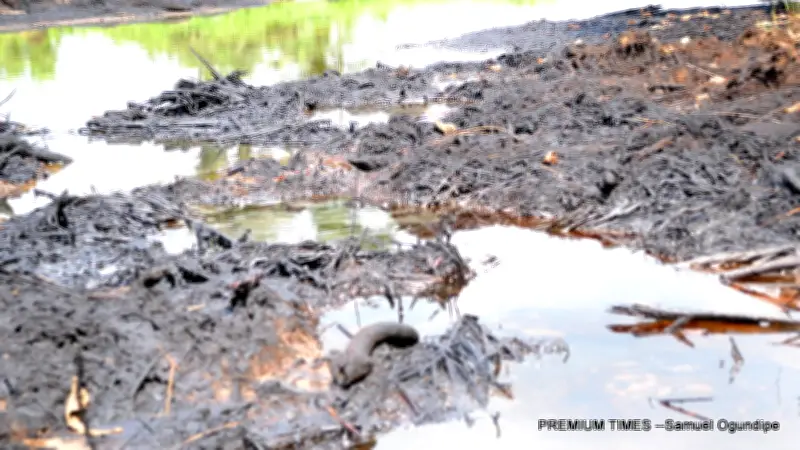
Nnimmo Bassey, director of the Health of Mother Earth Foundation (HOMEF), has declared that Bayelsa is one of Nigeria's most polluted states, attributing the contamination to hydrocarbon extraction linked to the oil and gas industry. He made this statement during a one-day capacity-sharing programme with the people of Nembe on Thursday in the Nembe Local Government Area of Bayelsa.
Per Capita Oil Pollution in Bayelsa
According to Mr Bassey, a renowned environmentalist, Bayelsa is one of the most polluted states in Nigeria and possibly in the world. He cited the Bayelsa State Oil and Environment Commission Report, published in May 2023, which recorded a per capita oil pollution level of 1.5 barrels of crude oil per person. This statistic underscores the severe environmental degradation affecting the state's population.
Mr Bassey also referenced the environmental assessment of Ogoniland conducted by the United Nations Environment Programme (UNEP) as evidence of the devastating impact of oil pollution in the Niger Delta. He alleged that oil companies failed to adequately clean up polluted areas, with some resorting to superficial measures rather than proper remediation.
UNEP Ogoniland Assessment
“The environmental assessment of Ogoniland was commissioned by the Federal Government of Nigeria in 2006 and carried out by UNEP to determine the scale, impact and long-term consequences of oil pollution in Ogoniland, Rivers. The assessment, conducted between 2009 and 2011, represents one of the most comprehensive environmental studies ever undertaken in an oil-producing region,” he said.
Mr Bassey explained that the investigation involved extensive scientific fieldwork across the four Ogoni local government areas of Khana, Gokana, Tai and Eleme, as well as laboratory analysis and consultations with communities. He urged oil companies to stop what he described as the systematic destruction of the Niger Delta, saying the region had been treated as a “sacrificial zone” since the early 1950s.
Environmental and Health Impacts
Mr Bassey lamented the adverse effects of oil and gas extraction, including massive deforestation and various forms of erosion affecting land and coastlines. He noted that although the term “environmental genocide” used in describing the situation was weighty, the issue should not be treated with levity.
Also speaking, the Head of Administration, Nembe Local Government Area, Godson Jim-Dorgu, said the area had been adversely affected over the years by oil spillage from oil companies. He said oil pollution had severely affected fish and farm produce, thereby worsening hardship among residents of Nembe, which he described as one of the areas most affected by oil spills.
Call for Remediation
Mr Jim-Dorgu called on the federal government and oil companies to commence the remediation of areas damaged by oil exploration and production activities. He said that since the Santa Barbara oil spill, which lasted about six months, there had been no adequate cleanup of the affected area, adding that the situation had negatively affected aquatic life.
Additionally, the Director of Primary Health Care, Nembe LGA, Jude Pulemote, said oil exploration activities had contributed to health challenges among rural residents. He said many pregnant women in Nembe are suffering from anaemia, adding that the disruption of livelihoods by oil activities had adversely affected host communities. Mr Pulemote urged the federal and Bayelsa governments to ensure that appropriate measures were taken to address the challenges confronting Nembe, describing it as one of the communities severely affected by oil exploration and exploitation in the Niger Delta.