
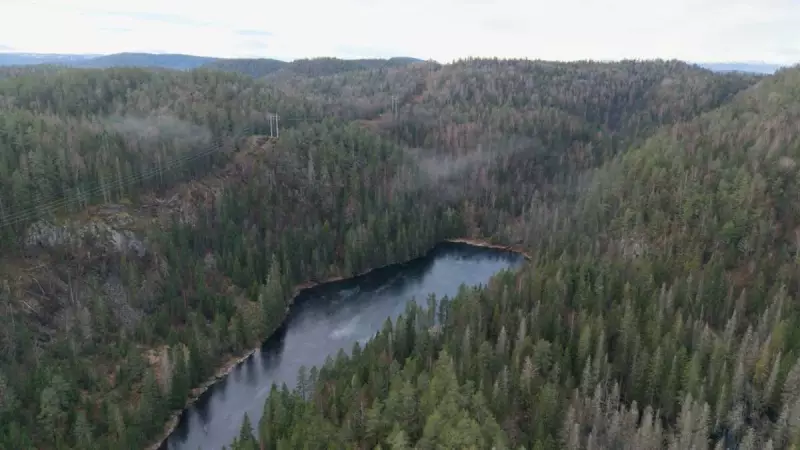
Europe's ambitious push to secure its own supply of critical minerals has hit a significant obstacle in Norway, where plans to develop the continent's largest rare earths deposit are being stalled by concerns over endangered wildlife, including beetles and mosses.
The Fensfeltet Treasure and Europe's Strategic Dilemma
Located near the small town of Ulefoss, a two-hour drive from Oslo, the Fensfeltet deposit holds an estimated 8.8 million tonnes of rare earth elements. These materials are essential for manufacturing magnets used in electric vehicles, smartphones, and advanced defence equipment like F-35 fighter jets. Currently, the European Union imports a staggering 98% of its rare earth needs from China, a dependency the bloc is desperate to reduce.
Tor Espen Simonsen, an official from Rare Earths Norway, the company with extraction rights, emphasised the strategic importance. "We are in a situation where Europe must procure more of these raw materials on its own," he stated. The EU's Critical Raw Materials Act (CRMA) targets sourcing at least 10% of its needs internally by 2030, yet no active rare earth mines currently operate in Europe.
Environmental Roadblock: The 'Invisible Mine' Meets Red-List Species
Rare Earths Norway proposed an "invisible mine" concept to minimise environmental impact, using underground extraction and reinjecting waste. However, the planned location for the above-ground processing park has sparked major controversy. Experts surveying the site identified 78 species on Norway's 'red list' for endangered flora and fauna.
The threatened species include:
- Saproxylic beetles that depend on deadwood.
- Wych elms and common ash trees.
- 40 different types of mushrooms.
- Various mosses.
Furthermore, plans to dispose of waste rock within a protected water system added to the concerns. The county governor has formally opposed the chosen site, forcing a review.
Balancing Green Tech with Green Spaces
The conflict encapsulates a modern dilemma: sourcing materials for a green energy transition while protecting local biodiversity. Martin Molvaer, an advisor at the environmental NGO Bellona, captured the tension: "We need to start mining as quickly as possible to bypass polluting value chains from China. But things should not move so quickly that we destroy a large part of nature... we must therefore rush slowly."
This delay has pushed the project's start date to the first half of the 2030s. The municipality is now examining alternative, less sensitive locations for the surface facilities, though none are ideal.
A Local Community's Tough Choice
For the 2,000 residents of Ulefoss, the project represents a much-needed economic revival after decades of decline and outmigration. Local Mayor Linda Thorstensen supports the mine, calling it "a new adventure" that could bring jobs to an area where many rely on social welfare. She framed the decision starkly: "We accept that we will have to sacrifice a significant part of our nature. It comes down to choosing the lesser of two evils."
Residents like 70-year-old retired teacher Inger Norendal express cautious optimism, acknowledging the need for wealth and new residents but also recognising that "mining obviously has its downsides too."
The standoff at Fensfeltet highlights the complex trade-offs facing Europe as it seeks strategic autonomy. The path to securing critical raw materials is proving to be as much about navigating environmental safeguards as it is about geology and geopolitics.




