
Benue State Government Inks Major Deal for Clean Cookstove Distribution
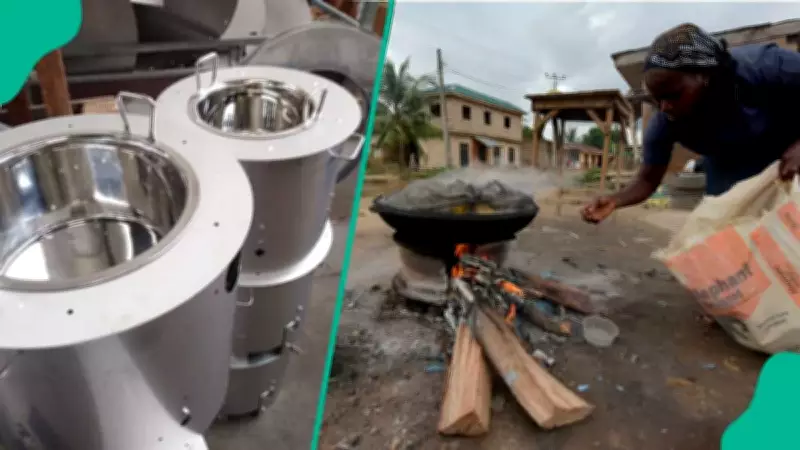
The Benue State Government has formalized a significant Memorandum of Agreement with Greenplinth Africa, committing to the deployment of two million clean cookstoves throughout the state. This ambitious project represents a crucial step in reducing dependence on traditional firewood and promoting environmentally sustainable cooking practices across local communities.
Strategic Climate Initiative Announced at Green Conference
This groundbreaking agreement was officially signed with the Benue State Council on Climate Change during the recent Green Conference held in Lagos. The three-day conference, themed "Decarbonisation Africa: Pathway to Climate Finance, Sustainable Growth and Green Economy," served as a platform for policymakers, investors, and green economy stakeholders to collaborate on practical climate solutions at Nigeria's sub-national level.
Comprehensive Benefits Package for Households
According to project details, each participating household will receive an impressive package including two clean cookstoves, stainless steel cooking pots, and 40 kilograms of briquettes manufactured from agricultural waste materials such as rice husks. Beyond the physical equipment, beneficiaries will also gain access to monthly financial incentives and comprehensive health insurance coverage for their entire families.
Daniel Mailumo, Director-General of the Benue State Council on Climate Change, emphasized that this partnership is strategically designed to achieve multiple objectives: cutting harmful emissions, improving household welfare standards, and supporting the state's long-term climate targets. "The deployment of clean cookstoves to Benue means rural women will no longer rely on firewood but on low-emission alternatives. This will help us protect our environment as we drive towards net-zero emissions," Mailumo stated.
Addressing Multiple Social and Environmental Challenges
The project addresses several interconnected issues simultaneously. By converting farm residues into usable fuel, it tackles problems of deforestation, indoor air pollution, and rural poverty. Women and girls, who traditionally spend extensive hours gathering firewood and face significant health risks from smoke inhalation, are expected to benefit substantially from this initiative.
"We want to ensure the girl-child has more time to study and mothers are protected from respiratory ailments caused by smoke inhalation," explained a project representative, highlighting the program's broader social impact beyond environmental considerations.
Broader Vision for Clean Cooking Expansion
Salisu Dahiru, a member of Greenplinth Africa's management team, revealed that this conference builds upon previous engagements and provides updates on ongoing plans to distribute 80 million cookstoves nationwide. The organization also supports large-scale tree planting initiatives aimed at carbon credit generation.
Dahiru commended Nigeria's climate governance framework, noting that the country stands among the few nations with a dedicated Climate Change Act that provides legal backing for emission reduction efforts across federal, state, and local government levels. However, he acknowledged that implementation complexities arise from Nigeria's substantial size and multi-tier governance structure.
Private Sector Partnerships Accelerating Climate Action
Partnerships between state governments and private-sector organizations like Greenplinth Africa are proving instrumental in accelerating climate action across Nigeria. This collaboration follows similar initiatives, including support from BURN, the world's leading clean cookstove company and carbon project developer, which is assisting Nigeria's efforts to scale clean cooking as one of the country's most immediate and investable climate solutions.
Experts believe that emerging carbon market mechanisms and tax policies are enhancing investor confidence and accelerating private-sector participation in clean energy initiatives. The key to scaling clean stove access lies in local manufacturing capabilities and carbon-backed subsidies that lower costs for households, making sustainable cooking solutions more accessible to Nigeria's population.




