Climate Change Intensifies Southern Africa Floods, Leaving Over 100 Dead and 300,000 Displaced
Southern Africa has been devastated by catastrophic flooding after experiencing a year's worth of rainfall in just ten days, with researchers confirming that human-caused climate change significantly intensified the torrential downpours. The disaster has resulted in more than 100 fatalities and displaced over 300,000 people across multiple countries, causing widespread destruction to homes, infrastructure, and livelihoods.
Unprecedented Rainfall and Widespread Destruction
A comprehensive study by the World Weather Attribution revealed that the region received what would typically be an entire year's rainfall within a mere ten-day period. Scientists noted that this rare magnitude of precipitation, which statistically occurs only once every fifty years, demonstrates a clear trend toward more violent and extreme downpours across southern Africa. The flooding has caused millions of dollars in damage to housing, roads, bridges, and other critical infrastructure while bringing untold human suffering to affected communities.
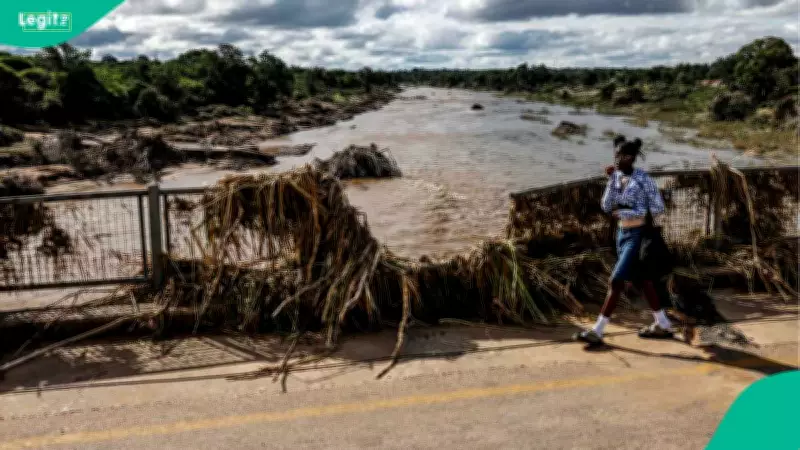
The floods struck South Africa, Mozambique, and Zimbabwe with particular severity, leaving a trail of destruction in their wake. In Mozambique, many homes were completely submerged underwater, while bridges and roads were swept away in Limpopo and Mpumalanga provinces in South Africa and various parts of Zimbabwe. The central and southern regions of Mozambique suffered the worst impacts, with the Gaza provincial capital of Xai-Xai and the nearby town of Chokwe largely inundated by floodwaters.
Climate Change and La Nina Synergy
The scientific analysis explained that while the La Nina weather phenomenon naturally brings wetter conditions to southern Africa, its effects were dramatically amplified by operating within a much warmer atmosphere caused by climate change. Izidine Pinto, senior climate researcher at the Royal Netherlands Meteorological Institute, emphasized that continued fossil fuel burning has not only increased the intensity of extreme rainfall but has transformed what would have been serious heavy rain periods into much more severe deluges that communities are ill-equipped to handle.
Pinto further noted that climate models struggle to measure the exact impact, but researchers identified a forty percent increase in rainfall intensity that cannot be explained without human-caused climate change. This transformation of weather patterns means that communities face more violent flooding events that exceed their preparedness and response capabilities.
Scientific Alarm and Unexpected Magnitude
Bernardino Nhantumbo, a researcher with Mozambique's weather service, expressed surprise at the event's magnitude, noting that while similar flooding occurred twenty-five years ago in the same areas, the current disaster exceeded all expectations. Some locations recorded in just two to three days the total rainfall typically expected for an entire rainy season, highlighting the unprecedented nature of the event.
Nhantumbo highlighted Mozambique's particular vulnerability as the country lies downstream of nine international rivers, making flood management especially challenging. He explained that even with accurate forecasting, the damages associated with such extreme events cannot be fully contained or prevented given current infrastructure and response systems.
Urgent Call for African Climate Models
Researchers emphasized the critical need for climate models developed specifically in Africa to better understand and predict the continent's unique climate challenges. Friederike Otto, professor of climate science at Imperial College London, pointed out that all freely available climate models are developed outside Africa, primarily in climate modeling centers in the United States, Europe, and some in Asia.
She explained that climate models are typically designed to best capture weather patterns in the regions where they are created, which inherently limits their accuracy when applied to African contexts. The absence of African-developed climate models represents a significant gap in understanding how climate change specifically impacts the continent's diverse ecosystems and communities.
The devastating floods in southern Africa serve as a stark reminder of the urgent need for both global climate action and localized adaptation strategies. As extreme weather events become more frequent and intense due to climate change, vulnerable regions require improved forecasting, infrastructure resilience, and community preparedness to mitigate future disasters.