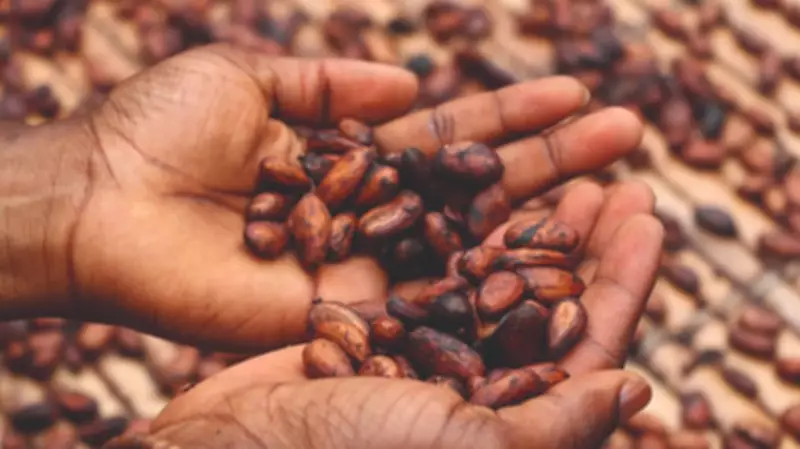
Cocoa Farmers Decry Pricing Models, Highlight Dire Impacts on Livelihoods
Cocoa farmers across Africa have expressed strong dissatisfaction with the current pricing models intended to stabilize prices in producing countries. In practice, these models have been adjusted to align with international market fluctuations, deviating significantly from their original goal of providing stability and protection for farmers. The Cocoa Farmers Alliance Association of Africa (COFAAA) has voiced concerns that many farmers, particularly from Cote d’Ivoire and Ghana, are unable to benefit from these prices due to flawed market structures.
Market Models and Farmer Struggles
COFAAA points out that one market model is semi-regulated with price setting, while another is fully regulated with price setting and sole exporting. According to Comrade Adeola Adegoke, Global President of COFAAA, these models were established by respective governments to shield cocoa farmers from price volatility, but they are currently failing in this objective. He emphasized that cocoa farmers are enduring a difficult period due to a downturn in cocoa prices over the past year, affecting all African origin countries.
Adegoke stated: "We understand that cocoa farmers are currently going through a difficult time now owing to the downturn in cocoa price over the past one year. No origin countries in Africa is currently immune from this terrible situation, which has negatively impacted the good enthusiasm exhibited by all of us during the cocoa price boom in 2024, which reached about $12,000 per metric tonne at the international market."
Global Chocolate Market and Farmer Challenges
The association has been monitoring recent developments in the chocolate market, where price surges have pressured sales and margins, especially in Europe. Adegoke highlighted that global chocolate consumption relies heavily on the efforts of African cocoa farmers, who face numerous challenges. These include low incomes, risks of child labor, limited access to education, poor infrastructure, inadequate healthcare, and growing security concerns such as illegal mining.
These issues threaten the long-term sustainability of the cocoa sector. Adegoke raised a critical question: "What is a fair and sustainable price for cocoa per ton today? One that supports both farmers at origin and buyers in international markets while also aligning with the evolving compliance and sustainability standards shaping the future of the industry."
Living Income Differential and Its Limitations
Adegoke expressed concern that over the past year, despite sharp declines in cocoa prices, the Living Income Differential (LID) has not delivered the expected benefits. The LID, which adds $400 per ton regardless of negotiated market prices, was designed as a safety net for farmers. However, its impact may be limited due to farmers' lack of access to information at the farm level.
He acknowledged the LID as a commendable initiative by Ghana and Côte d’Ivoire, representing a step toward improving farmer incomes. Yet, he questioned its long-term sustainability: "How sustainable is the LID in the long term? Is it a tool that can work consistently across different market conditions, or does its effectiveness depend on certain parameters?"
Call for Clarity and Collective Action
COFAAA has urged the Conseil du Café-Cacao, Ghana COCOBOD, and the Côte d’Ivoire–Ghana Cocoa Initiative to provide clarity on the LID's current status and future direction. This guidance is seen as valuable for other African cocoa-producing countries considering similar approaches.
To address these issues, COFAAA has established a Global Members Assembly & Empowerment Forum. This forum aims to assess current developments affecting the continent and formulate a position, given that Africa produces 70% of the world's cocoa, with Ivory Coast and Ghana alone accounting for 60%. Despite this, the continent gains less than 6% from the global chocolate market valued at over $147 billion.
Adegoke explained: "The reason for setting up the forum is to also find a way to assist the cocoa farmers across the origin countries through provision of inputs and other safety nets that could one way or the other cushion the effects of the fall in cocoa prices experienced across the board of each cocoa-producing country."
Forum Participation and Expert Involvement
Representation at the COFAAA Assembly Forum includes approximately 20 cocoa farmers per country, with confirmed participation from Côte d’Ivoire, Ghana, Cameroon, Nigeria, Uganda, and Sierra Leone. Subcommittees led by cocoa experts across Africa have been formed to bring diverse experiences and perspectives to guide the initiative, fostering collaborative solutions for the sector's challenges.