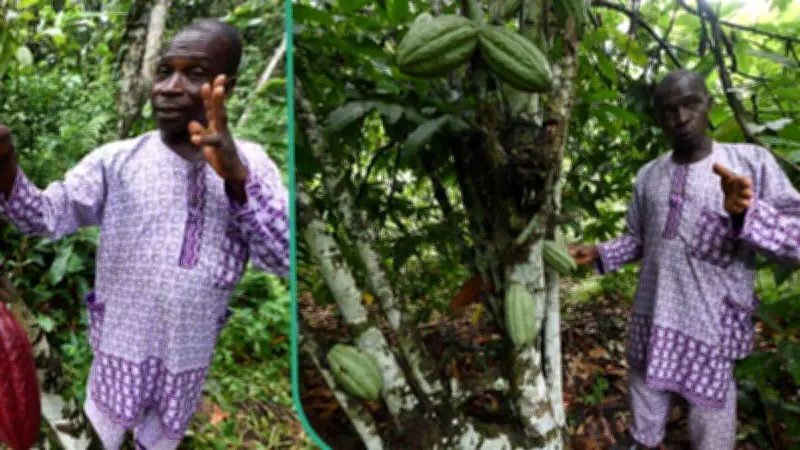
Nigerian Cocoa Farmers Face Devastating 70% Price Collapse
Cocoa farmers and industry stakeholders across Oyo, Ogun, and Kwara states are raising alarm over a catastrophic decline in cocoa prices, describing the situation as a severe setback for Nigeria's agricultural sector. According to a comprehensive survey conducted by the News Agency of Nigeria, cocoa prices plummeted by approximately 70% from a peak of N2.5 million per tonne to around N700,000 between late 2024 and early 2025.
Farmers Drowning in Debt After Expansion During Boom
The dramatic price drop has left many farmers struggling with overwhelming debts after they expanded operations during the previous price surge. Adeola Adegoke, President of the Cocoa Farmers Association of Nigeria, revealed that the recent downturn has reversed years of progress, noting that earlier price increases had successfully attracted new investors and encouraged youth participation in cocoa farming.
"Many farmers expanded their operations or acquired new farmlands during the boom period, but the sudden downturn has forced some new entrants to completely exit the sector," Adegoke explained. He emphasized that while cocoa prices have collapsed, the costs of farm inputs, labor, and other production expenses have remained stubbornly high, creating an impossible financial squeeze for agricultural producers.
Industry Leaders Demand National Cocoa Board Revival
Industry stakeholders are urgently calling for the federal government to revisit the Executive Bill submitted to the National Assembly in 2025 for the establishment of a National Cocoa Board. They argue that the absence of a central regulatory body has left the sector dangerously vulnerable to market shocks and has weakened coordination across the entire value chain.
Felix Oladunjoye, Chairman of the Cocoa Processors Association of Nigeria, attributed the sector's challenges directly to the lack of a coordinating institution since the dissolution of the Nigerian Cocoa Board in 1986. "Although several private trade groups exist, none has the legal authority to regulate or stabilize the industry," Oladunjoye stated, highlighting the structural deficiencies plaguing cocoa production.
Global Market Dynamics Compound Local Challenges
Oladunjoye further explained that global market factors have significantly contributed to the price decline, including reduced demand for chocolate products, international conflicts, and post-pandemic economic pressures. Excess cocoa supply in the global market and currency fluctuations have also played substantial roles in undermining Nigeria's cocoa sector.
In Ogun State, CFAN Board of Trustees Chairman Olusesan Showunmi reported that many farmers are currently under severe financial strain after taking loans to expand production during the price surge. "The sudden drop in prices has made it extremely difficult for farmers to repay debts while covering basic operational costs," Showunmi warned, adding that continued price instability could push some farmers to abandon cocoa for other crops.
Farmers Call for Comprehensive Support Measures
Across cocoa-producing states, farmers and traders are demanding improved access to credit, subsidized farm inputs, and stable policy frameworks to protect their livelihoods. A cocoa merchant in Abeokuta, Niyi Odeyale, confirmed that the price drop has negatively affected entire cocoa-producing communities, making it harder for farmers to meet basic household needs.
Similarly, farmer Bashir Atanda in Ilorin noted that while cocoa farming remains limited in Kwara State, interest in the crop is growing and requires substantial government support to reach its full potential. Industry leaders are specifically calling for:
- Government intervention through subsidized agricultural inputs
- Improved cocoa seedlings and planting materials
- Enhanced access to finance and credit facilities
- Development of climate-resilient cocoa varieties
- Establishment of a National Cocoa Board for regulation
The crisis comes amid security challenges in cocoa-producing regions, including a recent incident where criminal gangs abducted four individuals from the Cocoa Research Institute of Nigeria in Ibadan. While two victims were rescued through intensive security operations, the incident underscores the multiple pressures facing Nigeria's cocoa sector as it struggles to recover from the devastating price collapse.