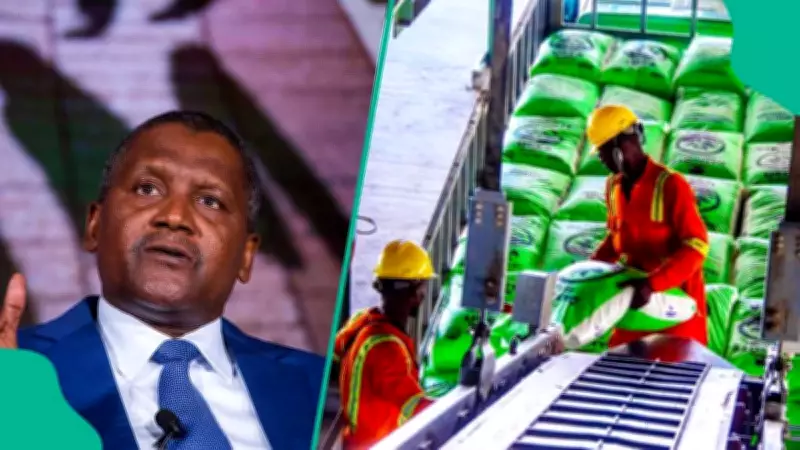
Dangote Fertiliser Becomes Major Global Supplier as Iranian Production Declines
Dangote Fertiliser Limited is witnessing a significant surge in global demand for its products as geopolitical tensions in the Middle East disrupt fertiliser supply chains and reduce output from Iran. The Lagos-based facility, Africa's largest producer of granulated urea and ammonia, is increasingly becoming a preferred alternative for international buyers facing supply shortages.
Geopolitical Tensions Drive Shift in Global Fertiliser Markets
According to Devakumar Edwin, Vice President of Dangote Industries Limited, buyers from various regions worldwide are turning to the Nigerian fertiliser plant to fill supply gaps created by declining Iranian production. The ongoing conflict involving the United States, Israel, and Iran has significantly tightened global fertiliser supply, prompting importers to seek more reliable sources.
"Demand has gone up substantially due to the shortage in the global market," Edwin stated during a recent call with Bloomberg. The Middle East tensions have raised fresh concerns about shipping activities through the Strait of Hormuz, a critical maritime route through which approximately one-third of global fertiliser supplies are transported.
Strategic Position and Expansion Plans
The Dangote fertiliser facility boasts an annual production capacity of about three million tonnes, with around 37% of its output exported to the United States, making it one of the company's key international markets. Founder Aliko Dangote has previously announced ambitious plans to position the company as the world's leading urea exporter within the next four years, challenging Qatar's current dominance in the sector.
The company is also expanding its regional footprint across Africa. In August 2025, Dangote signed a $2.5 billion agreement with the Ethiopian government to construct a new fertiliser plant in the country's Somali region. This strategic move demonstrates the company's commitment to strengthening its presence on the continent while addressing growing agricultural needs.
Market Implications and Future Outlook
Any disruption along the Strait of Hormuz shipping corridor could further strain global supply chains and drive up fertiliser prices, making Dangote's production capabilities increasingly valuable to international markets. The company's ability to maintain consistent output while competitors face geopolitical challenges positions it favorably for continued growth.
As global fertiliser markets adjust to these new dynamics, Dangote Fertiliser Limited appears well-positioned to capitalize on shifting trade patterns and emerging opportunities. The company's expansion initiatives, combined with its existing production capacity, suggest it will play an increasingly important role in global agricultural supply chains in the coming years.