Dangote Refinery Reshapes Nigeria's Economic Landscape
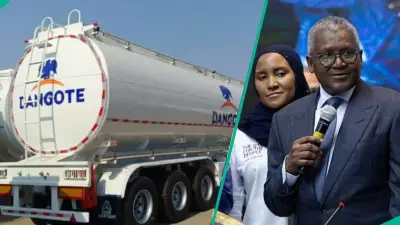
The Dangote Refinery in Lagos, the world's largest single-train refinery, has become a strategic buffer for Nigeria amid global supply chain strains, particularly the crisis in the Strait of Hormuz. Recent reports indicate the refinery has overtaken the United States in supplying jet fuel to Europe, marking a shift in Africa's role in global industrial flows. Instead of exporting crude and importing refined products, Nigeria now supplies refined value to major markets, enhancing economic stability, trade, and national confidence.
Planned Kenya Refinery Targets East African Integration
Dangote's intention to build a refinery in Kenya represents a significant continental milestone. A facility of that scale would serve the East African market, support aviation hubs in Nairobi, Kampala, Addis Ababa, Kigali, and Dar es Salaam, and provide reliable refined products for manufacturing, logistics, and agriculture. This investment would strengthen the African Continental Free Trade Area by creating industrial corridors that link regions through production, while expanding skilled employment and technical expertise across East Africa.
Political Economy Shift: Three Pillars of Development
Across Africa, sustainable development increasingly depends on productive capacity. Dangote's investments highlight three essential pillars: industrial capacity that turns raw materials into refined products at scale; long-term capital that builds assets supporting economic stability and regional trade; and human capital that trains engineers, technicians, and managers who drive industrial growth. This approach reflects a wider argument that Africa's future rests on building and producing, and on strengthening internal capability.
If Africa had 10 industrialists with Dangote's vision, the continent's economic landscape would be transformed. Multiple refineries would serve regional markets; steel and cement plants would support construction; fertiliser complexes would boost agriculture; petrochemical hubs would supply global markets; and integrated logistics networks would lower intra-Africa trade costs. The outcome would be millions of skilled jobs, stronger regional economies, and a more confident Africa able to shape its own development path.
Dangote Foundation: Blending Industry with Social Commitment
Alongside his industrial ventures, Dangote has built one of Africa's most active philanthropic institutions. The Dangote Foundation supports nutrition programmes, health interventions, disaster relief, and education initiatives across the continent. This blend of industrial ambition and social commitment reflects a model of development that is both economically productive and socially grounded, showing that industrial growth and humanitarian support can reinforce each other, strengthening communities while building national capacity.
Aliko Dangote's refinery in Lagos, his planned refinery in Kenya, and his wider industrial footprint represent more than business success. They offer a new vision of African development driven by productive capacity, long-term investment, and human capital. His work demonstrates that Africa's future will be shaped by those who build, invest, and develop the skills and institutions needed for sustained growth. Dangote is helping build a new African confidence, rooted in capability, ambition, and the steady rise of industrial power.
Wale Osofisan is a Nairobi-based governance and institutional-architecture strategist and director at Harlech Consultancy Services.