
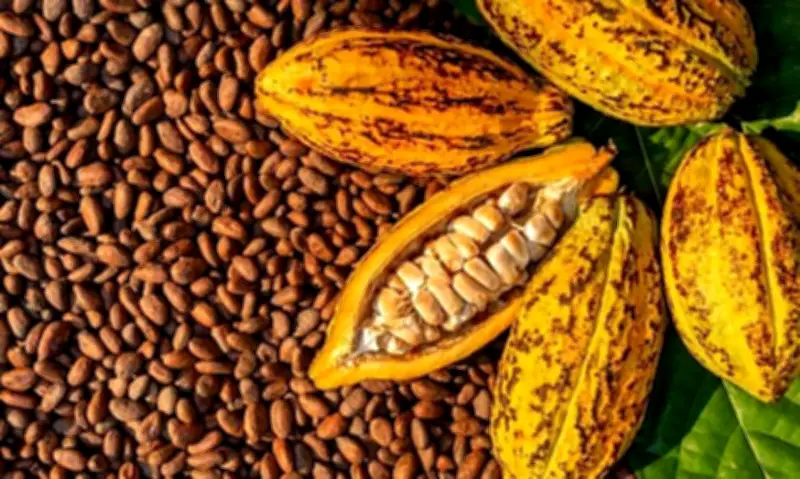
The Federal Government of Nigeria has renewed its call for increased local cocoa processing, advocating for an end to the export of raw cocoa beans. This push aims to capture greater economic value from the country's cocoa production and strengthen the domestic cocoa industry.
Government Stance on Value Addition
Speaking at a stakeholders' meeting in Abuja, the Minister of Agriculture and Food Security, Senator Abubakar Kyari, emphasized the need for cocoa processors to expand their capacity. He stated that the government is committed to supporting initiatives that will reduce the export of unprocessed cocoa beans, which currently accounts for a significant portion of Nigeria's cocoa output. According to Kyari, processing cocoa locally can generate more revenue, create jobs, and boost the nation's GDP.
“The era of exporting raw cocoa beans must end. We have the potential to process our cocoa and export finished or semi-finished products, which will fetch higher prices in the international market,” Kyari said. He assured stakeholders that the government would provide necessary incentives and an enabling environment for local processing.
Current State of Cocoa Production and Export
Nigeria is one of the world's largest cocoa producers, yet a large percentage of its cocoa beans are exported raw. This practice limits the country's earnings from the global cocoa market, where processed cocoa products like butter, powder, and liquor command higher prices. The Ministry of Agriculture has noted that increasing local processing capacity is a key priority under the current administration's agricultural transformation agenda.
Data from the National Bureau of Statistics shows that Nigeria exported approximately 200,000 metric tons of cocoa beans in 2024, with only a fraction processed locally. The government aims to reverse this trend by encouraging investments in processing facilities and technology.
Challenges and Opportunities
Cocoa processors face several challenges, including high energy costs, inadequate infrastructure, and limited access to finance. The minister acknowledged these hurdles and pledged government intervention through policy reforms and partnerships with development finance institutions. He also called on state governments to provide land and support for cocoa processing clusters.
The push for local processing aligns with the African Continental Free Trade Area (AfCFTA) agreement, which offers opportunities for Nigerian processed cocoa products to access larger markets across Africa. Industry experts believe that value addition could triple Nigeria's cocoa revenue within five years.
Stakeholder Reactions
Representatives of cocoa processing companies welcomed the government's stance but called for concrete actions. The President of the Cocoa Processors Association of Nigeria, Mr. Akinwumi Adesina, said, “We appreciate the government's commitment, but we need consistent policies, reliable power supply, and affordable credit to expand our operations.” He noted that many processors are operating below capacity due to these challenges.
Farmers also stand to benefit from local processing, as it could lead to stable prices and reduced post-harvest losses. The government has promised to support farmer cooperatives to improve bean quality and ensure a steady supply to processors.
Way Forward
The Federal Ministry of Agriculture plans to establish a Cocoa Value Chain Development Fund to provide low-interest loans for processors. Additionally, the ministry is working with the Nigerian Export Promotion Council to identify new markets for processed cocoa products. The government aims to achieve 50% local processing of cocoa beans by 2027, up from the current estimated 20%.
Senator Kyari concluded, “Our goal is to make Nigeria a global hub for cocoa processing. This will not only boost our economy but also improve the livelihoods of millions of cocoa farmers and their families.”




