
Federal Government Upgrades 150 Communities, Targets Sustainable Development Goals 11 and 6
The Federal Government has successfully upgraded more than 150 communities with essential basic amenities over the past two years through its urban renewal and slum upgrading initiatives. This effort is part of a strategic push to achieve Sustainable Development Goals (SDGs) 11, which focuses on sustainable cities and communities, and SDG 6, centered on clean water and sanitation.
Minister Dangiwa Announces Partnership with Water and Sanitation Society
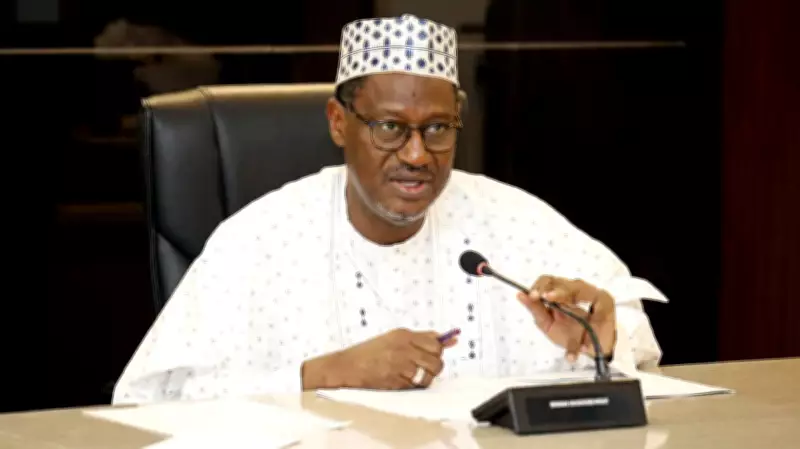
Arc. Ahmed Dangiwa, the Minister of Housing and Urban Development, disclosed this progress during a courtesy visit from the Society for Water and Sanitation (NEWSAN) at his office in Abuja. Dangiwa emphasized the ministry's commitment to exploring partnerships with NGOs like NEWSAN to strengthen advocacy for water, sanitation, and hygiene across Nigeria. He noted that NEWSAN's activities align closely with the government's goals, particularly in urban development and slum upgrading.
The minister detailed the range of amenities provided under these initiatives, including security measures, electricity, solar street lighting, drainages, roads, water, and sanitation facilities in urban areas. Additionally, the ministry has supplied micro-stores and other basic amenities where needed. "Our willingness to collaborate underscores the importance of data-driven planning and interventions," Dangiwa stated. "We are aiming to achieve SDG 11 by directly addressing SDG 6 through these comprehensive upgrades."
Budgetary Constraints and Legislative Support
Despite these achievements, Dangiwa acknowledged that budgetary constraints currently limit the ministry's interventions from covering the entire country. However, he expressed readiness to collaborate further with NEWSAN moving forward. The minister also highlighted the role of legislators in channeling constituency projects to the ministry, particularly in water and sanitation. "Out of every ten interventions we receive, more than 60 percent are directed toward water and sanitation," Dangiwa explained. "Legislators view this as a more impactful intervention compared to other projects like motorcycles."
He credited the Special Projects Unit (SPU) for actively delivering these interventions, with over 150 communities reached in the past two years. Other departments, such as the Urban and Regional Development Department and the Engineering Services Department, have also contributed through budgetary provisions and technical implementation. Dangiwa assured that the ministry will continue its efforts once budgetary allocations increase or with support from partners.
Documentation and Future Collaborations
The minister committed to ongoing collaboration with NEWSAN, including the exchange of ideas and sharing of relevant data. He announced plans to document projects before and after interventions to clearly demonstrate the impact of the ministry's work. Dr. Shuaib Belgore, the Permanent Secretary of the Ministry of Housing and Urban Development, reinforced this commitment, noting that the ministry is already addressing water and sanitation issues despite funding challenges.
Belgore welcomed the timeliness of NEWSAN's visit, seeing it as an opportunity to incorporate the construction of safe toilets in markets and other public places into the ministry's sanitation interventions. This aligns with broader efforts to improve public health and hygiene standards.
NEWSAN's Advocacy and National Progress
Earlier in the meeting, Mr. Benson Attah, the National Coordinator of NEWSAN, commended the ministry's efforts in providing shelter and partnering to achieve safe water and improved sanitation goals. Attah works with community-based organizations and NGOs to ensure every citizen has access to these essentials. He recalled the 2018 national state of emergency on water, sanitation, and hygiene declared by the former administration, alongside Public Order 009, which prohibits open defecation under the Clean Nigeria campaign.
Attah explained that states were assigned to implement open defecation-free zones in line with Nigeria's commitment to SDG 6 and regional obligations under the Africa Union's water and sanitation framework. However, he noted that only Jigawa and Katsina States have so far achieved Open Defecation Free status nationwide. Urging the ministry to use its influence to promote this in other zones, Attah proposed including provisions for water, sanitation, and hygiene in contracts with contractors to ensure sustained progress.
This collaborative effort between the Federal Government and NEWSAN highlights a dedicated approach to urban renewal and sustainable development, aiming to transform communities and meet critical global goals.




