
The International Real Estate Federation (FIABCI) has called for the urgent adoption of integrated development frameworks, including Public-Private-People-Policy-Partnerships (5P), to address Nigeria’s deepening housing crisis. Experts urged policymakers to stop viewing housing as a welfare issue and instead recognize it as a critical foundation for economic participation, improved health outcomes, social stability, and human dignity.
FIABCI President Highlights Systemic Failures
FIABCI Nigeria Chapter President Akin Opatola made the call during a presentation at the FIABCI Spring Symposium held at the United Nations headquarters in New York City. The global forum brought together policymakers, real estate leaders, and development experts, including UN-Habitat Deputy Director Remy Sietchiping, FIABCI Secretary General Narek Arakelyan, and other international figures.
Speaking on the theme “Nigeria and the global housing crisis: structural gaps, practical fixes,” Opatola noted that Nigeria’s housing deficit currently stands at about 28 million units and could more than double by 2050. He added that over 60 percent of urban residents already live in substandard or informal housing. He emphasized that the crisis is not merely about supply but a systemic failure involving land administration, financing, and construction costs, stressing that what is missing is policy coherence and institutional will to match available capital with unmet need at the required speed.
Land Administration Challenges
Opatola identified three key structural failures driving the crisis. On land administration, he criticized the Land Use Act of 1978, noting that it vests land ownership in state governors and makes access to title cumbersome. He said more than 90 percent of land in Nigeria lacks a formal title, rendering it unusable as collateral. “No collateral means no mortgage. No mortgage means housing becomes a cash transaction available only to high-income earners,” he said.
Financing and Construction Hurdles
On financing, Opatola noted that Nigeria’s mortgage system remains one of the weakest globally, with mortgage penetration below 1 percent of GDP. Interest rates of 25 to 30 percent make homeownership inaccessible to most citizens. He also highlighted construction challenges, including import dependency, foreign exchange volatility, and infrastructure deficits in power and transport, which continue to drive up housing costs.
Government Efforts and Funding Gaps
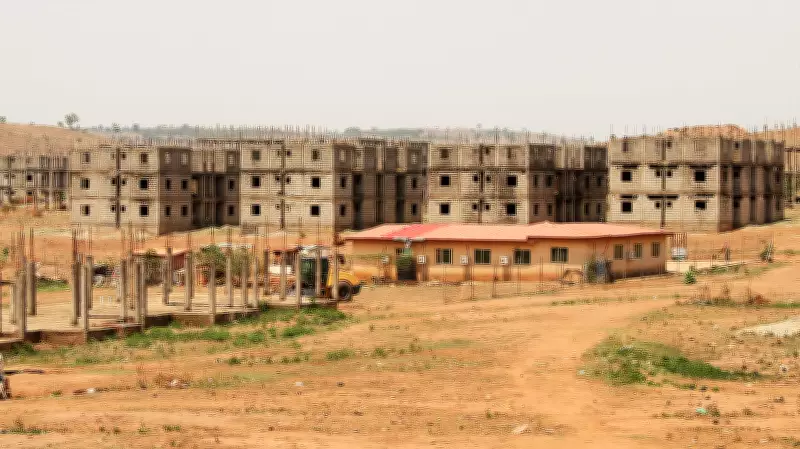
Opatola acknowledged ongoing government efforts, including the Renewed Hope Cities and Estates Programme, which aims to deliver 50,000 housing units nationwide. He said over 10,000 units are currently under construction across 14 locations. He also highlighted the MOFI Real Estate Investment Fund (MREIF), a N250 billion Series 1 issuance targeting N1 trillion, designed to provide mortgages at about 9.75 percent interest—significantly lower than commercial bank rates. However, he noted that the 2025 housing budget of N11.5 billion for 20,000 units reflects the scale of the structural funding gap.
Proposed Reforms
To bridge the gap, Opatola called for sweeping reforms, including digitization of land administration, faster title registration processes, and the introduction of strata title legislation to enable large-scale apartment ownership. He also recommended targeted tax incentives for mass housing developers, infrastructure support for housing estates, and properly structured Public-Private Partnerships that share risk between government and investors. He further urged international institutions such as UN-Habitat, the World Bank, and the International Finance Corporation (IFC) to support land reforms and help mobilize domestic pension funds into housing finance. According to him, “informality in Nigerian cities is not a cultural preference but the rational outcome of decades of policy failure.”
Global Collaboration Needed
FIABCI World President Antonio Campagnoli noted that housing challenges across countries are similar, including affordability constraints, supply shortages, inequality, and policy misalignment. He called for stronger collaboration models such as the 5P framework, where governments, private investors, institutions, and communities jointly develop scalable housing solutions. Campagnoli also stressed the need for clearer measurement of social impact in housing delivery, arguing that better data is essential for aligning capital with real housing needs. He described housing as social infrastructure, noting that bridging financial sustainability with measurable social outcomes remains a key global challenge.




