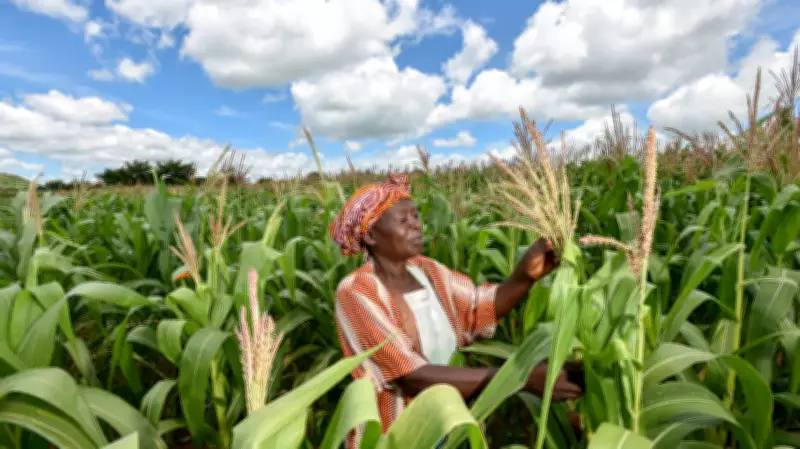
Food Security and Farm Reforms Take Center Stage at Vanguard Economic Discourse
Nigeria's agriculture sector, which contributes between 23 and 24 percent to the Gross Domestic Product and employs approximately 60 to 70 percent of the labor force, is exhibiting early signs of recovery after enduring years of structural challenges. However, experts and government officials caution that these gains remain fragile and could easily be reversed without sustained investment and comprehensive reforms. Stakeholders emphasized this point at the 2026 Vanguard Economic Discourse held in Lagos, where they unanimously agreed that food security is not merely a social concern but is central to economic stability and investor confidence.
Opening Remarks Highlight Economic Priorities
In his opening remarks, Vanguard Editor-in-Chief, Eze Anaba, stated that food affordability serves as the clearest measure of whether economic policies are effectively working. He argued that an economy where citizens cannot afford basic food items cannot be considered to be performing adequately. This set the tone for discussions focused on actionable solutions to bolster Nigeria's agricultural landscape.
Government Interventions Show Progress but Face Challenges
The Minister of Agriculture and Food Security, Abubakar Kyari, represented by Engr. Maruf Ajenifuja, reported positive developments, noting that prices of key food items had dropped by up to 50 percent, while food inflation declined to 8.98 percent in January—marking the first single-digit rate in a decade. He attributed these improvements to government interventions, including the National Agricultural Growth Scheme, which has supported over 622,000 farmers and improved yields by up to 30 percent in participating states. Additionally, he cited the distribution of more than two million bags of fertilizer to over one million farmers as a key factor in this progress.
However, Ajenifuja issued a stark warning that the recovery is not yet secure. He highlighted that fertilizer remains the biggest cost for farmers, priced at about N60,000 per bag, making it unaffordable for many smallholder farmers. Without continued support, he noted, yields could drop from three to four metric tonnes per hectare to about 1.5 metric tonnes, potentially reversing recent gains and undermining food security efforts.
FAO Representative Calls for Systemic Improvements
In his keynote address, the Food and Agriculture Organisation (FAO) Representative to Nigeria, Hussein Gadain, pointed out that the country's food system is under significant pressure from insecurity, climate shocks, and macroeconomic challenges. He explained that these factors are reducing household incomes, increasing malnutrition risks, and weakening social stability, with broader implications for the economy. Gadain called for increased and better-targeted investment in agriculture, improved rural security, climate-resilient farming systems, stronger data for policymaking, and better alignment between agricultural training and industry needs.
He emphasized, "Food security relies on availability, access, utilisation and stability. It is not achieved on the farm alone," and warned that "we lose up to 70 percent of farm produce" due to inefficiencies in the supply chain, highlighting the need for holistic reforms beyond just farm-level interventions.
Livestock Sector and Broader Reforms Discussed
The Minister of Livestock Development, Alhaji Idi Mukhtar Maiha, highlighted the livestock sub-sector as a major but underutilized economic asset. Panellists agreed that this sector holds significant potential for boosting rural income and improving nutrition, but it lacks the necessary policy support for large-scale development. Stakeholders stressed that reforms would yield limited results if farmers continue to abandon their land due to violence and insecurity.
They also called for improved access to credit, faster rural infrastructure development, and greater youth participation across the agricultural value chain to ensure sustainable growth and resilience in the face of ongoing challenges.
Platform for Dialogue Continues to Evolve
The Vanguard Economic Discourse, now in its ninth year, remains a key platform for dialogue between the public and private sectors on economic policy, fostering discussions that aim to shape Nigeria's agricultural future and overall economic health. This year's event underscored the urgent need for coordinated efforts to secure food production and support farmers in a volatile environment.