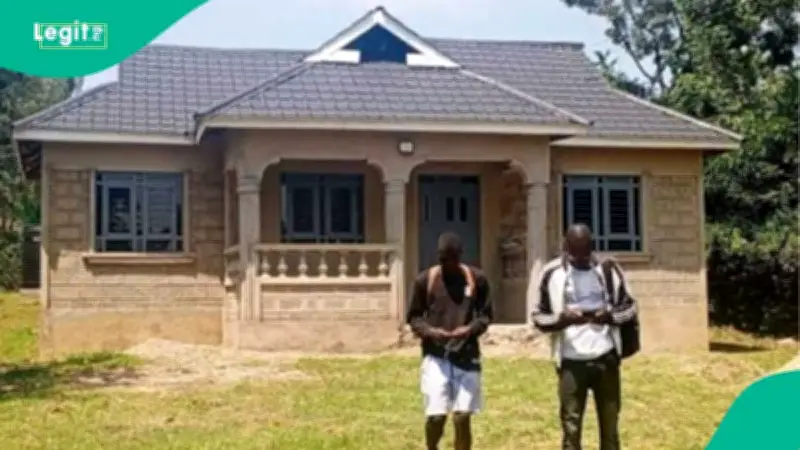
Building a house on a monthly salary of N300,000 to N500,000 in Nigeria is possible, but it requires careful planning, patience, and financial discipline, according to a report by Legit.ng. The report, published on August 21, 2026, outlines strategies such as consistent saving, choosing affordable locations, starting with modest designs, and building in phases. It also emphasizes creating additional income streams and avoiding unnecessary financial pressure to make homeownership more achievable.
Understanding Current Construction Costs
Legit.ng notes that 2026 market estimates show how expensive construction has become. A 50kg bag of cement can cost between N9,500 and N13,000, depending on location, brand, and supply. In Lagos, a 9-inch block costs around N750, while a 12mm reinforcement bar can cost about N9,800 per length. These figures highlight the financial challenge of building in Nigeria's current economic climate.
For perspective, the report states that building a standard two-bedroom bungalow in Lagos could cost between N25 million and N35 million, excluding land. Costs may be lower in other parts of the country, but completing a house quickly on a N300,000 to N500,000 salary remains unrealistic. The smarter approach, according to the report, is to build gradually and sustainably.
Creating a Dedicated House Fund
The report suggests that someone earning N300,000 monthly could aim to save between N30,000 and N50,000 each month, depending on expenses such as rent, transportation, food, and family responsibilities. For someone earning N500,000, saving between N75,000 and N125,000 monthly may be possible with disciplined budgeting. At N100,000 a month, savings would reach N1.2 million in one year and N6 million in five years, excluding investment returns or additional income.
While this may not be enough to complete a house, it can cover important stages such as land documentation, professional fees, foundation work, blocks, or roofing materials. The report advises keeping the house fund separate from regular expenses and channeling bonuses, salary increases, freelance earnings, and other legitimate additional income into it to accelerate the project.
Starting Small and Building in Stages
The report emphasizes that a salary earner does not have to begin with a four-bedroom duplex or an elaborate three-bedroom bungalow. A modest one- or two-bedroom bungalow designed for future expansion can be a more realistic starting point. Construction can be divided into stages: land purchase and documentation, architectural and engineering designs, foundation, blockwork and structural work, roofing, plumbing and electrical work, plastering, doors and windows, and finally painting, flooring, and other fittings.
This phased approach allows construction to pause at a safe stage and resume when more funds become available. However, the report warns that phased construction should never mean compromising structural integrity. A qualified professional should determine the appropriate foundation, reinforcement, and structural design for the site.
Choosing Location and Building Within Income
Location can significantly affect construction costs. Buying land and building in prime areas of Lagos or Abuja is generally more expensive than in smaller cities, towns, and developing communities. Recent estimates put the cost of a standard two-bedroom bungalow in Lagos at between N25 million and N35 million, excluding land. In some states outside Lagos and Abuja, a decent two- or three-bedroom bungalow may cost around N20 million, although actual costs vary depending on location, specifications, and materials.
Affordability should not come at the expense of due diligence. Before buying land, the report advises confirming its ownership, title, planning requirements, and development status to avoid costly disputes. The biggest lesson for a salary earner is that building a house is a marathon, not a race. Someone earning N300,000 should not take on the burden of building a N50 million property simply because friends or relatives are constructing bigger homes. A better strategy is to buy legitimate land when financially possible, save consistently, prepare a realistic bill of quantities, and complete one construction stage at a time.
Ultimately, building a house on a N300,000 to N500,000 salary is possible, but it requires patience, realistic expectations, and financial discipline. Starting with a modest design, choosing an affordable location, developing additional income streams, and building in phases can make homeownership more achievable without placing unsustainable financial pressure on the household, according to Legit.ng.