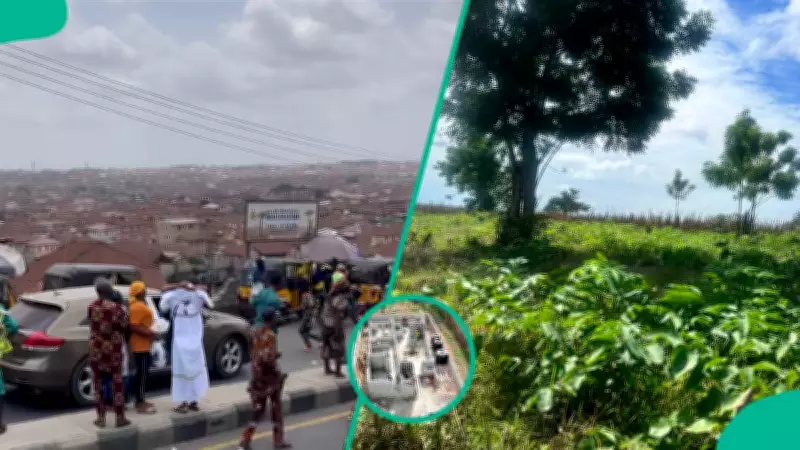
Ibadan's Urban Growth Intensifies Biodiversity and Housing Pressures
Ibadan, Oyo State, is experiencing a severe strain on its biodiversity and forest ecosystems as its population surges, fueled by a national housing affordability crisis. With a growth rate of 3.15% and a population nearing four million, this sub-Saharan African city faces rapid urban expansion that threatens natural resources and environmental sustainability.
Housing Crisis Drives Migration to Ibadan
Rising rent costs across Nigeria are pushing many residents toward homeownership, with Ibadan emerging as a preferred destination due to relatively lower land prices. Ayobami Lekan, a filling station manager in Lagos, exemplifies this trend. He commutes weekly to his family home in Ajia, Ibadan, after finding Lagos rents unsustainable. "I was paying N2.4 million per annum for a self-contained apartment in Lagos. With a wife and two children, it was not conducive," Lekan explained. "I borrowed money, got land in Ibadan, and built my house gradually."
According to a 2025 report by The Punch, the median rent for a two-bedroom apartment in many Nigerian cities has climbed to about N2.5 million per year, while the minimum wage remains at N70,000 monthly. This affordability gap is accelerating internal migration to areas like Ibadan, where hotspots such as Ayegun Oleyo and Omi-Adio are seeing increased real estate development.
Population Inflows and Infrastructure Development
Housing expert Kayode Sadiq notes that major road construction projects in Ibadan are catalyzing relocation. "Some areas are seeing increased migration due to road constructions. This is a major catalyst for relocation," Sadiq told Legit.ng. Ibadan is projected to reach a population of 8.7 million by 2050, ranking 22nd in Africa's Urbanisation Dynamics 2025 report by organizations like the AfDB and OECD/SWAC.
The State Performance Index 2025 identified Ibadan as the most preferred destination for Nigerians seeking to relocate within the country. This influx is driving a housing boom, but it comes at a significant environmental cost.
Biodiversity Loss and Deforestation Concerns
Ibadan's urban expansion is leading to substantial biodiversity loss, with deforestation accelerating due to housing development. The Oyo State government is currently clearing the 52-hectare Ogunpa Forest Reserve behind Agodi Gardens to develop a residential estate, contradicting environmental conservation goals. Trees are being cut indiscriminately, illegal logging persists, and land-use changes are widespread.
Forests in Ibadan are critical for terrestrial biodiversity, providing water, livelihoods, and climate regulation. They support over 8,000 plant species with medicinal potential, used by traditional healers to treat ailments like malaria and diabetes. However, the International Union for Conservation of Nature (IUCN) has classified 18 medicinal plant species in Nigeria as critically endangered and 146 as threatened, with climate change, deforestation, and urbanization accelerating their depletion.
Ecological Impacts and Human Activities
Population growth is a clear driver behind these declines. Human activities, including housing development, increase fire risks, pollution, and alter nutrient cycles. Introducing non-native species and supporting domestic predators exacerbate these effects. Removing natural land cover creates barriers to wildlife movement, leading to fragmented landscapes where remaining natural areas are too small to sustain viable populations of native species, resulting in declines in wildlife abundance and diversity.
Femi Obadun, a top public servant in Ondo State, warned, "Protecting the forest means protecting ourselves. When we destroy the forest, we destroy humanity." The United Nations' Food and Agriculture Organisation (FAO) has noted that population pressure and financial motivation are major threats to forest conservation in Africa.
As Ibadan continues to grow, balancing urban development with environmental preservation will be crucial to mitigate biodiversity loss and ensure sustainable living conditions for its residents.