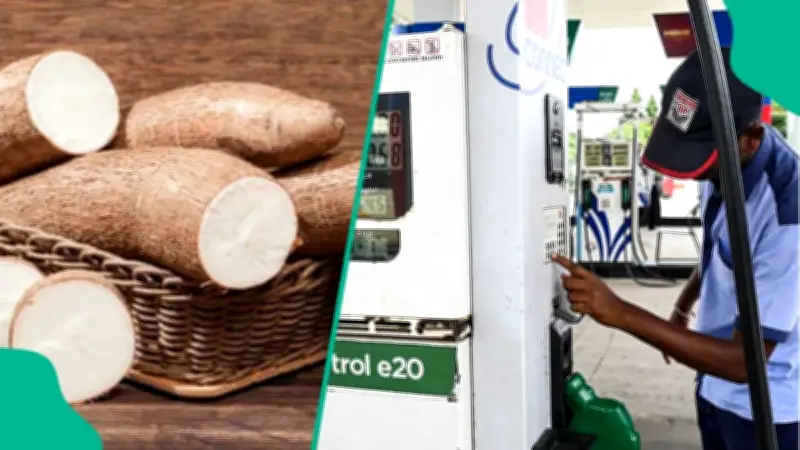
The Major Energies Marketers Association of Nigeria (MEMAN) has called for the accelerated adoption of cassava-based ethanol in petrol blending, arguing that the initiative could lower petrol production costs, expand opportunities for local farmers, and strengthen Nigeria's agricultural value chain.
The association made the appeal during a summit held in Lagos in partnership with the US Grains and Bioproducts Council, where industry experts discussed the future of ethanol-blended fuels and their potential impact on Nigeria's economy and energy sector.
E10 Fuel Could Unlock Demand for Cassava Ethanol
Speaking at the event, MEMAN's Executive Secretary, Clement Isong, said Nigeria's downstream petroleum industry was gradually preparing for the introduction of E10 fuel, a blend containing 90 per cent petrol and 10 per cent ethanol.
According to him, widespread adoption of E10 would significantly increase demand for locally produced ethanol, creating fresh opportunities for cassava farmers, agro-processors, and investors.
He explained that one of the objectives of the summit was to educate stakeholders, particularly farmers, about the growing market potential for cassava-based ethanol.
"We want farmers to understand that significant opportunities are emerging for cassava cultivation and ethanol production," Isong said.
He revealed that Nigeria currently produces roughly 150 million litres of cassava-derived ethanol annually, a figure that falls far short of the estimated two billion litres that would be needed if E10 fuel becomes the national standard.
Isong noted that bridging this supply gap could stimulate investments across the agricultural and manufacturing sectors while creating jobs and boosting rural incomes.
Building a Reliable Ethanol Supply Chain
Despite the promising outlook, Isong stressed that the transition to ethanol-blended petrol would only succeed if Nigeria develops a dependable ethanol supply chain capable of meeting future demand.
He said MEMAN would continue collaborating with technical experts, regulators, and other stakeholders to ensure vehicles, fuel infrastructure, and industry standards are adequately prepared for the gradual rollout of E10 petrol.
Experts Highlight Fuel Quality and Economic Benefits
Also speaking at the summit, ethanol technical consultant and adviser to the US Grains and Bioproducts Council, Rowena Torres-Ordóñez, explained that E10 consists of 10% ethanol blended with 90 per cent petrol by volume.
She noted that ethanol possesses a higher octane rating than conventional petrol, allowing it to improve the performance and quality of blended fuel.
Torres-Ordóñez added that ethanol is free from sulphur, benzene, and aromatic compounds, making it a cleaner component that could contribute to better air quality and improved public health.
Beyond its environmental advantages, she said ethanol blending offers significant economic value by supporting local industries, creating employment opportunities, and enhancing Nigeria's energy security through reduced dependence on imported petroleum-based fuel additives.
She also presented an analysis indicating that ethanol blending could deliver economic gains of between ₦72 and ₦93 per litre, depending on prevailing tariff structures and Value Added Tax policies. According to her, the improvement in fuel octane alone contributes an estimated ₦63 per litre of the projected benefit.
Path Forward for Nigeria's Energy Mix
Industry participants concluded that expanding Nigeria's local ethanol industry would create a sustainable market for cassava farmers, encourage greater investment in agro-processing, and help diversify the country's energy mix while reducing reliance on conventional petroleum fuel components.