
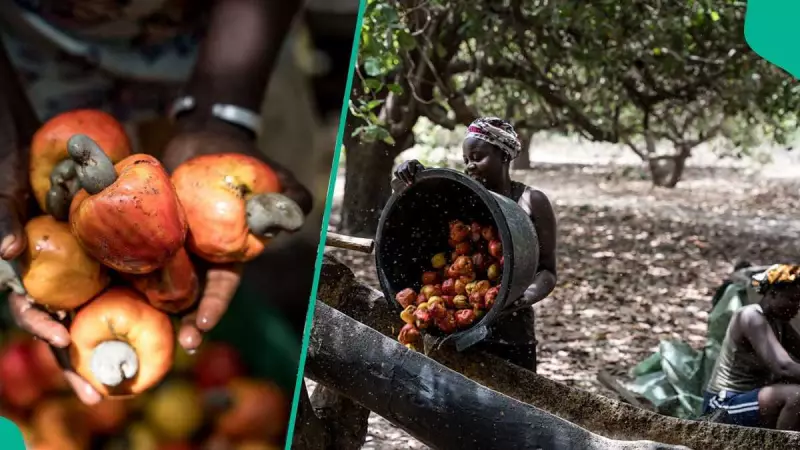
Nigeria's Cashew Exports Soar to 600,000 Metric Tonnes Annually
The National Cashew Association of Nigeria (NCAN) has announced a significant milestone, revealing that Nigeria's cashew exports have increased to approximately 600,000 metric tonnes per annum. This growth marks a substantial boost for the country's non-oil export sector, highlighting the industry's expanding role in the national economy.
NCAN President Highlights Industry Transformation
Dr Joseph Ajanaku, the National President of NCAN, disclosed this information during the Nigeria Cashew Day 2026 event held in Abuja. He emphasised that this progress reflects years of coordinated efforts by stakeholders to enhance packaging, quality, and global market acceptance of Nigerian cashew nuts. "The cashew industry is assuming a new dimension from where we used to be in 2001. From exporting less than 200 metric tonnes, we have grown to close to 600,000 metric tonnes of cashew being exported out of the country," Ajanaku stated.
Push to Regain Global Leadership Position
Despite the impressive export figures, NCAN is actively working to reclaim Nigeria's position as the world's leading cashew producer. Ajanaku pointed to the country's favourable land, climate, and population advantages as key factors supporting this ambition. "Nigeria has the land, the weather and everything working for us to be number one. What this forum has done is to energise our resolve to increase cashew production across the country," he explained. As part of this strategy, the association has intensified nationwide cashew tree planting initiatives to support long-term expansion.
Challenges and Digital Solutions
The NCAN president identified illegal activities by some foreign buyers as a major challenge, undermining accurate production and export data. "Some foreigners buy cashew from farms and export it without filling the Nigeria Export Proceeds Form because they do not want to repatriate the proceeds. That is why we cannot get accurate figures of what we truly produce," he noted. To address this issue, NCAN has introduced the NCAN Farmers' Mapper, a digital system designed to track farms, production volumes, and export destinations, aiming to improve transparency and data accuracy.
Call for Government Support and Reforms
NCAN has urged the Federal Government under President Bola Ahmed Tinubu to introduce a Special Agro Processing Loan (SAPL) with an interest rate of 10 per cent. This initiative is intended to enable farmers and processors to compete more effectively on the global stage. "If farmers can access such loans, they will be able to compete favourably because Nigeria already has a big advantage," Ajanaku asserted. Additionally, stakeholders are advocating for stronger policies to enhance local value addition and reduce reliance on raw exports.
African Leaders Advocate for Local Processing
At the same event, Mr Ibrahim Sanfo, President of the African Cashew Alliance (ACA), called on African governments to prioritise local processing over exporting raw cashew. He highlighted that processing levels are currently below 10 per cent, while 80 to 90 per cent of cashew is exported in raw form. "Without strong government policies and funding, we cannot change this," Sanfo stressed, noting that increased processing would boost local consumption, job creation, and value retention across the continent.
Economic Impact and Future Prospects
Mr Sherif Balogun, National President of the Federation of Agricultural Commodities Association of Nigeria (FACAN), underscored the growing contribution of cashew to Nigeria's economy. He reported that non-oil exports have risen from about $5.7 billion to $6.1 billion this year, with cashew alone contributing over $450 million. Balogun added that Nigeria currently processes only 20 to 30 per cent of its cashew output, urging improved coordination among farmers, processors, exporters, and government agencies. "With proper planning and value addition, the cashew sector can do much more in the next five years," he concluded.




