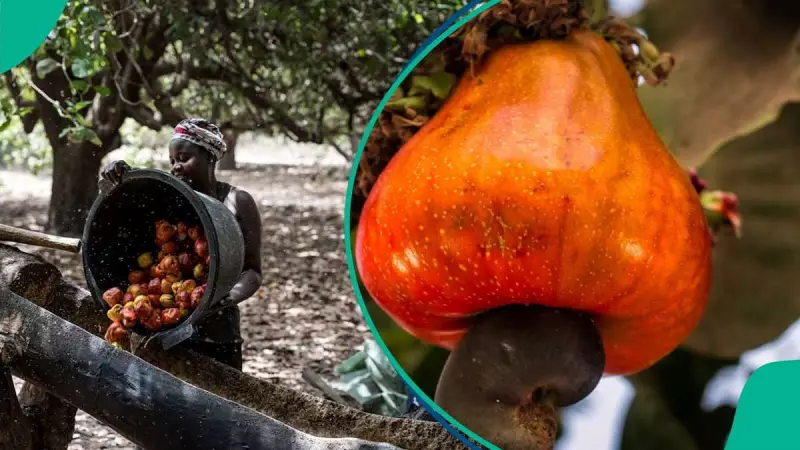
Nigeria's cashew industry has achieved a significant milestone by generating over $400 million in annual export earnings, contributing substantially to the country's non-oil revenue streams. This impressive financial performance was highlighted during the recent 4th Nigeria Cashew Day event held in Abuja, where industry leaders gathered to assess the sector's progress and challenges.
Strong Export Performance Masks Processing Deficiencies
According to Sheriff Balogun, President of the Federation of Agricultural Commodity Associations of Nigeria (FACAN), official data confirms consistent growth in Nigeria's non-oil exports, with agricultural commodities like cashew playing a pivotal role. The country's non-oil exports have increased from approximately $5 billion to $6.1 billion this year, with cashew exports alone accounting for more than $400 million from over 300,000 tonnes shipped internationally.
Despite these encouraging figures, stakeholders emphasize that the industry is operating well below its true potential. Balogun revealed that Nigeria currently processes only about 20 to 30 percent of its cashew output locally, meaning the majority of the valuable commodity is exported in raw form without significant value addition.
The Untapped Potential of Local Processing
The limited local processing capacity represents a substantial missed economic opportunity. Industry experts estimate that deeper value addition through comprehensive processing could increase revenue by more than five times while simultaneously creating thousands of employment opportunities across the value chain.
Balogun stressed that improved planning and strategic investment could significantly boost both output and earnings in the coming years. He called for more factories capable of handling advanced processing stages including roasting, packaging, and the production of derivative products such as cashew milk and cashew oil.
Domestic Consumption Remains Critically Low
Another major challenge facing the industry is the extremely low domestic consumption of cashew products. Ibrahim Sanfo, President of the African Cashew Alliance, noted that Africa remains the world's largest producer of cashew but consumes less than one percent of its total output. This pattern holds true for Nigeria, where domestic consumption represents a negligible portion of production.
Sanfo emphasized that low processing capacity, estimated at under 10 percent across the African continent, remains a fundamental obstacle to growth. Most African countries, including Nigeria, export between 80 and 90 percent of their raw cashew nuts, missing opportunities for value addition and local market development.
Government Support and Strategic Vision
Industry leaders are advocating for stronger government support to expand local processing capabilities and stimulate domestic consumption. Joseph Ajanaku, President of the National Cashew Association of Nigeria, expressed confidence in Nigeria's ability to reclaim its former position as a leading global cashew producer, citing the country's abundant land resources, favorable climate conditions, and large population as competitive advantages.
The need for strategic intervention is underscored by broader economic data. According to a report by the International Trade Centre, Nigeria's untapped earnings from commodities including cashew, cocoa, and urea are worth approximately $3.9 billion. While Nigeria remains a net exporter of cocoa, this cash crop alone holds an unrealized export value of $749 million for the country.
The cashew industry's current performance, while financially significant, represents only a fraction of what could be achieved through comprehensive value addition and market development. With proper investment in processing infrastructure and strategic promotion of domestic consumption, Nigeria's cashew sector could transform into a major economic driver, creating substantial employment opportunities while significantly boosting export earnings.