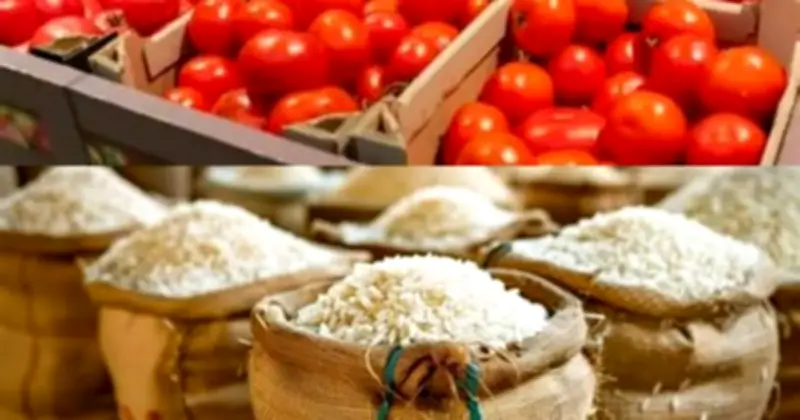
The Organisation for Technology Advancement of Cold Chain in West Africa (OTACCWA) has warned that Nigeria is at risk of severe supply shortages across key staple foods, including rice, tomatoes, peppers, and onions, within the next three months. The alert came from the President of OTACCWA and Nigeria Country Director for the World Agriculture Forum, Alexander Isong, during a press briefing in Lagos.
Declining Rice Production and Cultivated Land
National rice output is projected to fall by six per cent to 8.3 million tonnes, while cultivated land dedicated to rice has dropped by seven per cent to 4.2 million hectares. This trend mirrors recent estimates from the United States Department of Agriculture (USDA), which indicated a five per cent year-on-year drop. Additionally, tomato scarcity is expected to persist until the late harvest cycle begins in October. Other major grains, such as maize, sorghum, and millet, face supply tightness due to lower planting figures. Meanwhile, wheat dependency remains steep, with Nigeria expected to import roughly 7.2 million tonnes to meet domestic consumption demand.
Rising Transportation Costs and Logistics Crisis
A primary contributor to the impending shortage is the sharp rise in logistics overhead driven by fuel costs. Freight charges to move one tonne of grain from Kano to Lagos escalated from ₦45,000 to ₦70,000, while transport fares on several interstate transit routes have doubled or tripled. This increase is eroding agricultural gains recorded earlier in the year before they reach consumer markets.
Post-Harvest Losses Due to Cold-Chain Deficit
Compounding the problem is Nigeria's deficit in cold-chain infrastructure. The country continues to lose between 30 per cent and 50 per cent of its harvested perishable produce before it gets to market. Less than five per cent of food in Nigeria is currently transported under temperature-controlled conditions, resulting in massive spoilage during long-distance haulage. This inefficiency exacerbates supply tightness and drives up prices for consumers.
Insecurity Displaces Farmers
Furthermore, insecurity across major food-producing zones in Northern Nigeria has displaced thousands of farmers, preventing safe access to agricultural fields. This ongoing violence disrupts planting and harvesting cycles, further reducing the available food supply.
Proposed Solutions to Avert Crisis
To avert widespread shortages, OTACCWA urged coordinated action from federal and state governments, private investors, and development partners. Recommended measures include expanding cold storage facilities, setting up pre-cooling aggregation centers near farm hubs, improving rural road networks, and leveraging rail freight for bulk produce transit. Isong also stressed the urgent need to guarantee security in farming belts and distribute improved seeds, fertilizers, and irrigation support to farmers ahead of the upcoming planting cycle.
"If we reduce post-harvest losses, improve logistics, secure farming communities, and support farmers, we can reduce shortages and stabilize food prices," Isong concluded.