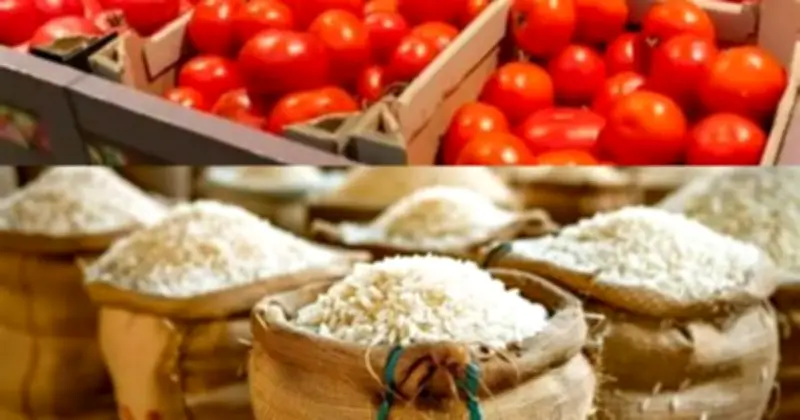
Warning of impending staple food crisis
The Organisation for Technology Advancement of Cold Chain in West Africa (OTACCWA) has warned that Nigeria risks severe supply shortages of rice, tomatoes, peppers, onions, and other staple foods within the next three months. The alert, delivered by OTACCWA President and Nigeria Country Director for the World Agriculture Forum, Alexander Isong, in Lagos, cites a combination of declining farm production, post-harvest losses, soaring transportation costs, and persistent rural insecurity as key drivers.
Declining rice production and land use
National rice output is projected to fall by six percent to 8.3 million tonnes, while cultivated land dedicated to rice has dropped by seven percent to 4.2 million hectares. This trend mirrors recent estimates from the United States Department of Agriculture (USDA), which indicated a five percent year-on-year decline. Additionally, tomato scarcity is expected to persist until the late harvest cycle begins in October. Other major grains such as maize, sorghum, and millet also face supply tightness due to lower planting figures.
Heavy reliance on wheat imports
Nigeria's dependence on imported wheat remains steep, with the country expected to import roughly 7.2 million tonnes to meet domestic consumption demand. The warning highlights that agricultural gains recorded earlier in the year are being erased before reaching consumer markets, exacerbating food inflation for millions of households already struggling with high living costs.
Escalating transport costs
A primary contributor to the looming shortage is the sharp rise in logistics overhead driven by fuel prices. Freight charges to move one tonne of grain from Kano to Lagos have escalated from ₦45,000 to ₦70,000, while transport fares on several interstate transit routes have doubled or tripled. These increases are passed on to consumers, further squeezing household budgets.
Post-harvest losses and infrastructure deficit
Compounding the problem is Nigeria's deficit in cold-chain infrastructure. The country continues to lose between 30 percent and 50 percent of its harvested perishable produce before it reaches markets. Less than five percent of food in Nigeria is currently transported under temperature-controlled conditions, resulting in massive spoilage during long-distance haulage. This inefficiency not only reduces the quantity of available food but also drives up prices for what remains.
Impact of insecurity on farming communities
Insecurity across major food-producing zones in Northern Nigeria has displaced thousands of farmers, preventing safe access to agricultural fields. This disruption has led to reduced planting and harvesting, further tightening supply. The combination of insecurity and infrastructure gaps threatens to undo any progress made in boosting agricultural output earlier in the year.
Proposed solutions and urgent actions
To avert widespread shortages, OTACCWA urged coordinated action from federal and state governments, private investors, and development partners. Recommended measures include expanding cold storage facilities, setting up pre-cooling aggregation centers near farm hubs, improving rural road networks, and leveraging rail freight for bulk produce transit. Isong also stressed the urgent need to guarantee security in farming belts and distribute improved seeds, fertilizers, and irrigation support to farmers ahead of the upcoming planting cycle.
"If we reduce post-harvest losses, improve logistics, secure farming communities, and support farmers, we can reduce shortages and stabilize food prices," Isong concluded.