
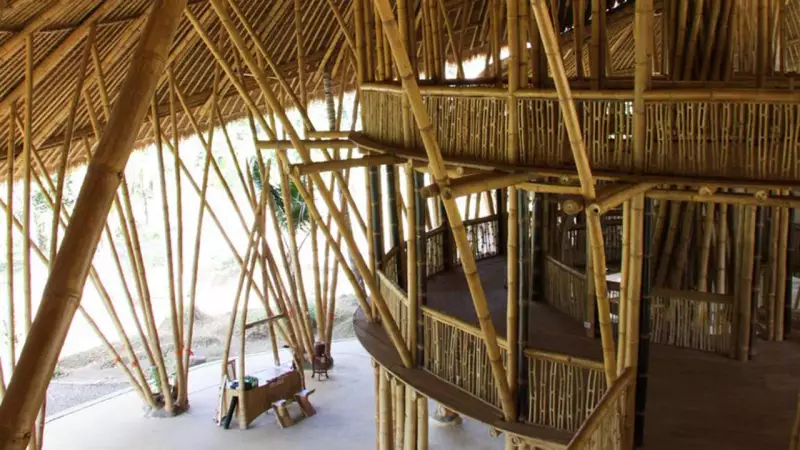
Federal Government Pushes Bamboo as Construction Solution
The Federal Ministry of Science and Technology has proposed an ambitious plan to promote bamboo as a mainstream construction material for affordable housing across Nigeria. This initiative aims to address the country's estimated 22 million housing deficit through building durable, low-cost smart houses for low and medium-income earners.
Speaking at a one-day Capacity Building Workshop in Abuja, the Permanent Secretary of the Federal Ministry of Innovation, Science and Technology, Mrs Esuabana Asanye, emphasized that adopting bamboo for housing construction would promote environmental sustainability while ensuring the construction process aligns with adaptability principles.
Nigeria's Housing Crisis in Numbers
The housing situation in Nigeria presents alarming statistics. Current market prices show a two-bedroom flat priced between N62 million and N180 million, while studio apartments and one-bedroom units range from N20 million to N42 million. This affordability crisis has forced approximately 70% of Nigerians to live in informal settlements.
Major cities like Lagos experience massive migration, with at least 600,000 people moving to the city yearly without plans to return. Many Nigerians have resorted to living in slums, under bridges, or in uncompleted buildings due to the severe housing shortage.
The crisis is exacerbated by rapid urbanization, high construction costs, dependence on imported materials, poor infrastructure, poverty, unaffordable mortgages, lack of land access, and systemic corruption.
Bamboo's Potential and Global Precedents
Bamboo grows abundantly across Nigeria, particularly in the South-East, South-South and Middle Belt regions. Unlike traditional hardwoods that take decades to mature, bamboo reaches harvestable strength within three to five years, making it one of the fastest renewable building resources available.
Globally, countries have successfully demonstrated bamboo's viability in construction. The International Network for Bamboo and Rattan (INBAR) has documented modern engineered bamboo products including laminated beams, panels, and plybamboo that meet structural standards for low-rise buildings.
In Colombia and Costa Rica, entire neighborhoods have been built using Guadua bamboo, while Indonesia and the Philippines have implemented bamboo in schools, community centers, and social housing projects. Even economic powerhouses like China and India are investing significantly in bamboo research and building codes.
Expert Concerns and Implementation Challenges
Despite bamboo's potential, stakeholders remain cautious about its large-scale adoption in Nigeria. Dr Victor Oyenuga, former President of the Nigerian Institution of Structural Engineers (NIStrucTE), stressed that government efforts must prioritize strong, fully matured bamboo and establish dedicated plantations to avoid scarcity and price inflation.
Kunle Awobodu, former President of the Nigerian Institute of Building (NIOB), noted Nigeria's history of failing to implement alternative construction technologies, citing stabilised clay blocks as an example that never moved beyond experimental stages.
Key challenges include the absence of bamboo in Nigeria's building codes, limited expertise in bamboo construction techniques, concerns about insect and fungal attacks, and the need for public acceptance. Many Nigerians still perceive bamboo as a material for temporary structures or rural architecture.
The Path Forward for Bamboo Housing
Professor Erekpitan Ola-Adisa, an architecture expert, described bamboo as a cost-effective and sustainable material that could help tackle Nigeria's twin housing and environmental crises. She recommended showcasing architecturally significant bamboo projects through journals and exhibitions, integrating bamboo studies into architectural curricula, and hosting workshops on bamboo joinery and structural systems.
Festus Adibe, former President of the Nigerian Institute of Architects (NIA), argued that bamboo can be modernized and used as reinforcement in contemporary buildings without affecting aesthetics. He emphasized that ongoing research aims to ensure structural soundness and appeal.
The success of Nigeria's bamboo housing initiative will depend on overcoming cultural, technical, and regulatory barriers while developing comprehensive policies, research frameworks, and educational programs to support this sustainable building alternative.




