
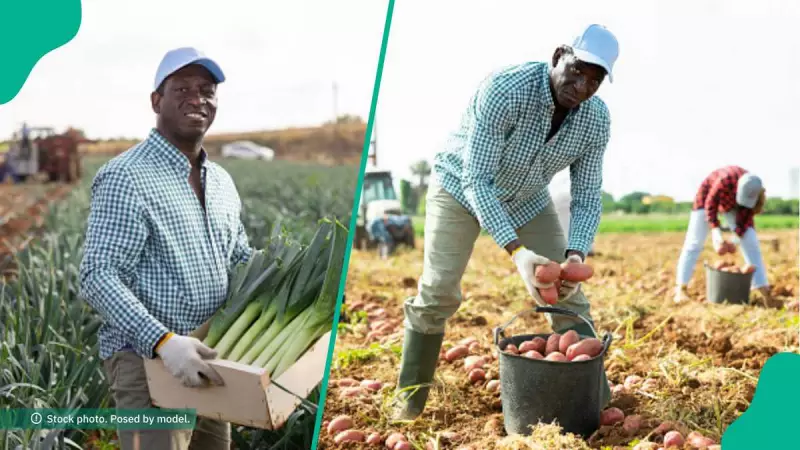
A Nigerian farm owner has sparked widespread conversation online after revealing the clever strategy he employed to prevent his staff from taking their Christmas and New Year holidays. The man, who goes by the username @bossolamilekan1 on X (formerly Twitter), shared that his quick thinking ensured his farm remained operational during the festive period.
The Holiday Request and the Smart Counter-Offer
The situation began when approximately seven of his farm workers approached him with a request. They sought permission to travel home to celebrate the Christmas and New Year holidays with their families, a common practice across Nigeria. Instead of granting or outright denying their leave, the farm owner devised an alternative proposition.
He promised to pay double salary for the month to any worker who agreed to stay back and work on the farm during both Christmas and New Year's Day. This immediate financial incentive presented a significant dilemma for the workers. The owner announced his tactic in a now-viral tweet, stating, "My workers came to me to request for holiday, like 7 of them said they want to go home, I came up with a quick plan that anyone that will be here for Christmas and new year with me on the farm will be receiving double salary for this month, guess where we all will be celebrating Christmas and new year."
Mixed Reactions Flood Social Media
The owner's story quickly garnered attention, triggering a flood of mixed reactions from netizens. The debate largely centered on the ethics of using financial power to influence personal time, especially during culturally significant holidays.
Some users criticised the move, framing it as a coercive tactic that prioritised business over human connection. User @beingblesssed commented, "They definitely wanted to celebrate the holidays with their loved ones and now you are depriving them from doing so by using money as a tool to hold them back… I’m so sure some of them haven’t seen their loved ones in years." Another, @Dayo_AFC, succinctly added, "Let them spend that little time with their families… Capitalism no pass this," implying the action was an extreme form of capitalism.
However, other commentators defended the farm owner's decision, noting the practical challenges of the agricultural sector. User @Adeyemi9A offered perspective from the business side: "You did good as a well considerate farm Owner, most farms are always short staffed during festive season, it's harder to keep staffs on the farm cuz they mostly resign towards the end of the year, if 7 of them are granted to leave , be sure at least 5 won't return by next yr."
Another point raised was about fair compensation. User @sojmiqel noted, "Anyone working on public holidays should be paid double its how it is everywhere else and it’s voluntary to work on PH. Kudos to you for compensating them." This highlighted that while the offer may have been strategic, it also aligned with the principle of extra pay for holiday work.
A Broader Conversation on Labour and Choice
The incident has opened up a broader discussion about the dynamics between employers and employees in Nigeria, particularly in sectors like agriculture. The core of the debate lies in the balance between operational necessity and the workers' right to personal and family time. The offer of double pay, while generous on the surface, underscores the economic pressures that can limit true freedom of choice for many workers.
One reaction, from @Web343133257117, poignantly captured this tension: "Good for the business but mentally it’s wrecking, structure your business in a way people can spend time with their loved ones in times like this, poverty really do take away your freedom of choice, May we all be financially free in 2026." This sentiment reflects a common desire for systems that do not force a choice between essential income and important family traditions.
The story was published on December 20, 2025, and the farm owner's identity is known only by his social media handle. The reactions compiled showcase a national conversation about welfare, compensation, and the spirit of the holiday season in the context of work and livelihood.




