
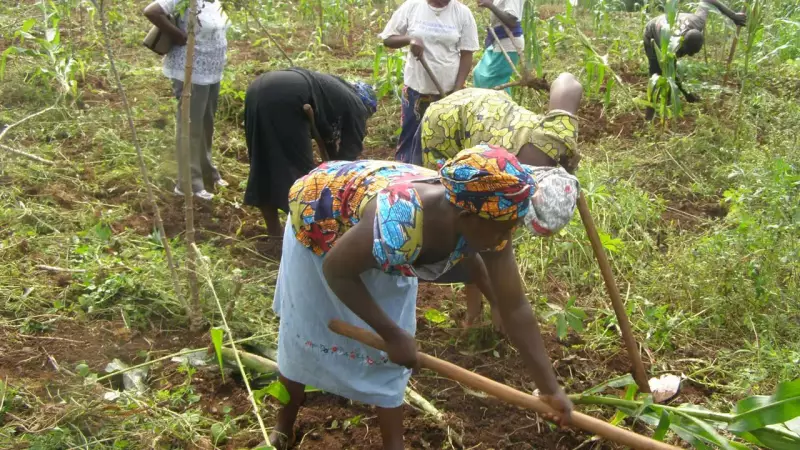
The Platform for African Women in Smart Climate Agriculture (PAWISCA) has announced a strategic push to position Nigerian women at the forefront of national food security, export expansion, and poverty reduction efforts. The organisation revealed its plans during a recent thanksgiving event held in Nigeria.
Strategic Positioning and Continental Recognition
Bola Oyegbami, the PAWISCA Representative in Nigeria, described the gathering as both a spiritual and strategic meeting. She disclosed that PAWISCA now boasts membership across 45 African countries, with the continental leadership adopting Nigeria's operational structure as a model for other nations to follow.
Oyegbami contextualised the initiative within Nigeria's current challenges, stating, "Presently in Nigeria, we need prayers. We are in a war. But when we thank God, we are holding Him fast. That is why we are thanking God for Nigeria."
Driving Exports and Innovation Across States
Over the last three years, PAWISCA has collaborated closely with the Nigerian Export Promotion Council (NEPC) to advance export-ready products from several states. The NEPC, under its CEO, Mrs. Ayeni, has formally recognised PAWISCA as a unique institution with a nationwide footprint, active in training, exhibitions, and value addition.
The organisation operates in all 36 states, led by female local council coordinators and supported by some male members. While focused on farming and export, its scope extends to fashion and creative industries. Members are transforming traditional crafts like Aso Oke and Igbo weaving into modern, globally marketable products.
In agriculture, PAWISCA is promoting innovative, processed foods to boost income. These include:
- Powdered egusi
- Black soup concentrates
- Plant-based creams
- Instant local meals
All products are processed, packaged, and registered with NAFDAC for both local sale and international export. Lagos State alone accounts for multiple approved products, with about eight states currently deemed export-ready.
"These are products that sell abroad. They bring in foreign exchange and directly address poverty," Oyegbami emphasised.
Financial Support and Capacity Building
PAWISCA's African leadership is setting up a financial support structure through Ecobank. This funding will be strictly tied to verifiable proof of production and training completion. "You don't just give money. People must show what they have produced and where they are exporting to," Oyegbami explained, citing approved projects like cassava-to-ethanol and soya bean processing.
Prof. Lola George-Akoje, PAWISCA Lagos State Coordinator and a Board of Trustees member, clarified the organisation's approach. She noted that PAWISCA is focused on tangible results and opposes the mentality of expecting quick money without fulfilling requirements.
"PAWISCA is mainly interested in projects that would be tested and supported when it comes to exportation for farmers to make more money," she stated. "If you are a farmer, let's see what you are growing, the way you can package it and process it... and the organization will encourage you."
She encouraged farmers to develop cassava by-products like ethanol and engage in value-added sectors like fashion, including 'adire' and other African cultural items.
With a published timetable, training for farmers and exporters is set to begin in January 2026. PAWISCA currently has over 5,000 members nationwide and continues to recruit through state and local government coordinators, urging Nigerians—particularly women—to transform their skills and farms into sustainable, export-oriented businesses.
Prof. George-Akoje expressed optimism for the new year, indicating that 2026 is likely to see the release of funds to qualified farmers and other beneficiaries as the initiative gains momentum.




