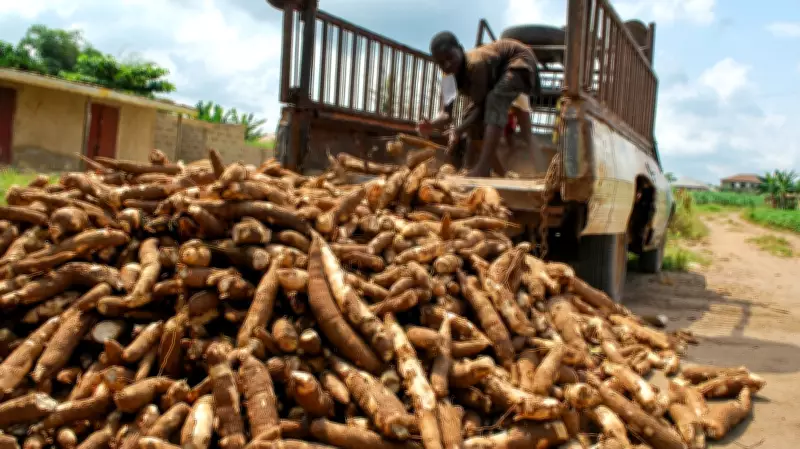
Nigeria's Cassava Sector Under Threat as Farmers Decry Funding and Policy Gaps
Stakeholders in Nigeria's agricultural sector have raised urgent concerns over the declining state of cassava production, highlighting that inadequate funding, weak policy implementation, and limited technical support are undermining one of the country's most critical food and industrial crops. These issues were discussed during a large-scale training event for farmers in Oyo State, where participants lamented that Nigeria is losing millions of naira annually due to falling cassava yields and reduced productivity across farming communities.
Large-Scale Training Event Highlights Challenges
The training, which brought together over 6,000 farmers, featured sessions and facility tours at the Fashola Agribusiness Hub and Iseyin, focusing on practical solutions to boost cassava production and improve value chain efficiency. Participants identified key challenges confronting farmers, including poor access to pest control systems, lack of modern farm management skills, inadequate extension services, and the growing impact of climate change. Many noted that these constraints have forced several farmers to abandon their farms, further worsening the production gap.
They also criticised the inconsistent implementation of agricultural policies, stressing that existing frameworks, if properly enforced, could have mitigated the current decline in cassava output. The programme was coordinated by the African Agricultural Technology Foundation in collaboration with the National Root Crops Research Institute, Umudike, Abia State, with support from a German development foundation.

Efforts to Equip Farmers with Modern Techniques
Speaking at the event, Project Coordinator of AATF, Samuel Ogunleye, said the initiative was designed to equip farmers with modern techniques to improve productivity and enhance market access. According to him, the programme targets farmers across the 33 local government areas of Oyo State and has already recorded significant participation in Ido, Ibarapa, and Iseyin zones.
"We are training farmers on improved agronomic practices, as well as how to process and market their products using modern technology," he said, adding that the availability of a cassava processing facility in Iseyin would help reduce post-harvest losses and increase farmers' income.
Chronic Underfunding of Agricultural Research
In his presentation, Team Lead at the institute, Adeyemi Olojede, explained that the training was deliberately scheduled during the off-season to enable farmers' full participation while addressing challenges affecting cassava production. He, however, decried what he described as chronic underfunding of agricultural research in Nigeria, blaming successive administrations for failing to prioritise the sector.
Olojede disclosed that many research institutes have been unable to access budgetary allocations in the past five years, forcing researchers to depend on personal networks and external support to sustain critical research activities.
Calls for Urgent Interventions and Collaboration
Stakeholders at the forum also called for stronger collaboration with the Organised Private Sector (OPS) to drive innovation, improve access to inputs, and strengthen the cassava value chain. They warned that without urgent and coordinated interventions, Nigeria risks losing its competitive advantage in cassava production, with far-reaching implications for food security, employment, and economic stability.
The participants urged government at all levels to prioritise funding, strengthen policy implementation, and invest in farmer education and infrastructure to revitalise the sector and ensure sustainable agricultural growth.