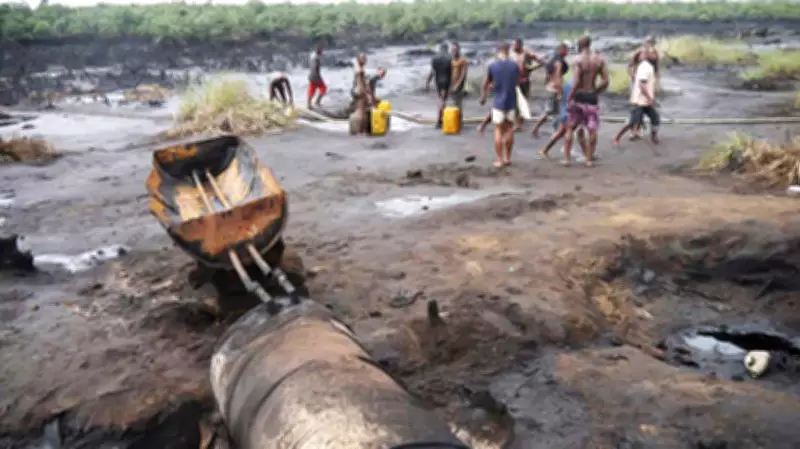
Ogoni Community Sets Conditions for Oil Exploration Resumption
The people of Ogoni in Rivers State have declared their willingness to permit oil exploration on their land, but only under specific conditions aimed at ensuring environmental justice and remediation. This stance comes as the Federal Government announces plans to resume oil activities in Ogoniland after a 30-year pause, with a target to increase daily production to 2.5 million barrels.
Government Plans and Local Demands
Led by the National Security Adviser (NSA), the initiative seeks to secure Ogoniland and exploit the vast reserves of Oil Mining Lease (OML) 11. While some local stakeholders support the move, it faces opposition from groups insisting on environmental cleanup and justice for historical pollution damages. The Ogoni community, represented by environmentalist Eric Dooh, expressed cautious optimism that exploration might proceed on their terms.
Dooh shared these views at the Inclusive Environments Nigeria Workshop in Lagos, which brought together journalists, activists, and other stakeholders to review a research project titled 'Developing a framework for Collective Environmental Justice'. This study was conducted by a UK-based team led by Prof. Chantal Davies, with members including Dr Egbosa Ekhator, Dr Holly White, and Dr Kim Ross. Dr Ekhator is affiliated with the University of Derby, while the others are from the University of Chester.
Key Conditions for Resumption
The Ogoni have outlined several non-negotiable requirements before oil exploration can restart:
- A comprehensive Environmental Impact Assessment (EIA) must be conducted to evaluate potential risks.
- All pending legal issues in court should be resolved, preferably through out-of-court settlements.
- An inclusive meeting involving impacted and host communities must be convened to ensure their voices are heard.
- A proper Needs Assessment for community projects should be carried out to address local development gaps.
Perspectives on Environmental Justice
From the UK research team's perspective, Dr Egbosa Ekhator noted that the government often uses the term 'environmental equality' instead of 'environmental justice', which may imply a focus on environmental sustainability. He highlighted that defining environmental justice clearly remains challenging, as it encompasses complex social and ecological factors.
The research emphasizes that environmental justice is more than just a trendy phrase. It fundamentally questions who benefits from environmental progress and who bears the costs. As climate change worsens and institutions commit to sustainability, this issue becomes increasingly urgent and unavoidable. Historically, marginalized communities—based on race, income, disability, or geography—have been excluded from environmental decision-making while suffering disproportionately from pollution, displacement, and harm. Environmental justice aims to rectify this imbalance by prioritizing equity in sustainability efforts, ensuring that affected communities actively participate in shaping decisions that impact their lives.
This development underscores the ongoing struggle for environmental rights in Nigeria's oil-rich regions, where communities like Ogoni continue to advocate for fair treatment and sustainable practices in the face of industrial expansion.