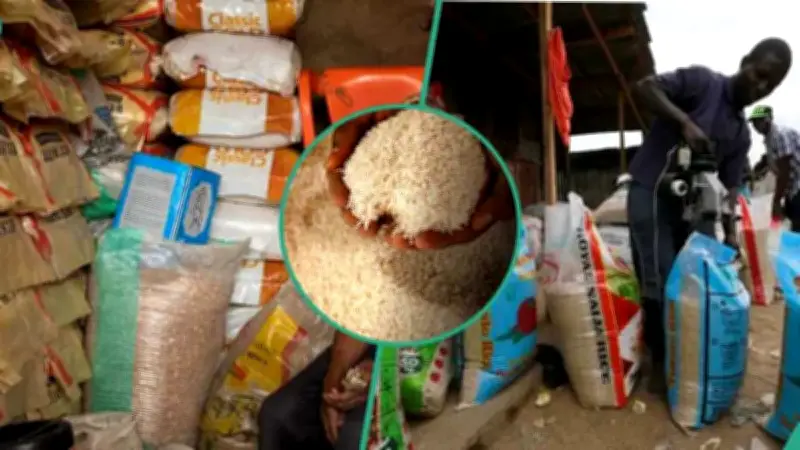
Rice millers in Nigeria have stated that they cannot sell a 50kg bag of locally produced rice below N58,000, citing high costs of paddy, electricity, diesel, and other operating expenses. This comes as the federal government pushes for prices to drop to between N55,000 and N57,000 per bag.
Millers Explain Why Prices Cannot Fall Below N58,000
The General Manager of Labana Rice Mills, Alhassan Yusuf, said the current cost of paddy, electricity, diesel, and other operational expenses makes it difficult for processors to reduce prices further without incurring losses. He explained that the price of milled rice largely depends on the cost of paddy, the raw material used by processors.
“At the current price we are buying paddy, the lowest we can sell our finished product, if we must pay salaries, electricity bills and other essential costs, is N58,000,” Yusuf explained. He added that selling below this level would expose the company to losses.
According to a report by Weekend Trust, locally milled rice currently sells for between N60,000 and N67,000 per 50kg bag. The disagreement between the government and rice processors over the cost of locally milled rice has been ongoing, with millers urging the federal government to consider tax waivers and other incentives to help reduce prices without undermining their operations.
Government Insists Rice Prices Are Too High
The federal government believes locally milled rice should cost less. At a meeting with rice processors and farmers on October 6, 2026, the Minister of Agriculture and Food Security, Abubakar Kyari, and the Minister of State for Agriculture and Food Security, Aliyu Sabi Abdullahi, said the government's assessment put the average production cost of a 50kg bag at N49,389.23.
Based on its analysis, the government proposed a selling price of between N55,000 and N57,000 per bag, arguing that the prevailing market price was too high. However, processors disputed the government's position, pointing to expensive paddy, energy costs, and other operational challenges.
The managing director of Umza Rice Mills also disclosed that his company spends about N100 million monthly on electricity, with diesel expenses potentially bringing the combined cost close to N200 million.
What Could Bring Rice Prices Down?
Rice processors say reducing production costs would make lower prices more achievable. They have called for tax relief, improved electricity supply, and stronger support for farmers. Farmers and industry representatives have also identified insecurity, expensive agricultural inputs, and inadequate paddy supply as challenges affecting production.
Economist Ibraheem Maigari advised the government to address these underlying costs rather than impose direct price controls, warning that excessive restrictions could discourage investment and create supply problems.
For consumers, the disagreement leaves a key question unresolved: whether rice prices can fall to the government's proposed range without making local production financially unsustainable.