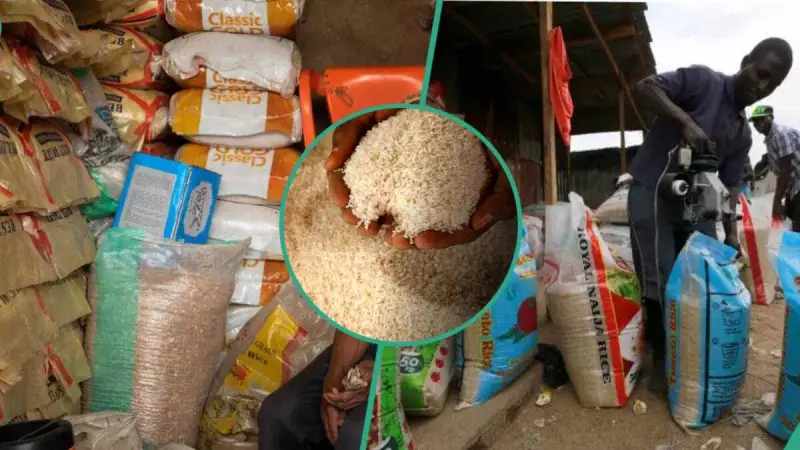
Nigerian households are experiencing significant relief as the price of rice has dramatically fallen across major markets, with some brands seeing reductions of up to 40% from their peak earlier this year.
Market Prices See Sharp Decline
According to recent market surveys, a 50-kilogram bag of rice now sells between N55,000 and N70,000, representing a substantial drop from the N85,000 to N95,000 price range recorded in January. The price reduction affects both local and imported varieties, bringing welcome relief to consumers struggling with food inflation.
The dramatic shift began around August 2025 and has continued through October, with market analysts pointing to improved harvests from northern states and increased imports through reopened land borders as primary factors.
Traders Count Heavy Losses
While consumers celebrate the lower prices, rice merchants are facing significant financial challenges. Many traders purchased their current stock at much higher prices earlier in the year and are now forced to sell at a loss.
At Arena Market in Oshodi, Mrs. Precious Okoro expressed the frustration felt by many in the trade. "We are selling at a loss. I bought several bags for between N80,000 and N85,000 earlier this year, and now I must sell them for as low as N65,000," she lamented.
Similar stories emerged from FESTAC Town Market, where retailer Mrs. Edith Nwaruh reported current prices ranging from N57,000 for Pretty Lady brand to N73,000 for Big Bull Premium. She confirmed that both local production and imports have increased, creating market oversupply.
Consumer Relief and Future Concerns
For Nigerian families, the price drop comes as a much-needed break from escalating food costs. At Oyingbo Market, Mrs. Andriana Okoromaro shared her relief: "At least rice is affordable again. I can now buy a full bag instead of half—it's a huge relief."
However, economic experts caution that the price decline may be temporary. Market instability and fluctuating supply could push costs upward again before the December festive season. The situation creates a delicate balance between consumer relief and trader sustainability.
Mr. Odion Michael from Mile 12 Market described the development as a "double-edged sword" that highlights the need for price stability in the agricultural sector. Traders are calling for government intervention through targeted support for local farmers and improved agricultural infrastructure to prevent such sharp fluctuations in the future.