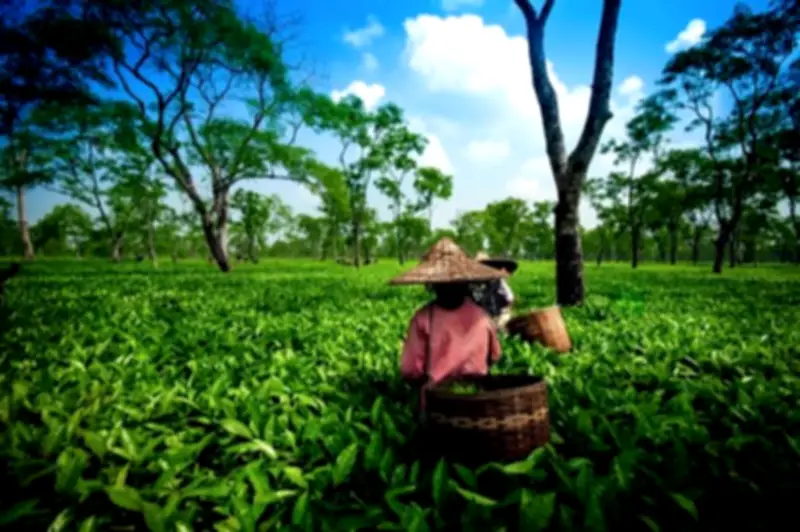
Stakeholders Advocate Agritourism for Food Security and Economic Growth
Stakeholders have called for the adoption of agritourism as a sustainable pathway to food security, rural prosperity, and economic self-reliance. This advocacy took place at the World Agritourism Festival 2026, themed "Agritourism Without Borders: Connecting Food, Culture and Global Prosperity." The festival brought together participants from Nigeria, The Bahamas, and other countries to explore how the fusion of agriculture, tourism, and culture can unlock new avenues for food security, job creation, and sustainable development.
Leading the discussions, the Managing Director of Xtralarge Farms and Resorts, Dr. Moji Davids, urged governments, investors, and development partners to rethink agriculture beyond mere food production. She emphasized that its true value lies in integrating with tourism, culture, and hospitality. Davids warned that nations failing to build robust agricultural systems linked to tourism risk economic vulnerability and dependence on external supply chains.
"The time has come for nations to stop seeing agriculture as just farming. It must become a full economic ecosystem that drives tourism, culture, wellness, and global competitiveness," she stated. Davids cautioned that no country can claim true sovereignty while relying heavily on imports for food and essential commodities. She noted that recent global disruptions, including the COVID-19 pandemic and geopolitical tensions affecting trade routes, exposed the fragility of over-dependent economies.
Referencing global supply uncertainties, she highlighted events like disruptions around the Strait of Hormuz to underline the urgency of food self-reliance. "You cannot claim sovereignty when your food systems are externally controlled. Every nation must take responsibility for its food future," she added. Davids recalled how the pandemic triggered widespread food shortages and supply chain breakdowns, urging countries to invest more aggressively in local agricultural production.
According to Davids, agritourism is no longer a niche idea but a transformative economic model linking multiple sectors and creating broad-based prosperity. "This is not just a conference; it is a movement. Agritourism connects agriculture, tourism, culture, wellness, and investment into one powerful ecosystem," she said. She noted that integrating agriculture with tourism opens opportunities across dozens of related sectors, expanding its economic impact beyond traditional farming.
Davids also disclosed that Xtralarge Farms and Resorts was established to reposition agriculture as an attractive, profitable, and experience-driven sector. She explained that visitors to agritourism sites not only observe farming activities but also engage with local culture, food systems, and rural livelihoods, fostering deeper appreciation and economic impact for host communities. "Every visitor becomes part of the value chain. They support farmers, create jobs, and help communities grow," she said.
She added that the organization has expanded its agritourism model beyond Nigeria through partnerships with government institutions, including federal ministries, the Lagos State Government, and international collaborators from The Bahamas, Ghana, the United Kingdom, Canada, and the United States. Davids recalled that agritourism initially faced skepticism in Nigeria but has now gained growing acceptance as a viable development model. "What once looked unfamiliar is now becoming a global movement. Agritourism is no longer an idea; it is a reality," she stated.
She further announced that the physical edition of the World Agritourism Festival will be hosted in Nigeria on June 12, 2026, urging global stakeholders to collaborate in building a more resilient and interconnected food future. "We are building a future where agriculture is not just about survival, but about prosperity, identity, and global connection," she concluded.
Expert Insights on Agritourism Benefits
Also speaking at the event, agritourism expert Dr. Jason Sands shared The Bahamas' experience, describing how the island nation is leveraging tourism growth to strengthen its agricultural base. He explained that rising tourist inflows have increased demand for locally sourced food, fostering collaboration between farmers, hotels, and tourism operators. "Agritourism connects agricultural production directly with tourism demand. It turns farms into economic and cultural destinations," Sands said.
He highlighted initiatives such as Chasing Butterflies in Andros, which offers farm-to-table dining experiences, and Down Too Earth Adventure Farm in Nassau, where visitors engage in farm tours, outdoor dining, and agricultural education. Sands also referenced the Gladstone Road Farmers Market, which provides a platform for farmers to sell fresh produce and artisanal goods directly to visitors year-round. He noted that beyond dining experiences, agritourism is attracting interactive participation, with tourists engaging in activities like harvesting coconuts, mangoes, plums, and eggs.
However, he acknowledged structural challenges facing agriculture in The Bahamas, including heavy dependence on food imports, climate vulnerability, and limited arable land. Despite these constraints, Sands expressed optimism, pointing to innovations such as hydroponics and vertical farming as game-changers for year-round food production. He also stressed the importance of government-backed initiatives supporting backyard farming, school gardens, and smallholder farmers as critical to strengthening food resilience.