
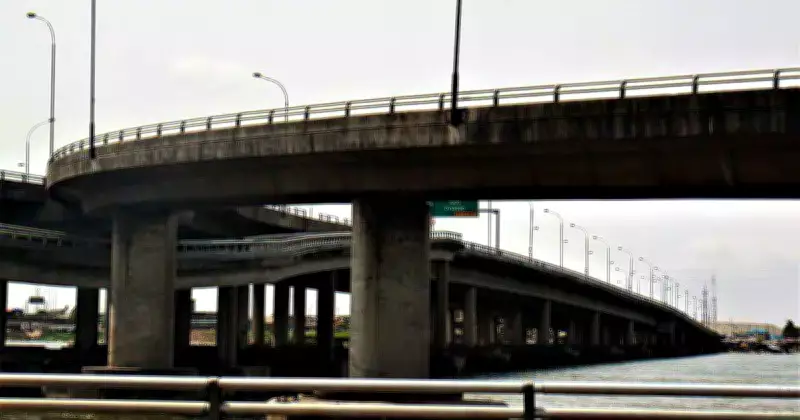
Tinubu Greenlights Demolition and Reconstruction of Historic Carter Bridge
President Bola Tinubu and the Federal Executive Council (FEC) have given the crucial approval for the demolition and complete reconstruction of the 125-year-old Carter Bridge in Lagos. This landmark decision was announced on Wednesday, March 4, 2026, following a comprehensive FEC meeting focused on national infrastructure development.
Critical Infrastructure Decision
The Minister of Works, David Umahi, revealed to journalists that the Carter Bridge, which serves as a vital link between Lagos Island and the mainland, has been deemed beyond rehabilitation. After extensive stakeholder consultations and technical assessments, the unanimous recommendation was for complete demolition and reconstruction rather than repair.
The Carter Bridge, originally constructed in 1901, holds historical significance as the first bridge connecting Lagos Mainland to Lagos Island. It predates both the Eko Bridge and Third Mainland Bridge, serving as the sole crossing point for decades until additional bridges were constructed.
Project Costs and Funding
The Federal Executive Council has approved ₦5 billion specifically for hiring a design firm to develop comprehensive blueprints for the reconstruction project. The total estimated cost for demolishing and rebuilding the Carter Bridge is projected to reach nearly ₦400 billion.
Funding for this massive infrastructure project will come from multiple sources, including savings from President Tinubu's economic reforms, foreign loans, and public-private partnerships. The president has consistently emphasized that infrastructure development remains a priority for his administration.
Historical Context and Previous Renovations
Named after Sir Gilbert Thomas Carter, former governor of the Colony of Lagos, the bridge spans from Iddo on the mainland to Idumota on Lagos Island. This isn't the first major renovation the bridge has undergone. Between 1970 and 1973, during General Yakubu Gowon's military government, the bridge was dismantled, redesigned, and rebuilt in a significant rehabilitation effort.
Additional Infrastructure Approvals
The FEC meeting also approved several other major road projects across Nigeria, demonstrating a comprehensive approach to national infrastructure development:
- The 103KM dual carriageway Ibadan–Ife–Ilesa road reconstruction approved for ₦427 billion
- The 132KM three-lane Kano–Kongolam carriageway approved for ₦334 billion
- The second phase of rehabilitation for the 129KM Keffi–Nasarawa–Abaji Road approved for ₦203 billion
- Completion of the remaining 71KM dual Suleja–Minna carriageway approved for ₦91 billion
- Reconstruction of an 86KM section of the Abuja-Lokoja road approved for ₦146 billion
Broader Infrastructure Agenda
These approvals continue President Tinubu's infrastructure development agenda, which began in 2023 with the controversial Lagos-Calabar Coastal Highway project. That coastal highway project costs approximately ₦7.5 billion per kilometer, highlighting the administration's commitment to substantial infrastructure investment despite significant costs.
The president has framed his economic reforms, including the removal of fuel subsidies, as necessary measures to generate funds for critical national development projects. He has repeatedly described these reforms as "painful but necessary" steps toward building Nigeria's infrastructure backbone for future generations.




