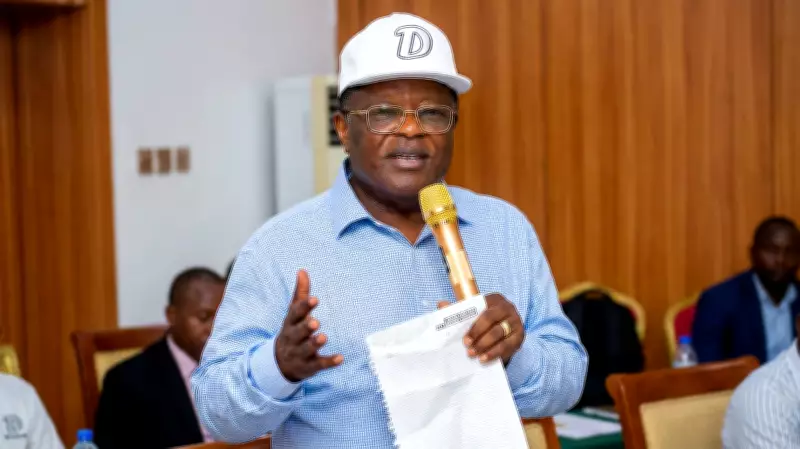
Umahi Declares New Era of Concrete Road Construction in Nigeria
Minister of Works David Umahi has proclaimed that Nigeria is entering a transformative phase in road infrastructure, with a decisive shift from traditional asphalt to durable concrete technology. During a comprehensive inspection tour of Federal Government projects in Rivers State, Umahi emphasized that this move aims to ensure longevity and optimal value for public investments.
Inspection of Key Projects and Warnings Against Sabotage
Umahi visited critical road sections including the Eleme–Onne axis of the East-West Road, the Bodo–Bonny Road, and the Port Harcourt–Aba highway. He issued a stern warning against practices that threaten infrastructure integrity, particularly the parking of heavy-duty trucks on completed roads. "No road is designed to carry static loads," he cautioned, highlighting that such actions can lead to rapid deterioration and costly repairs.
The minister appealed to Nigerians to take collective responsibility for safeguarding public assets. "The minister cannot be everywhere. We must protect our own," he stated, urging citizens to report misuse and support government efforts to maintain road quality.
Progress and Challenges on Specific Projects
At the 15-kilometre Eleme–Onne section, Umahi praised Reynolds Construction Company for maintaining high standards despite funding disruptions. The project, valued at over ₦230 billion, faced delays after Nigerian National Petroleum Company (NNPC) funding was halted in August 2025. President Bola Tinubu's intervention restored financing, accelerating work. Umahi explained that the technical nature of the job—involving deep excavation, stone reinforcement, and concrete layering—contributes to its pace, with completion expected by June or July to include features like solar lighting and landscaping.
On the Bodo–Bonny Road, Umahi hailed it as a landmark achievement, enabling direct vehicle travel from the mainland to Bonny Island for the first time. Additional enhancements such as solar streetlights and tree planting have been approved, with plans to dualise connecting routes and introduce tolling for maintenance.
Inspecting the Port Harcourt–Aba Road, Umahi attributed years of delay to poor funding and weak execution by contractor China Civil Engineering Construction Corporation. Only nine kilometres were completed in eight years, and that section deteriorated due to asphalt failure. The project has been redesigned with concrete, achieving over 95 percent completion, and is targeted for commissioning by May 2026.
Emphasis on Indigenous Contractors and Economic Impact
Umahi highlighted the growing role of indigenous firms, commending Julius Berger Road Builders for exceptional performance. He noted that local contractors are demonstrating capacity and commitment, sometimes undertaking projects without upfront payment, which boosts national self-reliance in infrastructure development.
Stressing the centrality of road infrastructure to Nigeria's economic transformation, Umahi pointed out that poor roads hinder trade and productivity. "Even when other sectors are working, without good roads, development is limited," he remarked, calling on the media and public to showcase progress and expose damaging acts.
As Nigeria invests heavily in road development nationwide, Umahi's message underscores that the success of this new construction era hinges not only on government policy but on citizen cooperation in protecting infrastructure from sabotage.