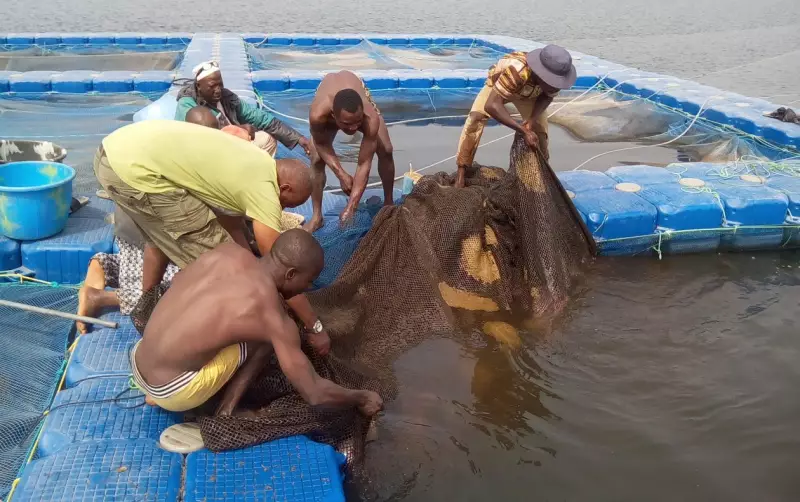
Nigeria's aquaculture sector stands at a critical crossroads, with immense economic potential being undermined by fundamental knowledge gaps among new entrants, industry experts have revealed.
The Promise and Peril of Nigerian Aquaculture
Fish farming represents one of Nigeria's most lucrative agribusiness opportunities, holding significant potential to boost economic growth, enhance food security, and create employment for millions. As Africa's second-largest aquaculture producer, Nigeria benefits from strong local consumption of products like catfish, opening numerous investment opportunities for newcomers.
According to sector players, this industry can substantially reduce Nigeria's reliance on imported fish, create sustainable jobs, improve food security, and boost local economies. The sector provides viable business opportunities for smallholder farmers and can serve as a reliable source of income for many Nigerians.
Critical Knowledge Gaps Causing Massive Losses
Despite these promising prospects, many new fish farmers are experiencing significant financial losses due to inadequate understanding of essential aquaculture management principles. While commonly cited challenges include high feed costs, inadequate supply chains, and limited market access due to infrastructure and technology deficits, experts identify knowledge deficiency as the most critical barrier.
Dr. James Onah, an experienced aquaculturist, explains that many farmers mistakenly believe they're implementing correct practices while overlooking vital details. "Most farmers think they are doing everything right," Dr. Onah noted, "but they ignore crucial elements like water quality management, proper feeding patterns, and understanding market demands."
One of the most common and costly mistakes involves the use of poor-quality pond water. Many beginners assume clear water automatically qualifies as suitable for fish, unaware that water quality encompasses multiple parameters beyond mere clarity. This misunderstanding has led to widespread fish mortality and stunted growth across numerous operations.
Practical Solutions for Sustainable Fish Farming
Feeding management represents another major challenge for newcomers. Beginners frequently fail to monitor daily feed consumption, resulting in either overfeeding or underfeeding—both scenarios negatively impact fish health and farm profitability. Dr. Onah also cautioned against purchasing feed in small batches, noting this practice increases operational costs and reduces efficiency.
Market misalignment poses an additional trap for inexperienced farmers, according to Mrs. Jelilat Dokunmu, a fish farmer with over twenty years of experience. "Farmers are advised to raise fish that match customer preferences, not personal ones," Mrs. Dokunmu emphasized. "Failure to align production with market demand often forces farmers to sell under pressure or at a loss."
As a training provider, Mrs. Dokunmu strongly recommends comprehensive education for beginners. "We offer hands-on classes in catfish farming and management. Farmers need more than just ponds—they require tested systems for production, management, and sales. With proper education and planning, fish farming in Nigeria can become a profitable venture for many potential farmers."
Malam Ado Mohammed, a fish trader at Kado Fish Market who also engages in fish breeding, stressed the sector's importance to Nigeria's economy. He emphasized that youth must be supported to tap into these opportunities to achieve national food security.
"As it is in other businesses, fish farming requires training and re-training for anyone who wants to make this business their source of livelihood," Mohammed stated. "Though lingering challenges face us as farmers, if we implement correct practices and adopt the right knowledge, we'll be smiling to the banks."
The consensus among industry stakeholders is clear: bridging the knowledge gap through targeted training and education represents the most viable path toward unlocking Nigeria's aquaculture potential and transforming it into the economic powerhouse it promises to be.