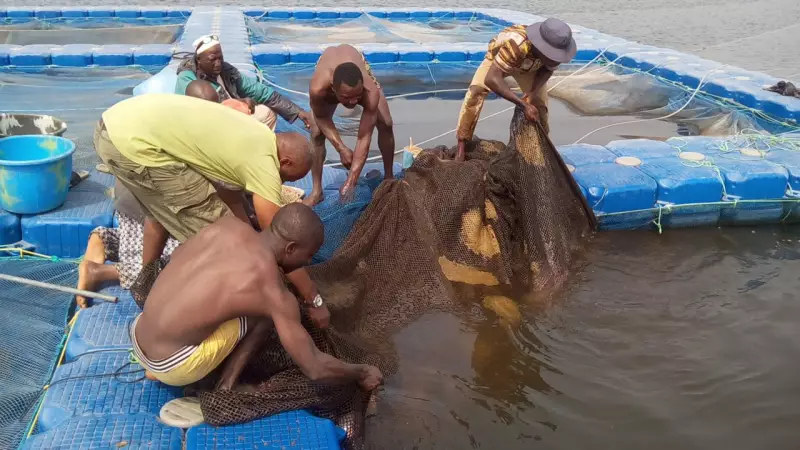
Fish farming stands as a highly profitable agribusiness with the proven capacity to accelerate Nigeria's economic growth, enhance national food security, and generate substantial employment for its burgeoning population. As the second-largest aquaculture producer in Africa, Nigeria boasts a robust domestic market for its products, especially catfish, creating a fertile ground for new investors.
The Promise and The Peril of Aquaculture
Industry stakeholders consistently highlight that a thriving fish farming sector can significantly reduce Nigeria's reliance on imported fish, create numerous jobs, improve food security, and boost local economies. It offers lucrative opportunities for smallholder farmers and can serve as a sustainable source of income for many Nigerians.
However, despite this impressive array of benefits, a large number of newcomers to the industry are encountering severe financial losses. While long-standing issues like the high cost of feed, inadequate supply chains, and limited market access due to poor infrastructure and technology are well-known, experts point to a more fundamental problem.
The Critical Knowledge Deficit
According to specialists, a major stumbling block is the little or no knowledge in critical aquaculture management. Many individuals invest heavily in setting up their fish farms only to face colossal losses, forcing them to abandon the business altogether.
"Most farmers think they are doing everything right," revealed Dr. James Onah, an experienced aquaculturist. "But they ignore vital details like water quality, feeding patterns, and understanding market demands."
Dr. Onah identified the use of poor-quality pond water as one of the most common and costly errors. He explained that many operators mistakenly believe clear water is inherently good for fish, overlooking critical parameters that affect fish health. This ignorance directly leads to high fish mortality and stunted growth.
Another significant issue is poor feeding management. "Beginners often fail to track daily feed intake, leading to overfeeding or underfeeding," says Onah. "Both scenarios negatively impact fish health and ultimately, the farm's profitability." He also cautioned farmers against the practice of buying feed in small batches, as it drives up operational costs and reduces overall efficiency.
Aligning Production with Market Realities
Mrs. Jelilat Dokunmu, a fish farmer with over twenty years of experience, highlighted market misalignment as another common trap for newcomers. She advised that farmers should raise fish to match customer preferences, not personal ones. Failure to do this often results in farmers having to sell their produce under pressure or at a loss.
To curb the high failure rate in the industry, Mrs. Dokunmu, who also provides training, strongly recommended proper education for beginners. "We offer hands-on classes in catfish farming and management. Farmers need more than just ponds; they need tested systems for production, management, and sales," she stated. "With proper education and planning, fish farming in Nigeria can become a profitable venture for many potential farmers."
Echoing this sentiment, Ado Mohammed, a trader at the popular Kado Fish Market in Abuja who is also involved in fish breeding, emphasized the sector's importance. He described fish farming as critical to the country's economy and stated it must be supported to enable youths to tap into its opportunities and help achieve national food security.
"As it is in other businesses, fish farming also requires training and re-training for anyone who wants to make this business his or her source of livelihood," Mohammed said. "Though there are lingering challenges facing us as farmers, if we do the right thing and ensure the right knowledge is adopted, we'll be smiling to the banks."