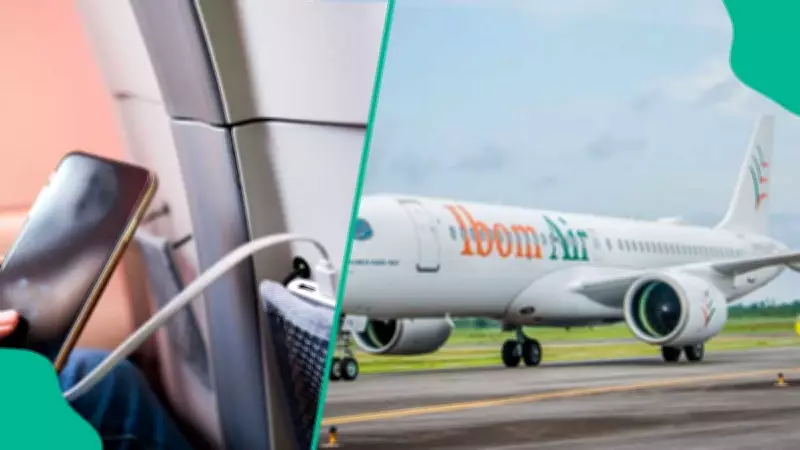
Ibom Air Implements Strict NCAA Power Bank Safety Regulations for Passenger Flights
Ibom Air has officially begun enforcing comprehensive new safety directives from the Nigeria Civil Aviation Authority (NCAA) regarding the carriage of power banks on commercial flights. The airline announced that passengers are no longer permitted to store power banks in overhead luggage compartments during any phase of flight operations. This significant policy change represents a proactive approach to aviation safety following global concerns about lithium-ion battery incidents.
New Cabin Accessibility Requirements for Power Banks
Under the updated NCAA regulations that Ibom Air is now implementing, all power banks must remain accessible within the cabin area throughout flights. Passengers are required to keep these devices in easily reachable locations such as seat pockets, under the seat in front of them, or inside carry-on bags that remain accessible at all times. The fundamental principle behind this regulation is to ensure cabin crew can quickly access power banks in emergency situations involving overheating or potential fire hazards.
The NCAA's safety directive explicitly states that power banks must not be placed in overhead bins under any circumstances. This positioning requirement enables flight attendants to respond swiftly if lithium battery-powered devices begin to overheat or exhibit dangerous behavior during flight operations. The regulation also reaffirms the long-standing prohibition against placing power banks in checked baggage, where they would be inaccessible during critical moments.
Watt-Hour Rating Restrictions and Approval Processes
In alignment with established global aviation safety standards, Ibom Air is enforcing specific watt-hour limitations for power banks carried on board:
- Power banks rated up to 100 watt-hours are permitted without restrictions or prior approval requirements
- Devices rated between 100 and 160 watt-hours require explicit prior approval from the airline before being brought on board
- Power banks exceeding 160 watt-hours are strictly prohibited from all flights
Passengers have been strongly advised to confirm the watt-hour rating of their devices before traveling to ensure compliance with these regulations. The airline emphasized that these measures are designed to prevent incidents of thermal runaway, a dangerous condition where lithium-ion batteries can ignite and spread rapidly during flight operations.
Industry-Wide Safety Implementation and Coordination
Ibom Air stated that it fully supports the NCAA's directive and is working closely with regulatory authorities to ensure complete compliance across all its operations. "Safety being one of our core values, Ibom Air fully supports the NCAA's directive on power bank carriage," the airline declared in an official statement. "The safety of passengers and crew remains our highest priority. We continue to work closely with regulatory authorities to ensure full compliance with all safety directives."
This enforcement by Ibom Air follows similar actions by other Nigerian carriers, including United Nigeria Airlines, which recently released its own safety advisory guiding passengers on proper power bank handling during flights. United Nigeria's guidelines specifically direct passengers not to use or charge power banks during flights, in addition to prohibiting placement in checked baggage or overhead compartments.
The NCAA's updated regulations and their enforcement by Nigerian airlines align with international aviation safety standards developed in response to documented incidents involving lithium-ion battery fires or explosions on aircraft worldwide. These measures represent a coordinated effort to enhance passenger safety while addressing the growing prevalence of portable electronic devices in modern air travel.