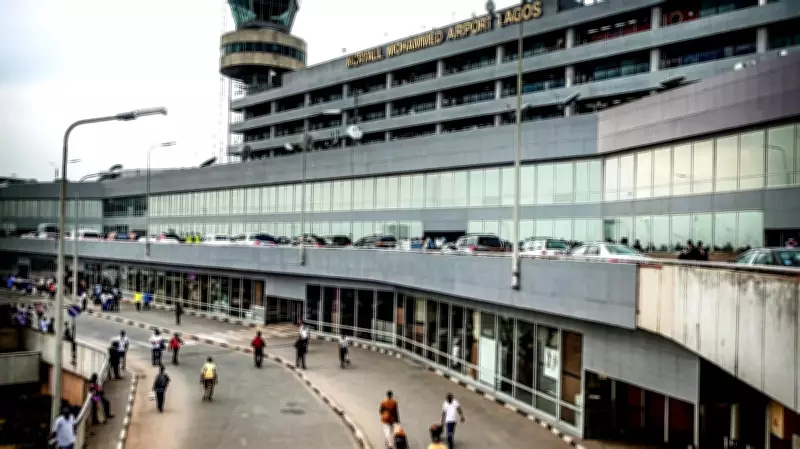
The recent tariff hikes by Bi-Courtney Aviation Services Limited (BASL) and Seymour Aviation Services Limited – the twin private car park operators at the Lagos Airport– speak to unchecked arbitrariness and customer exploitation in the name of access control to a public facility. While price adjustments tied to cost variables are normal in a service business, a blanket 169 per cent increase without a commensurate value addition is excessive and punitive. The operators’ reckless adjustment should be reversed immediately or brought to the express attention of the Federal Competition and Consumer Protection Commission (FCCPC).
The scale of the increase
Out of the blue, Bi-Courtney Aviation Services Limited, which owns and manages the Murtala Muhammed Airport terminal two (MMA2), and its counterpart at the international wing, Seymour Aviation Services Limited, uniformly raised the cost of access to the multi-storey building car parks by as much as 169 per cent across various vehicle categories. BASL operator had raised car park tariffs twice between March and April 1 this year, after issuing a two-week notice to its motorist customers. The second adjustment was apparently done to rival Seymour’s arbitrariness in price review. Notably, BASL’s March hike was N2,500 for sedans, with the first hour at N1,300 and subsequent hours at N500. For Sports Utility Vehicles (SUVs), the tariff was hiked from N1,800 to N3,500, with an N500 hourly extension.
But under the revised pricing segment, which commenced in April, sedans now pay N3,500 for the first hour; Sports Utility Vehicles (SUVs) pay N4,000, and large buses pay N20,000 for the same first hour. Subsequently, sedans and SUVs are billed at N2,500 per hour. Also, overnight parking surged to N50,000 from the initial N6,000 rate. The company also imposes a N25,000 penalty on vehicle owners for lost or damaged parking tickets.
Justification from operators
The BASL management said the review was aimed at restoring order and putting random users of the facility in check through the cut-throat pricing mechanism. Specifically, it cites abuse of the system by motorists who leave vehicles for extended periods, sometimes for weeks and by e-hailing drivers who occupy parking slots while waiting for passengers. Besides, the upward adjustment helps enhance safety and improve the passenger experience within a facility constrained by a limited parking capacity of about 800 vehicles.
Indeed, Bi-Courtney and Seymour are not alone in the price adjustment spree, though they earned the exclusive reputation of doing so in an obnoxious manner. Recall that the Federal Airports Authority of Nigeria (FAAN) had, on March 1, adjusted toll prices as it migrated to a cashless regime that turned out to be a nightmare and a disaster until President Bola Tinubu thankfully aborted the chaos. FAAN has, within this period, raised the toll fees for sedans and SUVs, from N300 and N500 to N500 and N1,000, respectively. The authority also introduced new rates of about 100 per cent across its car parks at Lagos and Abuja airports. Compared with those of its tenants and car park operators, FAAN’s price adjustment almost peters out into insignificance.
Critique of the rationale
Clearly, Bi-Courtney’s rationale for raising prices to reduce facility abuse and congestion amounts to punishing all customers to address the fallout from its poor planning, systemic inefficiencies, and weak regulation. The MMA2 car park was designed short-sightedly, oblivious of the high patronage era and attendant congestion due to its proximity to the busy terminal. The car park was apparently shoehorned into the space far less than what a modern airport service facility requires. And this is now coupled with the inefficiency of the handlers in finding a better control strategy than the crude capitalist method of imposing a blanket exorbitant price that fences out more than half of those who need such a facility in the first place.
Such a mindset of blind exploitation and turning services into elitist affairs explains why Nigerian aviation, despite its unrivalled inefficiency, is among the most expensive in Africa. The industry levies over 30 sundry taxes and charges on each flight ticket issued, amounting to 40 per cent of the total cost. The sector therefore racks up a combination of excessively high taxes (roughly $180 per international departure, three times the African average), soaring jet fuel prices, foreign exchange shortages, and high maintenance costs, with airports like Lagos and Abuja ranked among the world’s most expensive to operate.
Meanwhile, airports are gateways to the modern economy. They facilitate business travel, tourism and trade. Any policy that increases the cost of accessing these gateways has ripple effects across multiple sectors. As it stands, the tariff hike for the Bi-Courtney and Seymour car parks is not a solution to the congestion problem, but rather a punitive financial burden imposed on already strained travellers and ancillary service providers. For many users, particularly in an economy like Nigeria’s, which is grappling with inflation, currency volatility, and declining purchasing power, the new rates are punitive and indefensible, given the lack of commensurate value. Charging N3,500 for the first hour for sedans, N4,000 for SUVs, and an eye-watering N50,000 for overnight parking raises questions about proportionality and fairness.
Lack of consumer-friendly policies
A sudden and steep tariff hike, without the introduction of structured long-term parking options or dedicated holding areas for ride-hailing operators, others who just ‘pick and go’ and provision of at least 10 minutes on-build time for motorists, just as obtainable in many public places globally, suggests a policy driven more by exploitative revenue generation than by fair thinking and comprehensive planning. At the same terminal, no motorist is allowed to pick up a passenger outside the terminal, even if the passenger was already out of the building waiting to be picked up. Everyone is compelled to use the car park upon entering the terminal. Even a minute stay attracts a minimum of N3,500! It is a subtle motivation for motorists’ reckless and illegal parking options that the same BASL had fought tooth and nail.
Regulatory failures
The obnoxious review highlights broader implications for consumer protection and regulatory oversight. Bi-Courtney operates under a concession arrangement, effectively functioning as a private operator within a public infrastructure ecosystem. This model demands a higher level of accountability, particularly when decisions have direct and widespread impact on the public. The industry regulator – the Nigeria Civil Aviation Authority (NCAA) – has also failed to effectively implement Part 19 of the Nigeria Civil Aviation Regulations (NCARs) – Economic Regulations, which deals with consumer protection, tariffs and pricing, competition, and economic oversight. NCAA is to ensure that charges imposed on users are fair, justified, and not exploitative. Unfortunately, on numerous occasions, passengers are confronted with unilateral decisions by airlines and terminal operators that significantly increase travel costs without corresponding improvements in service quality, while the NCAA looks the other way. It took the intervention of the FCCPC to push back on airlines’ fare exploitation during the last yuletide season. But for how long must the FCCPC step into the arena supposedly controlled by the NCAA to peck exploiters to order?
The obnoxious spike in tariffs and its attendant backlash should serve as a wake-up call not just for regulators but also for policymakers and industry stakeholders. Nigeria’s aviation sector is at a critical juncture, with passenger numbers consistently declining. There is a clear need for private investment and strategic thinking to bridge infrastructure deficits and improve service delivery. There is also an urgent need to protect consumers from capitalist operators who recklessly traverse price barriers that challenge convenience and inclusivity.