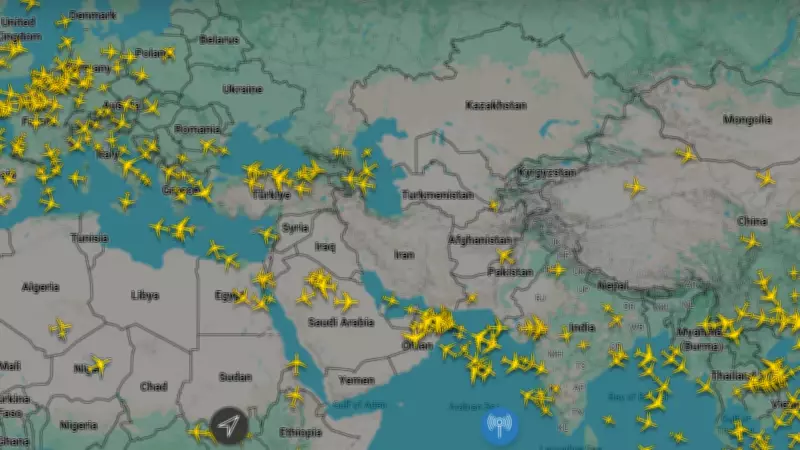
Middle East Airspace Shut Down Following US-Israel Military Strikes on Iran
Airspace across a significant portion of the Middle East has been abruptly shut down, plunging international flights into widespread chaos and disruption. This unprecedented closure follows coordinated military strikes executed by the United States and Israel targeting Iran on Saturday, February 28, 2026. The attacks, described by the two nations as a 'pre-emptive' measure against a Tehran government allegedly intent on developing nuclear weapons, have triggered immediate retaliation and severe regional instability.
Immediate Airspace Closures Across the Region
In the direct aftermath of the military strikes, numerous countries across the Middle East announced either full or partial closures of their skies to all civilian air traffic as a critical security precaution. The closures were implemented swiftly, creating a domino effect of aviation disruptions.
- Iran: The entire Iranian airspace was closed indefinitely immediately following the attacks, effectively halting all civilian flights within and over the country.
- Israel: Israel also shut its airspace to civilian aircraft after launching what it described as pre-emptive strikes against Iranian military targets.
- Iraq and Kuwait: Both nations confirmed complete closures of their respective airspaces, adding to the growing no-fly zones across the region.
- United Arab Emirates (UAE): The UAE imposed a temporary and partial closure of its skies, citing precautionary security measures amid the escalating conflict.
- Qatar and Bahrain: Commercial flights were halted in both countries due to heightened security threats and the prevailing regional instability.
- Jordan and Syria: These countries also restricted airspace in specific parts of their territories, prioritizing safety concerns for civilian aviation.
Widespread Flight Cancellations and Global Disruption
Flight-tracking data from Saturday revealed vast swathes of the Middle Eastern sky virtually empty of civilian aircraft. Planes were either rerouted along alternative paths or grounded entirely as international carriers scrambled to adapt to the rapidly changing security landscape. Major airlines, including Air France, Air India, Turkish Airlines, Norwegian, Air Algerie, and Lufthansa, announced widespread cancellations affecting numerous routes.
According to the flight tracking website FlightAware, the global aviation network experienced severe ripple effects. As of 1030 GMT on Saturday, more than 9,600 flights had been delayed worldwide, with over 500 flights cancelled entirely. The disruptions extended far beyond the Middle East, impacting travel schedules across Europe, Asia, and Africa as airlines adjusted their operations to avoid the conflict zone.
Retaliatory Strikes and Escalating Tensions
The initial US-Israel strikes prompted immediate retaliation from Iran, with reports indicating that missiles were launched targeting Israel and other locations across the Middle East. This exchange of military action has significantly heightened tensions, raising concerns about a broader regional conflict. The airspace closures are a direct response to these security threats, aimed at protecting civilian aircraft from potential crossfire or targeted attacks.
The situation remains fluid, with aviation authorities and governments closely monitoring developments. Travelers are advised to check with their airlines for the latest updates on flight statuses and potential rerouting. The closure of such a critical aviation corridor is expected to have lasting impacts on global travel logistics and regional security protocols.