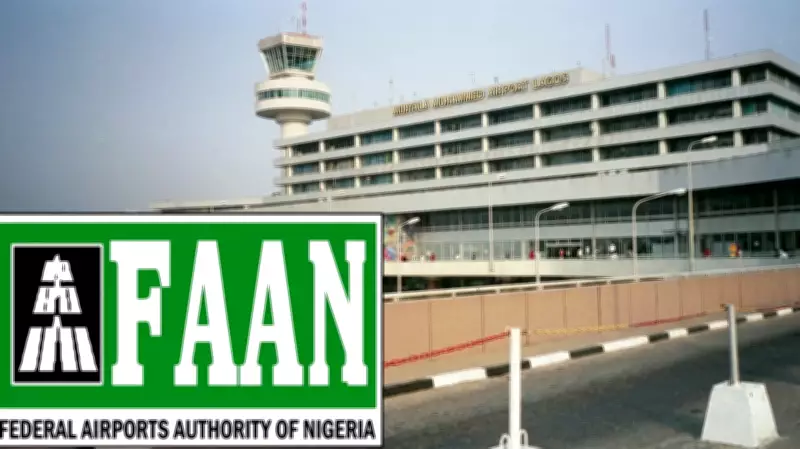
NAMA Deploys Mobile Control Tower at Lagos Airport, Restores Operations After Fire Incident
The Nigerian Airspace Management Agency (NAMA) has successfully deployed a fully operational mobile control tower at Murtala Muhammed International Airport (MMIA) in Lagos, marking a significant milestone in restoring air navigation services after a devastating fire engulfed the old terminal building last month. This critical infrastructure deployment comes almost four weeks after the fire disaster that destroyed the airport's air-to-ground facilities on February 23, 2026.
Technical Deployment and Operational Readiness
During an on-site inspection of the newly installed facility, Director of Safety Electronics and Engineering Services at NAMA, Terese Ihenacho, confirmed that the mobile control tower is now fully operational and serviceable. "All necessary test runs have been completed, and air traffic controllers are ready to commence operations soon," she stated emphatically. Ihenacho highlighted that the deployment demonstrates NAMA's resilience and unwavering commitment to ensuring the continuity of safe and efficient air navigation services at Nigeria's busiest aviation hub.
The mobile tower has been specifically reconfigured to meet Nigeria's unique operational requirements, incorporating local innovations that enhance both efficiency and safety standards. "The way it was manufactured is not the way we are using it. We have restructured it to suit our local peculiarities," Ihenacho explained. Notable enhancements include the integration of a smart strip system alongside traditional manual strips, representing a forward-looking approach to modern air traffic management.
Enhanced Connectivity and Infrastructure Support
Ihenacho further revealed that the reconfigured mobile tower now features seamless connectivity to Centrex and TRACON systems, which were previously unavailable. "This is part of our innovation to meet global standards while addressing our specific operational needs," she emphasized. Beyond the technical deployment, NAMA has implemented comprehensive support infrastructure at the site, including:
- Enhanced lighting systems powered by solar energy
- Reinforced structural bracing to withstand environmental conditions
- Additional power supply systems for uninterrupted operations
- Comprehensive security coverage with CCTV surveillance
Future Plans and Stakeholder Collaboration
NAMA has already concluded arrangements to deploy a second mobile control tower to service Runway 18R at the same airport. Ihenacho emphasized that the consideration for additional towers will involve close collaboration with key aviation stakeholders, including:
- Air traffic controllers
- Nigeria Civil Aviation Authority (NCAA)
- Federal Airports Authority of Nigeria (FAAN)
- Nigerian Meteorological Agency (NiMet)
This collaborative approach aims to ensure optimal safety positioning and operational efficiency across all airport facilities. The mobile tower deployment forms part of NAMA's broader contingency and resilience strategy, originally conceived as a backup solution to mitigate potential disruptions from infrastructure upgrades or environmental constraints affecting the main control tower.
Personnel Welfare and Operational Continuity
Ihenacho also addressed ongoing efforts to improve working conditions for air traffic controllers and technical staff operating at the temporary facility. "Discussions are underway with relevant authorities to provide essential amenities and support services for our personnel," she noted, acknowledging the dedication and technical expertise of NAMA staff whose efforts ensured the timely delivery and operational readiness of the mobile tower.
The agency's managing director, Farouk Umar, had initially promised to deploy the mobile control tower by February 27, 2026, following the fire incident. While the deployment experienced some delays, the successful installation now represents a crucial step in restoring full operational capacity at Lagos's primary international gateway, ensuring continued safety and efficiency in Nigeria's aviation sector.