Nigeria's Aviation Sector Suffers Major Blow as Middle East Conflict Disrupts Air Travel
International airlines operating between Nigeria and the Middle East are facing substantial financial losses following renewed hostilities between Israel and Iran, which have triggered widespread airspace closures across the region. The escalating conflict has grounded aircraft, stranded passengers in Lagos, and halted millions of naira in expected revenue.
Major Airlines Grounded in Lagos
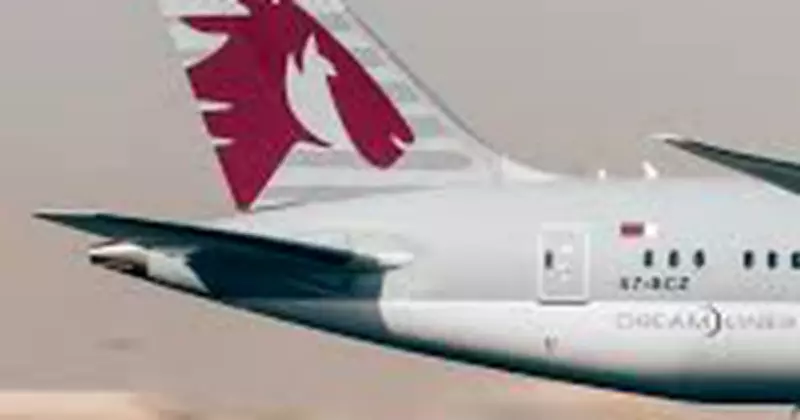
Two prominent carriers, Emirates and Qatar Airways, were unable to operate scheduled flights from Nigeria after airspace restrictions intensified in parts of the Middle East. Aircraft scheduled to depart for Doha and the United Arab Emirates remained parked at Lagos airport as military exchanges between Israel and Iran escalated.
Both airlines had planned to deploy high-capacity aircraft on the affected routes. Emirates was scheduled to operate its Boeing 777-300ER, configured to carry between 354 and 360 passengers. Qatar Airways was set to use a Boeing 787-800 with a capacity ranging from 210 to 250 passengers.
Massive Financial Impact
Using conservative estimates of 354 seats for Emirates and 210 for Qatar Airways, at least 554 passengers were expected to depart Nigeria per rotation. Over multiple rotations between Saturday and Tuesday, these numbers climbed rapidly, resulting in significant revenue losses.
Ticket pricing reveals the substantial financial impact of the disruption. Qatar Airways' one-way fares were selling between ₦1.3 million and ₦1.8 million. Emirates' one-way tickets ranged from $1,380 to $2,395. Using the official exchange rate of ₦1,379 to $1, Emirates' lowest fare converts to ₦1,903,020 per passenger.
Across four rotations within the review period, Emirates alone would have airlifted approximately 1,416 passengers. At ₦1,903,020 per seat, this amounts to ₦2.69 billion in projected one-way revenue and roughly ₦5.39 billion for return trips.
Qatar Airways, operating 210 passengers per flight across similar rotations, would have transported about 840 passengers. At ₦1.3 million per ticket, projected earnings stand at ₦1.09 billion one-way and ₦2.18 billion for return journeys.
Combined, both airlines are estimated to have lost approximately ₦7.54 billion within the short period under review.
Broader Economic Consequences
The ripple effects extend far beyond airline balance sheets. Aviation taxes, passenger service charges, handling fees, and fuel purchases have all been affected. For Nigeria, where international aviation contributes significantly to non-oil revenue streams, this sudden halt represents more than a scheduling inconvenience—it constitutes a measurable economic pause.
Passengers Stranded and Distressed
Many passengers arrived at Lagos airport last Saturday expecting routine departures, only to be informed that flights could not proceed due to airspace closures triggered by missile exchanges and mounting military tensions. Some were initially told the delay might be temporary, but hours later they were asked to disembark and leave the airport.
Dare Olanihun, one of the stranded passengers, described his experience: "If I had known that war would break out, I would have traveled earlier. This is a serious blow to me. Tears dropped from my eyes when we were asked to disembark." His flight was scheduled to connect through a Middle Eastern hub before onward travel, an option that disappeared within hours.
Regional Airspace Closures
Across the Middle East, governments moved swiftly as tensions escalated. Syria reportedly shut sections of its southern airspace bordering Israel for 12 hours. Jordan conducted defensive operations and intercepted incoming projectiles. Kuwait temporarily closed its airspace after engaging aerial threats. Russia's aviation authority, Rosaviatsia, suspended commercial flights to Israel and Iran until further notice.
The escalation followed strikes by the United States and Israel on multiple locations in Iran, including Tehran. U.S. President Donald Trump described the operations as major combat actions. Iran responded with missile strikes targeting northern Israel and U.S. military installations in the Middle East.
Local Catering Industry Affected
Following a directive by Nigeria's Minister of Aviation and Aerospace Development, Festus Keyamo, foreign airlines were required to patronize local caterers for outbound international flights. This policy had begun to yield higher sales for domestic catering firms, but with flights suspended, that progress has stalled.
One caterer, who requested anonymity, revealed she had already prepared meals for one of the affected airlines before learning the flights would not depart. "Two airlines going to those routes are my customers. I had to sell the food I prepared over the weekend," she explained.
Waiting for Resolution
Currently, airlines await the reopening of restricted airspace while passengers monitor updates for rescheduled flights. Caterers are adjusting their inventory to minimize losses. In Lagos, aircraft remain grounded with engines silent and schedules paused, awaiting decisions being made thousands of kilometers away in conflict zones.
The situation highlights how geopolitical conflicts in distant regions can have immediate and severe economic consequences for Nigeria's aviation sector, affecting airlines, passengers, and supporting industries alike.