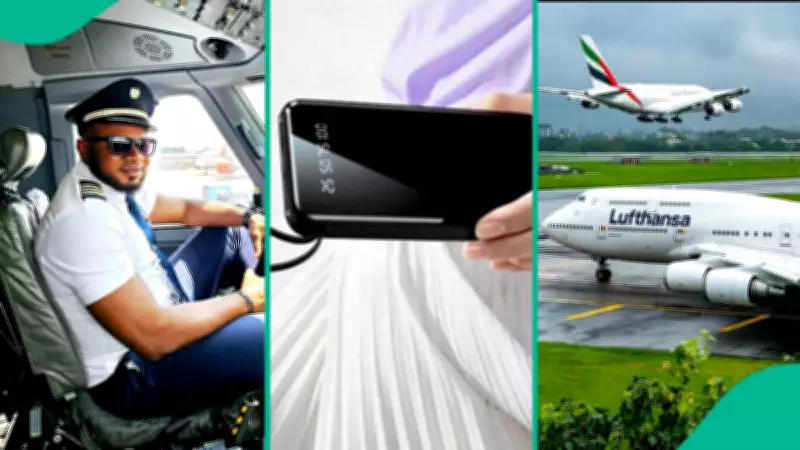
Nigerian Pilot Shares Vital Flight Safety Guidance Amid Power Bank Restrictions
Prominent Nigerian pilot Captain Ifeanyi Callistus has issued a crucial safety advisory for air travelers, emphasizing proper handling of power banks during flights. This comes as Nigerian airlines implement stricter policies in alignment with new regulations from the Nigerian Civil Aviation Authority (NCAA).
Critical Safety Advisory from Aviation Expert
In a detailed post on his verified Facebook page, Captain Callistus, known for his viral pre-flight speeches in Pidgin English, explained that power banks containing lithium-ion batteries are classified as potentially hazardous materials under aviation safety rules. He stressed that these devices must be kept in hand baggage and must not be used or charged while onboard aircraft.
The Air Peace pilot highlighted several key safety points:
- Power banks should never be placed in checked baggage
- Lithium batteries must remain accessible during flight
- Passengers must strictly follow airline safety rules and aviation regulations
Captain Callistus shared a concerning incident to illustrate the importance of these measures: "A passenger once placed a power bank inside a carry-on bag, and during the flight the device overheated and caught fire on the aircraft. Because the bag was stowed in the overhead locker, it was not easily accessible and the situation escalated before the crew could respond."
Airlines Implement Stricter Power Bank Policies
Following NCAA directives, multiple Nigerian airlines have announced enhanced restrictions regarding power bank carriage. Ibom Air has prohibited passengers from placing power banks in overhead bins or checked-in baggage, citing compliance with global aviation safety standards.
The airline stated this decision reinforces its commitment to protecting passengers and crew from potential in-flight hazards associated with lithium-ion batteries. United Nigeria Airlines has issued similar safety advisories, specifying that each passenger may carry a maximum of two power banks, with each device not exceeding 100 watt-hours capacity.
Global Aviation Standards and Local Implementation
Captain Callistus explained that these regulations align with global aviation standards issued by the International Civil Aviation Organisation (ICAO) and adopted by national regulators worldwide. Lithium batteries are prohibited in checked baggage and subject to strict capacity limits when carried onboard aircraft due to risks of overheating, fire, or explosion if damaged or improperly handled.
The pilot emphasized: "This video is to create awareness for passengers, especially travelers in Nigeria and around the world, so we can all fly safer and avoid preventable incidents. Remember: At 30,000 feet, the crew are the only firefighters available."
These safety measures represent a significant shift in how Nigerian airlines manage potential fire hazards onboard aircraft, with both Ibom Air and United Nigeria Airlines actively enforcing the new directives to enhance passenger safety during flights.