President Tinubu Approves Second Runway Construction for Abuja Airport
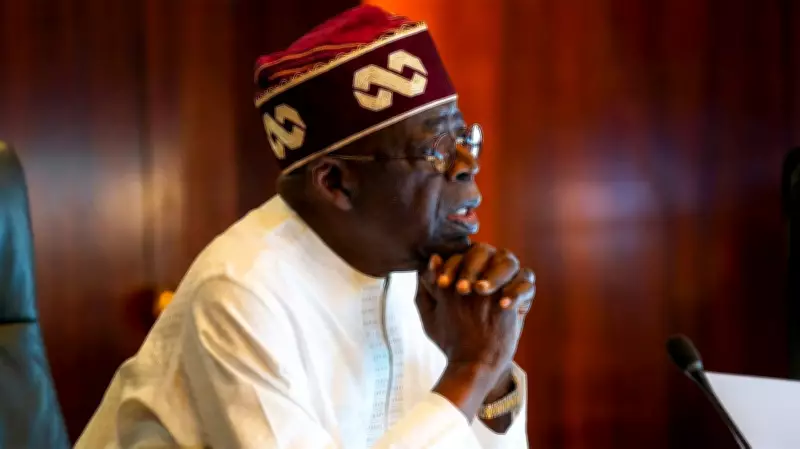
President Bola Ahmed Tinubu has once again given his approval for the construction of a second runway at the Nnamdi Azikiwe International Airport (NAIA) in Abuja. This significant decision was disclosed by the Minister of Aviation and Aerospace Development, Festus Keyamo, during his keynote address at the inaugural Nigeria Aircraft Acquisition and Investment Summit (NAAIS) held in Lagos.
Renewed Push for Aviation Infrastructure
In his speech, Minister Keyamo emphasized that the construction of a second runway is a renewed effort to strengthen Nigeria's aviation infrastructure and alleviate the growing operational pressures on the nation's airports. The summit, themed 'Unlocking Capital, Confidence & Capacity in Nigerian Aviation', provided a platform for discussing critical issues in the sector.
Historical Context and Controversies
The plan for a second runway at the Abuja airport dates back to 2009 under the then Minister of Aviation, Babatunde Omotoba. Initially, Julius Berger presented a cost estimate of N64 billion, which was scaled down from higher figures. Public Works suggested an alternative estimate of N32 billion based on 2010 pricing. The N64 billion figure sparked public controversy and suspicions of foul play, leading to its disapproval by the National Assembly.
In 2022, the Federal Government reached an agreement with the China Civil Engineering Construction Corporation (CCECC) to construct the runway for N64 billion. However, the cost increased to N90 billion in 2023 and was further hiked by the contractor to N532 billion in 2024. Minister Keyamo opposed this amount, and the contractor subsequently abandoned the site.
Current Developments and Government Initiative
Minister Keyamo announced that President Tinubu has approved the contractor's return to the site, although he did not disclose the financial costs involved. He stated that the Federal Government views this project as a critical component of its current agenda, underscoring its importance for national development.
Addressing Capital and Capacity Challenges
During the summit, the Director-General of Civil Aviation (DGCA), Chris Najomo, highlighted the need to unlock capital by addressing structural and financial barriers that have long constrained the growth of Nigeria's airlines. He noted that aircraft acquisition is capital-intensive and stressed that without access to sustainable and affordable financing, fleet expansion and modernization efforts may remain limited.
Najomo advocated for strengthening the legal and institutional framework for aircraft financing, urging investors and financiers to develop innovative solutions tailored to Nigeria's unique environment to make aircraft acquisition easier for carriers.
Global and Local Perspectives
In a virtual speech, the Director-General of the World Trade Organisation (WTO), Dr. Ngozi Okonjo-Iweala, observed that aviation is crucial for moving goods from production to delivery points. She noted that African aviation has contributed little to such movements, with intra-African trade remaining at 16 percent and the continent contributing only three percent to global trade despite its population and potential.
Lagos State Governor, Babajide Sanwo-Olu, assured attendees that the state would continue to play a key role in connecting people across Nigeria. He emphasized that the proposed Lekki Airport, once completed, would ease passenger and cargo movements within the state, further enhancing Nigeria's aviation capabilities.