Passengers Stranded After Train Collision on Kaduna-Abuja Route, NSIB Launches Probe
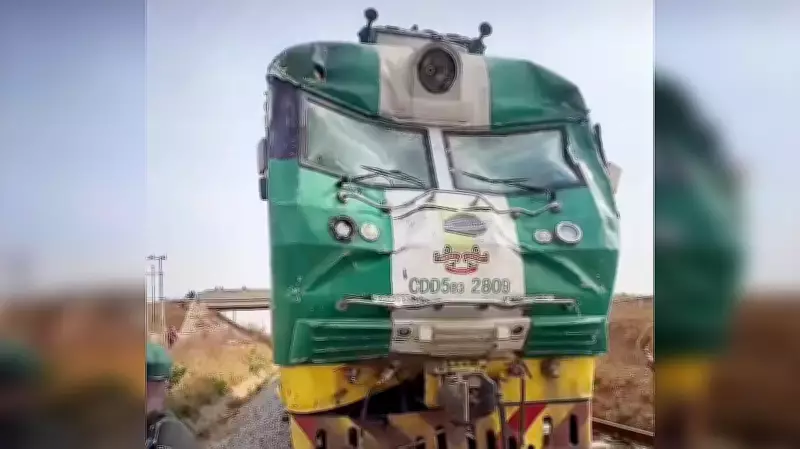
Many passengers were left stranded yesterday following a collision between two trains on the Kaduna-Abuja rail track, prompting the Nigeria Railway Corporation (NRC) to immediately suspend operations along this busy corridor. The Nigerian Safety Investigation Bureau (NSIB) has commenced a thorough investigation into the incident, while NRC confirmed that no fatalities were recorded, though injuries were sustained.
Incident Details and Passenger Accounts
The train mishap occurred during the early morning hours along the Jere axis, raising fresh concerns about safety procedures and signalling systems on one of Nigeria's busiest rail lines. According to passengers, the train departed Kaduna as scheduled but later encountered another train on the same track. Witnesses described the moment as sudden, with a loud bang causing both trains to come to an abrupt stop.
One passenger recounted, "We were moving at a steady pace when a loud bang was heard, and the train suddenly braked. We later realised we had hit another train on the same track. Everyone in the train was shaken, as we waited for official information." Another passenger, Sada Malumfashi, added, "I just dropped from the Kaduna–Abuja train. We heard a loud bang and the train jolted to a stop, flinging people across. Some passengers were hit and are bleeding with serious injuries."
Official Statements and Emergency Response
Early reports indicated notable damage to the front sections of both trains, but no fatalities were confirmed. The Management of NRC, in a statement signed by Managing Director Kayode Opeifa, confirmed that an avoidable incident occurred around 10:30 a.m. near Asham, involving a rear locomotive and a passenger coach due to a coupling issue.
The statement noted that some passengers sustained injuries and were promptly taken to a nearby medical facility for care. Emergency response protocols were immediately activated, with technical teams mobilised to the location. Security personnel were deployed to assist passengers and secure the site, while NSIB was on site to conduct a thorough investigation in line with established safety procedures.
NSIB Investigation and Timing Discrepancy
Experts suggested that such incidents might point to a breakdown in communication between train operators and the control centre or a malfunction in the automated signalling system. On the timing, NSIB disclosed that the occurrence took place around 9:16 a.m. along the Jere–Asham section near Asham Station in Kaduna, contrary to an earlier NRC release.
According to NSIB, the train, identified as KA2, departed Rigasa Railway Station in Kaduna at the start of its scheduled journey to Idu Station in Abuja. It operated within the service window of 7:15 a.m. to 10:01 a.m., arriving at Jere Station around 8:52 a.m. before departing again at 8:59 a.m. to continue to Abuja.
NSIB detailed, "Upon arrival at Jere Station, a rear locomotive was attached to the train to provide additional operational support. Shortly after departure, the rear locomotive became detached while the train proceeded along a downward gradient towards Asham. The detached locomotive rolled forward and struck the rear portion of the train, resulting in a serious operational occurrence." The train consisted of two locomotives, one power car, two business class coaches, and six standard passenger coaches, conveying 429 passengers, 46 crew members, and 24 security personnel.
Commitment to Safety and Ongoing Probe
The Director General of NSIB, Capt. Alex Badeh Jr., expressed concern for the affected passengers and reaffirmed the Bureau's commitment to uncovering the facts behind the occurrence. He assured that NSIB is working closely with NRC and other relevant agencies to probe the matter thoroughly, aiming to prevent future incidents and enhance rail safety across Nigeria.