Trump's Presidential Aircraft Switched After Electrical Problem Detected
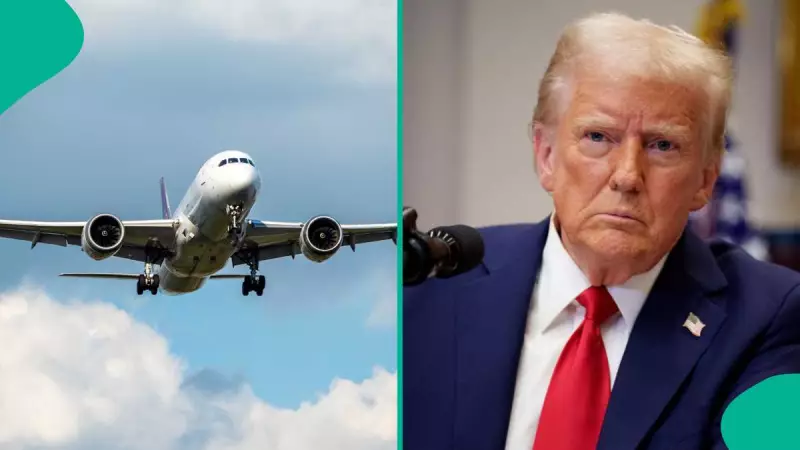
United States President Donald Trump safely transitioned to a backup aircraft after a minor electrical issue was identified on Air Force One shortly before his scheduled departure. The incident occurred at Joint Base Andrews near Washington, where the president's initial Boeing 747 aircraft was found to have the technical problem during pre-flight checks.
Safe Transfer to Backup Plane for Davos Journey
According to White House officials, the electrical issue was detected by the crew of the presidential aircraft before takeoff. President Trump subsequently boarded a smaller Boeing 757 to continue his journey to the World Economic Forum in Davos, Switzerland. The departure occurred around midnight local time on Wednesday, January 21, approximately two hours after the originally scheduled takeoff time.
The White House emphasized that the president's safety was never compromised and that standard security protocols were followed throughout the aircraft change procedure. This marks a rare occurrence involving presidential air travel, though not entirely unprecedented in recent history.
Historical Context of Presidential Air Incidents
While incidents involving presidential aircraft are uncommon, they have occurred previously under different administrations. In 2011, Air Force One aborted a landing due to adverse weather conditions while carrying President Barack Obama to an event in Connecticut. More recently in 2022, the Air Force Two aircraft transporting then-Vice President Joe Biden was struck by birds during approach in California, though it landed safely without incident.
These occurrences highlight that even the most advanced and meticulously maintained aircraft can experience technical issues, though presidential security protocols are designed to handle such situations without compromising safety.
Public Reactions to the Aircraft Incident
The news of the electrical issue on President Trump's aircraft has generated diverse reactions from American citizens and observers:
- Nick commented humorously: "Plot twist: the backup plane is just a regular 747 with a wifi password that says 'Make America Great Again'"
- Gbenga Giwa questioned: "But we are told Air Force One can NEVER get ANY issue, and even if it does, it can be solved mid-air. They said it's White House on motion."
- Ravi provided technical perspective: "Air Force One has backup systems precisely for situations like this. Mechanical issues happen even with the most advanced aircraft. The real story here is safety protocol working as designed, not drama."
- Giuliogaia expressed political criticism: "One of Trump's greatest achievements has been to harm and shame his own worldwide supporters, allowing the worst left-wing leaders to come back and win."
- Chris Dwyer tweeted: "Oh, shocks. I don't care about Trump if something happened, but the others on the plane I was worried about. Could have been a great day, though."
- Elizabeth Durack raised security concerns: "James O'Keefe posted a video today of a guy near Davos talking about how he'd like to shoot down Air Force One. He went on and on. The guy was joking about historic, nonfunctioning artillery, but still, I wonder if it gave the Secret Service pause about the mindset of people there?"
Security Protocols and Presidential Travel
The incident underscores the comprehensive safety measures in place for presidential travel. Air Force One, while representing the pinnacle of aviation technology and security, operates with multiple redundant systems and backup protocols. The swift transition to an alternative aircraft demonstrates the effectiveness of these contingency plans.
President Trump's journey to the World Economic Forum continues as scheduled despite the aircraft change. The annual gathering in Davos brings together world leaders, business executives, and policymakers to discuss global economic issues and international cooperation.
This development occurs amidst ongoing discussions about aviation safety and the reliability of presidential transportation systems. While such incidents understandably attract public attention, aviation experts note that minor technical issues are not uncommon in commercial or government aviation, with established procedures ensuring passenger safety remains paramount.