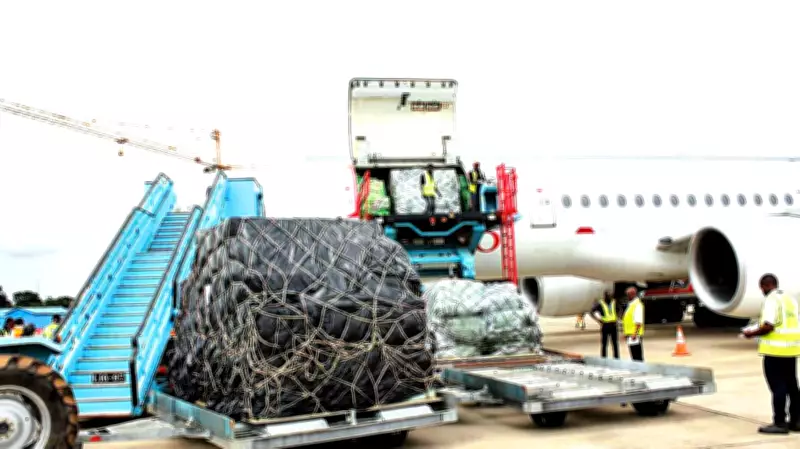
Nigeria's inability to become a major cargo hub in West Africa is largely due to the weak economies of neighbouring countries, according to the Managing Director of Mainstream Cargo, Seyi Adewale. Speaking in an interview with The Guardian in Lagos, Adewale highlighted the challenges affecting cargo movement and logistics operations in the region.
Regional Economic Weaknesses
Adewale noted that most West African countries lack the production capacity, trade volume, and industrial strength required to support a vibrant regional cargo network. He pointed out that countries surrounding Nigeria, such as Senegal, The Gambia, and Benin, do not generate sufficient trade activities to sustain profitable cargo distribution and airline operations. "Our neighbouring countries are small. The trade and business really revolve around here (Nigeria). We have weak countries surrounding us. It is not really profitable and efficient because who are we supplying, who are we distributing to?" he asked.
Comparison with Other African Regions
He compared West Africa with Southern and Northern Africa, where stronger economies and better trade activities support regional logistics and cargo operations. Countries like South Africa, Algeria, Morocco, Egypt, and Tunisia have stronger trade, production, and tourism sectors that encourage cargo connectivity. Adewale recalled that the only period Nigeria experienced significant cargo and passenger movement within West Africa was during the Economic Community of West African States Monitoring Group (ECOMOG) operations in the 1990s.
Infrastructure Challenges
On infrastructure challenges, Adewale identified information and communication technology (ICT) downtime within customs clearing systems as a major problem. Disruptions on platforms such as B'Odogwu and customs clearing systems in airports and seaports increase cargo clearance costs and put pressure on importers and clearing agents. He explained that cargo agents or importers are given a seven-day demurrage-free period to clear goods, but any downtime on customs ICT infrastructure directly affects shipment clearance and increases costs. "We have just seven days to clear any goods for any client – demurrage-free days and if, for any reason, there is downtime or there are issues regarding customs ICT infrastructure in clearing, it directly affects the shipment. Not only that, it causes a strain between the importer and the clearing agents," he said.
Other Infrastructure Issues
Adewale also raised concerns over sudden increases in charges by aviation agencies, including the Nigeria Civil Aviation Authority (NCAA) and the Federal Airports Authority of Nigeria (FAAN), as some of the infrastructure challenges facing the cargo business. He mentioned deficiencies in cold-chain infrastructure, questioning whether cargo handling companies consistently maintain and verify temperatures for sensitive cargo. He emphasized the need for seamless ICT communication between cargo handlers such as Skyway Aviation Handling Company (SAHCO) and Nigerian Aviation Handling Company (NAHCO), airlines, customs, and regulatory agencies including the National Agency for Food and Drug Administration and Control (NAFDAC) and the Standards Organisation of Nigeria (SON).
Additional Challenges
Other challenges identified include poor warehouse management, cargo tracking difficulties, leaking terminal roofs, and inefficient cargo location systems. Adewale expressed scepticism that existing cargo terminals operated by FAAN and privately managed terminals such as Bi-Courtney Aviation Services Limited (BASL) would be sufficient to support future growth. He called for innovation, efficient space management, and continuous upgrade of screening equipment to prevent congestion and improve service delivery.