
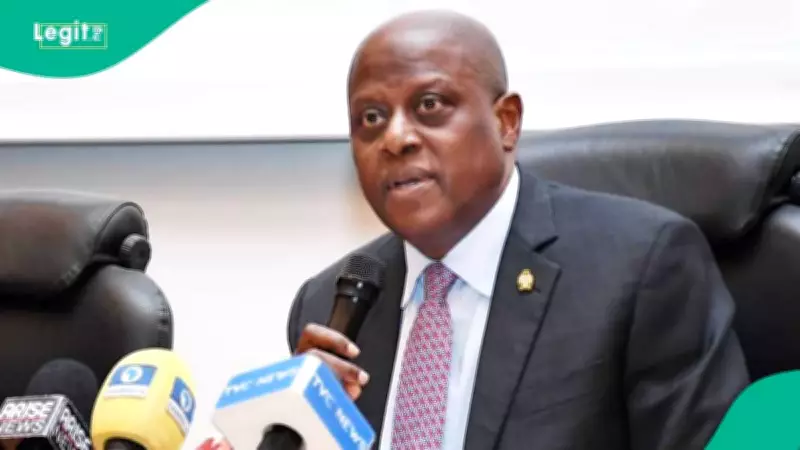
CBN Moves to Alleviate Customer Concerns Over Banking Stability
The Central Bank of Nigeria (CBN) has issued a fresh statement to calm mounting anxiety among bank customers following the conclusion of the banking sector recapitalisation exercise. The apex bank insists that affected financial institutions, including those entangled in court cases or supervisory processes, remain stable and fully capable of meeting their obligations to depositors.
Union Bank's Legal Battles and Governance Uncertainty
One of the most closely monitored situations involves Union Bank of Nigeria, where a leadership crisis has sparked significant public concern. A ruling by the Federal High Court in Lagos reinstated the bank’s board and declared the CBN’s earlier dissolution of its management unlawful, stating that the regulator exceeded its statutory powers. However, the CBN has challenged this decision at the appellate level, arguing that its intervention was necessary to prevent systemic risk within the financial system. Despite this ongoing legal tussle, which has left the bank’s governance structure in limbo, operations continue uninterrupted.
Providus and Unity Bank Merger Still Pending
Attention is also focused on Providus Bank and Unity Bank Plc, whose proposed merger remains incomplete despite having received regulatory approvals. This merger, widely viewed as a strategic move to meet recapitalisation requirements, has yet to receive final legal sign-off. Until the process is finalized, both institutions remain under close scrutiny as stakeholders await its closure.
Polaris and Keystone Banks Under Regulatory Oversight
Meanwhile, Polaris Bank and Keystone Bank Limited are still under regulatory oversight. Although they did not meet the minimum capital threshold before the March 31, 2026 deadline, the CBN insists they possess the capacity to comply once ongoing issues are resolved. According to a report by Leadership, CBN Governor Olayemi Cardoso explained that some challenges faced by these banks emerged after the recapitalisation programme was announced, making it impractical to hold them to the same timeline as others.
Cardoso Assures Nigerians of Normal Banking Operations
Speaking on the sidelines of the World Bank and IMF meetings, Governor Cardoso stressed that there is no cause for alarm. He emphasized that normal banking operations continue across all affected institutions, and customers’ deposits remain secure. Cardoso noted that once regulatory and legal encumbrances are resolved, these banks are expected to meet the capital requirements without difficulty.
Recapitalisation Exercise Deemed a Major Success
Despite the lingering issues with a few lenders, the CBN has described the broader recapitalisation exercise as a resounding success. Cardoso highlighted that the programme attracted a strong mix of both domestic and foreign investments, reflecting renewed confidence in Nigeria’s banking sector. He revealed that approximately 73 percent of the capital raised came from local investors, while 27 percent was sourced internationally—a development he described as a significant milestone.
Nigeria’s Banking Sector Enters a More Resilient Phase
The CBN governor stated that the successful execution of the recapitalisation policy has effectively silenced early scepticism about its feasibility. According to him, the outcome has validated the central bank’s long-term strategy for strengthening financial institutions and ensuring systemic stability. With most banks already meeting the required thresholds and others on track to comply, Nigeria’s banking sector appears to be entering a more resilient phase, even as a handful of institutions navigate the final stretch of legal and regulatory hurdles.
In related news, Legit.ng earlier reported that Nigeria’s banking sector is facing tighter regulatory scrutiny. The CBN has set an April 30 deadline for lenders to submit Board-approved Risk-Based Capital (RBC) stress test reports, signaling a shift from focusing on capital size to assessing its resilience. This policy is designed to safeguard gains from the recent recapitalisation exercise.




