
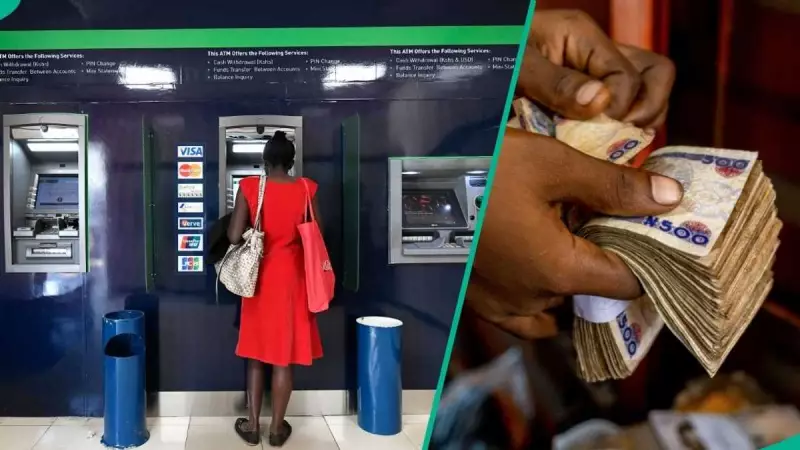
CBN Announces New ATM Regulations to Address Cash Access Challenges
The Central Bank of Nigeria (CBN) has revealed plans to introduce comprehensive new regulations aimed at improving automated teller machine (ATM) operations across the country's banking sector. This strategic move comes as Nigeria faces persistent challenges with cash access and electronic payment reliability.
Aligning Card Issuance with ATM Capacity
Speaking through his Special Adviser Fatai Karim at the 2026 Committee of Heads of Bank Operations Conference, CBN Governor Yemi Cardoso announced that the upcoming policy will require commercial banks to carefully align the number of debit cards they issue with the operational capacity of their ATM networks. This regulatory approach represents a significant shift in how banks manage their electronic payment infrastructure.
The central bank emphasized that when cash access fails due to prolonged ATM outages or uneven distribution, the credibility of Nigeria's entire payment system becomes compromised. Karim stated that the CBN is actively engaging with key industry stakeholders and expects the new policy to take effect within months, possibly before the end of the second quarter of 2026.
Addressing Systemic Challenges
The planned regulations specifically target several persistent issues that have plagued Nigeria's banking sector, including ATM congestion, frequent downtime, and uneven cash availability across different regions of the country. By implementing these measures, the CBN aims to enhance ATM reliability, improve cash distribution mechanisms, and ultimately restore public confidence in electronic payment systems.
According to Vanguard reports, these rules represent a comprehensive effort to strengthen the foundation of Nigeria's financial infrastructure at a critical juncture in the nation's economic development.
Record Cash Holdings Outside Banking System
The announcement of these regulatory changes coincides with concerning data about Nigeria's cash economy. The country closed 2025 with a record N5.4 trillion in currency held outside the formal banking system, indicating a strong and persistent preference for cash transactions among both households and businesses.
Data from the CBN reveals that only a small fraction of Nigeria's physical cash remains within deposit money banks, with total currency in circulation reaching N5.7 trillion by December 2025. This substantial amount of cash outside regulated financial institutions has surpassed the previous record of N5.125 trillion set in December 2024.
Broader Economic Context
The rise in cash holdings outside banks has occurred alongside broader money supply growth, which reached approximately N124.4 trillion by the end of 2025. Financial analysts note that this trend underscores the widening gap between formal financial channels and Nigeria's substantial cash economy.
This development presents a significant challenge for regulators who continue to push for greater adoption of mobile banking, financial inclusion initiatives, and electronic payment systems across the country. The Sun reports that despite these efforts, many Nigerians still prefer traditional cash transactions over digital alternatives.
Recent Banking Sector Developments
This regulatory announcement follows recent changes in Nigeria's banking sector, including the implementation of a 7.5% Value Added Tax (VAT) on card maintenance fees and other selected electronic banking charges that took effect on January 19, 2026. Under this new arrangement, a standard N50 card maintenance fee now attracts an additional N3.75 as VAT.
The CBN's forthcoming ATM regulations represent a proactive approach to addressing systemic issues within Nigeria's financial infrastructure while responding to the persistent preference for cash transactions among the population. These measures aim to create a more reliable and accessible banking environment for all Nigerians.




