
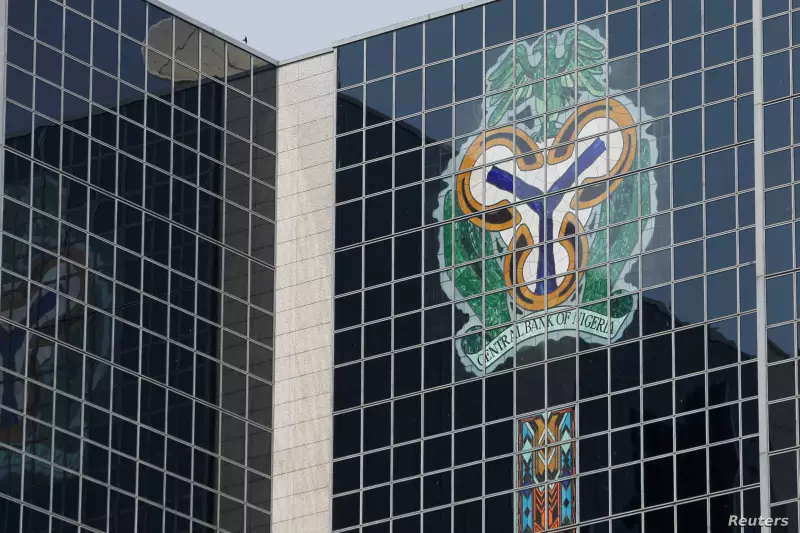
Governor of the Central Bank of Nigeria (CBN), Olayemi Cardoso, has firmly declared that the apex bank will not revert to the practice of financing the government's fiscal deficits. This significant announcement was made at the prestigious 60th Annual Bankers' Dinner, a high-profile event held in Lagos that gathered top bankers, political leaders, and key regulators.
A Definite End to an Erratic Era
Fiscal deficit financing is a mechanism that permits the Federal Government to seek liquidity support from the CBN to cover budget shortfalls, a provision that exists under strict statutory conditions within the CBN Act. However, Cardoso reaffirmed that the bank will not return to "funding fiscal deficits," despite these legal provisions.
This stance directly addresses the controversial practices under the previous administration, where the government reportedly drew an accumulated N30 trillion in overdrafts from the CBN. A substantial portion of this sum, about N23 trillion, was later restructured into a long-term bond. Governor Cardoso, who had previously stated the CBN had ended the era of "reckless" ways and means advances, used this platform to solidify this new policy direction.
The Unwavering Push for Single-Digit Inflation
Alongside the commitment to fiscal discipline, Governor Cardoso reiterated the Bank's primary objective of achieving single-digit inflation, emphatically stating that double-digit inflation "cannot be accepted." He provided encouraging data to support the current trajectory, noting that headline inflation has fallen sharply from over 34 per cent in November last year to 16.05 per cent as of last month.
This figure, the lowest in recent years, follows a change in the base year and a restructuring of the Consumer Price Index (CPI) basket. Despite this significant moderation, Cardoso stressed that the CBN will continue its efforts to push inflation down to single digits. The last time Nigeria recorded such a feat was in 2025. Looking ahead, the Governor disclosed that the CBN's internal models project a sustained disinflation into 2026.
Economic Resilience and Sectoral Support
Cardoso attributed the positive economic indicators to the recent reforms implemented by the bank and the federal government. He stated that these reforms have placed the economy on the right path, allowing for steady and sustainable growth. "The resilience and recovery we are seeing is not a coincidence but a product of difficult choices," he told the gathering, highlighting the courage, patience, and sacrifice demonstrated by the current administration.
Further reinforcing the positive outlook, the Governor confirmed the Bank's commitment to the organic growth of Nigeria's external reserves, which rose to over $46 billion in mid-November.
The sentiment of recovery was echoed by other leaders at the event. The President/Chairman of Council of the Chartered Institute of Bankers of Nigeria (CIBN), Prof. Pius Olanrewaju, described 2025 as a story of resilience, stabilisation, and gradual recovery. He also mentioned the institute's initiatives to combat brain drain, including a talent retention programme to mitigate the impact of the 'japa' phenomenon.
Similarly, Oliver Alawuba, Chairman of the Body of Bank CEOs and Group Managing Director of UBA, emphasized the critical need for increased credit to the private sector to consolidate the ongoing economic recovery. He assured that a stronger risk-management framework would enable banks to expand credit to vital segments such as SMEs, youth, women, and the creative sector. Alawuba also gave assurances that banks are fully mobilised to ensure cash availability ahead of Christmas and are committed to seamless digital transactions during the festive season.




