
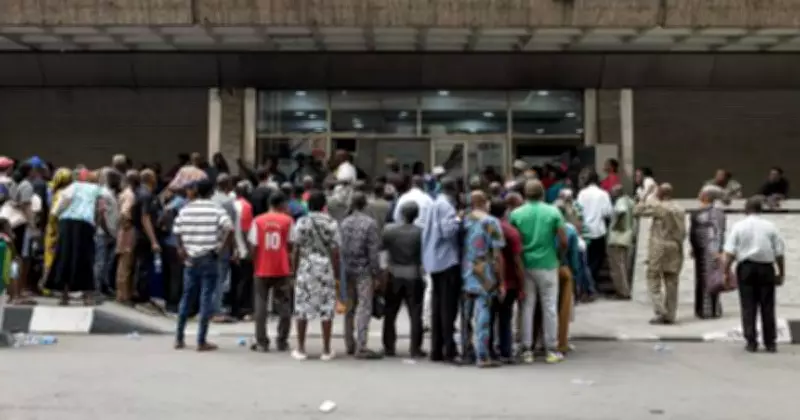
First Bank's Controversial Layoff Strategy Ignites Public Fury
First Bank of Nigeria has ignited a firestorm of public outrage following disturbing accounts of how the financial institution executed its latest round of mass staff layoffs. While workforce reductions are not uncommon in the banking sector, it is the particularly cold and calculated method employed by First Bank that has Nigerians talking and expressing widespread condemnation across social media platforms.
The Deceptive Training Process
According to multiple accounts circulating on various social media platforms, the bank initiated this controversial process by deploying a new group of non-core staff to branches nationwide one morning. Depending on branch size, as many as ten new workers arrived simultaneously, creating the appearance of routine recruitment activity to all present employees.
Management then instructed existing non-core staff members to train these new arrivals, guiding them through essential banking operations including checking account balances, posting transactions, opening new accounts, and navigating various system menus. The training proceeded without incident, with no one suspecting the true purpose behind these sessions.
What these employees did not realize was that the individuals they were patiently training had actually been hired to replace them. The shocking truth only became apparent when staff members attempted to log into their work systems during their next scheduled shift and discovered their access had been completely revoked.
The Sudden Lockout and Dismissal
Initial confusion led some affected employees to assume they were experiencing network issues, prompting them to contact IT support for assistance. To their further dismay, they discovered that some IT staff members receiving these support requests had also been locked out of their systems, indicating a broader, coordinated action.
Shortly after the system lockouts, an SMS message arrived on their personal phones informing them that their services were no longer required by the bank. There were no prior meetings, no formal warnings, and no explanations provided beyond this brief text message notification.
Public Reaction and Broader Concerns
The circulating accounts have generated significant online reaction, with Nigerians expressing multiple layers of response including outrage directed at First Bank's management, deep sympathy for affected employees, and broader unease about job security in Nigeria's challenging economic landscape.
One social media user shared a personal connection to the situation, stating: "This is not funny at all. It affected my next flat neighbour couple. Husband was real staff and wife on contract. Both got disengaged last Friday. Having spent over 10yrs. May God show up for them miraculously."
Another comment highlighted the dedication these employees showed: "The annoying thing is these people give their lives to the jobs, no room to attend interviews or do other jobs."
Career advice emerged in the discussion, with one user warning: "The max anyone should do a contract bank role is three years, if you've a BSc and lucky with age I don't advise you take up a contract role. The moment you stay more than three years, you'll become complacent and the layoff will heat hard that age won't do you any favour when..."
Questions about institutional protections were raised, with one comment demanding: "What exactly is the Labour Union doing about this? Unless the severance package is so generous, unions should shut down all the bank outlets. We have labour law for a reason."
Historical Context and Industry Standards
The Nigerian banking sector has a documented history of abrupt exits for non-core and contract staff members, but the deliberate utilization of outgoing employees to train their own replacements without their knowledge has struck many observers as particularly callous, even by established industry standards.
This incident raises serious questions about corporate ethics, employee treatment, and the psychological impact of such dismissal methods on affected workers who dedicated years of service to the institution.
At the time of this reporting, First Bank of Nigeria had not issued any public statement addressing these specific allegations or the widespread criticism generated by the accounts of their layoff methodology. The silence from the banking institution has only fueled further discussion and condemnation across Nigerian social media and public discourse.




