
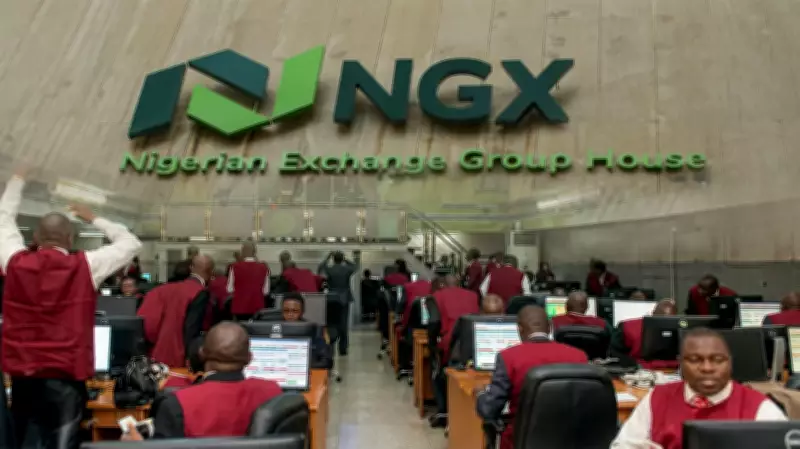
The Nigerian Exchange Limited (NGX) has officially launched the T+1 settlement cycle, reducing the time it takes to settle securities trades from two business days to just one. This move, which began implementation yesterday, follows a successful six-month transition from the previous T+3 to T+2 cycle.
Impact on Investors and Market Efficiency
Under the new regime, investors who buy or sell shares will have their transactions settled within one business day after the trade date. This significantly accelerates the transfer of cash and securities, improves market liquidity, and aligns Nigeria's capital market with global trends. Processing times are expected to drop sharply, allowing investors quicker access to their funds.
SEC Director-General Commends Transition
Speaking at the launch event in Lagos, the Director-General of the Securities and Exchange Commission (SEC), Dr. Emomotimi Agama, hailed the transition as a milestone in modernizing Nigeria's capital market infrastructure. He emphasized that for retail investors in cities like Lagos, Kano, or Port Harcourt, selling shares today means cash is available tomorrow, not in two or three days. This frees up capital for reinvestment, consumption, or business decisions.
For institutional players and custodians, Agama noted that the shift requires immediate operational reconfiguration, including faster reconciliation, tighter confirmation windows, and more automated back-office processes. He described this as healthy pressure that forces modernization and raises operational standards across the market.
Global Alignment and Competitiveness
Agama highlighted that Nigeria joins a growing number of markets worldwide, including the United States, Canada, and India, that have adopted faster settlement cycles to improve efficiency, deepen liquidity, and strengthen investor confidence. The U.S., Canada, and Mexico adopted T+1 in May 2024, while India implemented it in phases between 2022 and 2023. The European Union, United Kingdom, and Switzerland are expected to migrate by October 2027.
Markets currently operating T+1 account for about 60% of global market capitalization, underscoring the rapid global shift toward shorter settlement periods. Agama stressed that faster settlement is no longer an innovation but a standard requirement for competitive markets seeking international investment.
CSCS CEO Highlights Operational Resilience
Yahaya Shantali, Chief Executive Officer of CSCS Plc, stated that the transition will improve operational resilience, enhance transaction processing, and deepen integration with global financial messaging systems and international market participants. He emphasized that the upgrades were not only for T+1 but to position Nigeria's capital market for sustainable growth, greater efficiency, and long-term global competitiveness.
Shantali reaffirmed CSCS's commitment to supporting market growth through continued investment in innovation and technology, strengthening market infrastructure, and enhancing stakeholder collaboration.
NGX Group CEO and Chairman Weigh In
Temi Popoola, Group Managing Director and CEO of NGX Group and Chairman of CSCS Plc, described the transition as a critical step in the broader evolution of Nigeria's capital market. He noted that while it is a significant milestone, it is part of a longer journey toward building a deeper, more liquid, and globally competitive market that supports sustained economic growth and capital formation.
Dr. Umaru Kwairanga, Chairman of NGX Group, said the shift benefits investors and market practitioners by increasing liquidity and efficiency. He commended market operators for their role in implementing previous reforms and expressed confidence that the transition to T+1 would be seamless, thanks to stakeholder professionalism and cooperation.




