
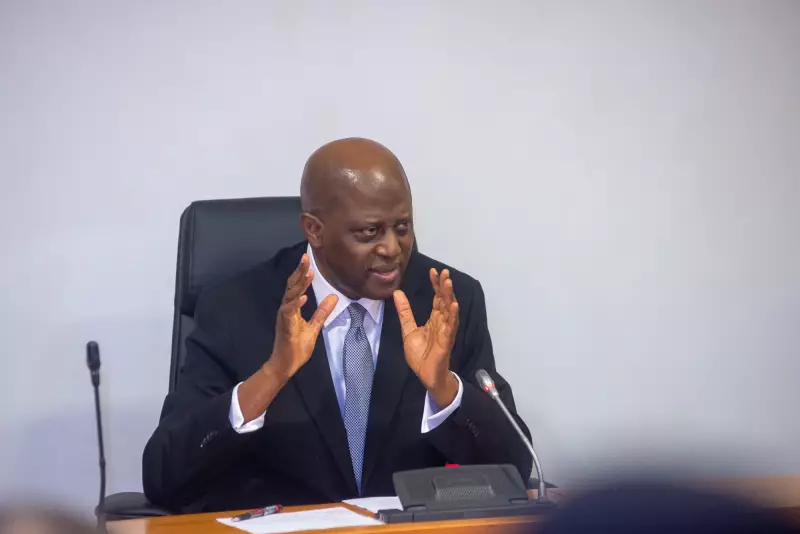
In a significant development for Nigeria's financial sector, the Central Bank Governor has announced that the country's foreign exchange market is now achieving unprecedented daily turnover figures without requiring central bank participation.
Market Achieves New Milestone
Olayemi Cardoso, Governor of the Central Bank of Nigeria (CBN), revealed during a press briefing on Tuesday that the foreign exchange market is now recording an average daily turnover of $500 million. This remarkable achievement comes with minimal intervention from the central bank, signaling a fundamental shift in market operations.
The announcement was made following the 303rd Monetary Policy Committee meeting held in Abuja, where Cardoso emphasized that Nigeria now operates a system driven entirely by "willing buyers and willing sellers."
Transparent System Driving Confidence
Cardoso explained that the current foreign exchange market represents a historic departure from previous systems. "What we have in the foreign exchange market in Nigeria today is something that has not happened before," he stated during the briefing.
The governor highlighted the electronic foreign exchange matching system (EFEMS) introduced by the apex bank as a key factor in boosting market confidence. This system has contributed significantly to the growing volume and stability observed in the market.
The transparency of the current system ensures that all participants can see who is buying and who is selling at any given time, creating an open marketplace that operates according to agreed rules.
End of Intervention Era
Cardoso emphasized that the old era where "if the CBN does not intervene, nothing happens" is now definitively over. The market has evolved to function independently, with discipline improved through policy consistency and the elimination of previous "flip-flops" that caused market distortions.
One of the most notable improvements has been the narrowing of FX rate differentials. Where gaps were once as wide as 60 percent, they have now reduced to approximately 2 percent due to enhanced market openness and transparency.
The governor concluded that these reforms have made Nigeria's foreign exchange market "more functional" and successfully restored confidence among all market participants, creating a stable environment for foreign exchange transactions.




