
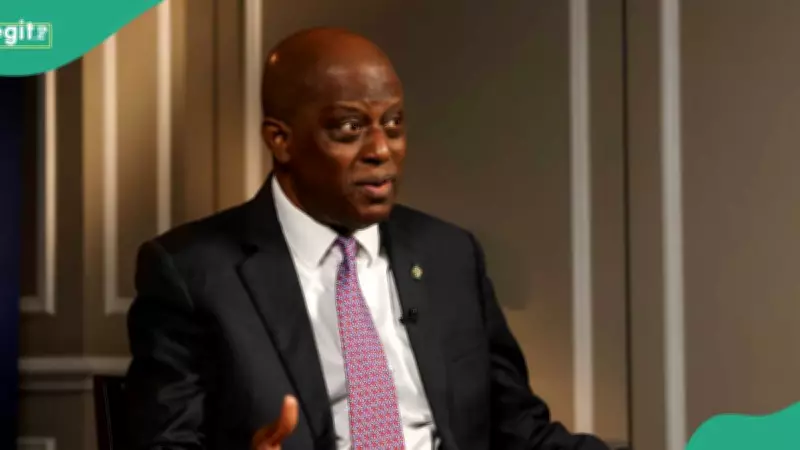
Nigeria's banking sector is currently navigating the final phase of a rigorous recapitalization initiative that has significantly shaped its trajectory for 2026. The Central Bank of Nigeria, under the leadership of Olayemi Cardoso, established elevated minimum capital thresholds in March 2024, mandating commercial banks with international licenses to amass at least ₦500 billion, national banks to secure ₦200 billion, and regional banks to achieve ₦50 billion by the impending deadline of March 31, 2026.
Strategic Objectives Behind the Recapitalization Drive
This ambitious regulatory framework is strategically designed to reinforce the financial system, enhance its capacity to withstand economic shocks, and stimulate broader economic growth. By compelling banks to bolster their capital bases, the Central Bank aims to cultivate a more robust and resilient banking environment that can effectively support Nigeria's developmental aspirations.
Leading Institutions That Have Successfully Met Requirements
As of late 2025 and early 2026, numerous financial institutions have demonstrated remarkable progress in fulfilling the Central Bank's capital mandates. Among the standout performers are the nation's largest and most systemically significant banks. Access Bank and Zenith Bank emerged as early achievers, not only meeting but substantially exceeding the ₦500 billion benchmark.
Access Bank accomplished this through a strategic rights issue, while Zenith Bank elevated its capital and premiums beyond ₦600 billion. Guaranty Trust Holding Company's banking subsidiary, GTBank, has also joined this elite group by aggressively raising equity to surpass the ₦500 billion threshold. United Bank for Africa has similarly raised sufficient capital to position itself above the requirement, awaiting final regulatory validation.
Beyond the Banking Giants: Other Successful Institutions
The success story extends beyond the largest banking corporations. Several national banks including Wema Bank, Stanbic IBTC, Globus Bank, and PremiumTrust Bank have comfortably exceeded the ₦200 billion mark. Specialized financial institutions have also demonstrated compliance, with non-interest lenders like Jaiz Bank and Lotus Bank meeting their Sharia-compliant category requirements, while merchant banks such as Greenwich Merchant Bank have crossed their respective thresholds through diverse capital-raising approaches.
According to Central Bank assessments, approximately 16 banks have already satisfied the recapitalization standards, with a broader cohort of 27 institutions actively raising fresh capital as the deadline approaches.
Institutions Still Navigating the Capital Challenge
Despite substantial advancements across the sector, several lenders continue to work diligently toward compliance with the new capital benchmarks. Various mid-tier and regional banks are actively pursuing rights issues, private placements, and potential mergers to secure the necessary funding.
Recent sector analyses indicate that institutions including Unity Bank and Keystone Bank remain engaged in efforts to meet the recapitalization target, facing varying degrees of capital shortfall. These banks are exploring multiple strategic options ranging from fresh capital issuances to potential mergers and acquisitions.
Foreign-Affiliated Banks Facing Strategic Decisions
Several foreign-affiliated banks operating with national licenses, such as Standard Chartered and Citibank Nigeria, require substantial capital enhancements or strategic repositioning to achieve compliance. Should these institutions fail to secure adequate funding or opt for market exit, their operational licenses could face reassessment, potentially triggering consolidation movements within the sector.
Potential Consequences of Non-Compliance
For banks that fail to meet the March deadline, the repercussions could be significant and multifaceted. The Central Bank has explicitly indicated that non-compliance may necessitate merger requirements, license downgrades, or even complete exits from commercial banking operations in Nigeria.
Smaller financial institutions might need to consider acquisition by stronger counterparts, surrender their operating licenses, or accept reclassification as non-bank financial institutions. Industry analysts note that merger discussions are already underway as survival strategies, though they caution that integration processes under pressure can present substantial challenges in harmonizing systems, corporate cultures, and operational frameworks.
Broader Implications for Nigeria's Banking Landscape
Successfully recapitalized banks are emerging with fortified balance sheets, enhanced lending capabilities, and increased confidence among both investors and customers. Conversely, institutions that struggle to meet requirements risk diminished market influence, potential consolidation, or complete exit, thereby reshaping Nigeria's banking architecture.
As the March deadline rapidly approaches, the recapitalization narrative transcends mere numerical targets, evolving into a story of institutional resilience, strategic adaptation, and the ongoing struggle to maintain relevance within an increasingly demanding financial ecosystem. Nigeria's banking narrative in 2026 will be defined not merely by capital figures achieved, but by how financial institutions navigate the profound transformations imposed by this comprehensive recapitalization initiative.
The forthcoming weeks will ultimately reveal which lenders ascend to strengthened positions, which institutions combine their capabilities through strategic partnerships, and which may gradually recede from the forefront of the nation's financial system.




