
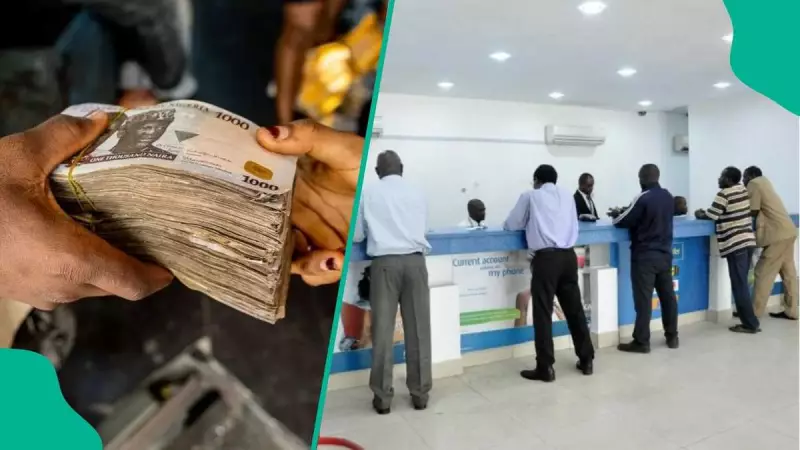
Nigeria's banking industry is poised for a significant revival in credit expansion as key economic headwinds begin to subside. After nearly two years of stringent monetary tightening, financial institutions are preparing to increase lending to businesses and households, signaling the end of a prolonged credit slowdown.
Economic Indicators Point to Recovery
Recent data from the Central Bank of Nigeria (CBN) provides early signs of improvement. Credit to the private sector saw a marginal increase of 0.3% month-on-month, reaching N74.6 trillion in November 2025. However, this figure remains 2% lower than the same period in the previous year, highlighting the unusual contraction that has affected Africa's largest economy.
The previous credit weakness stemmed directly from the CBN's aggressive measures to combat inflation and stabilize the national currency. High interest rates and constrained liquidity limited banks' capacity to lend. While this strategy slowed credit growth, it also fortified the banking system, preparing it for a new phase of expansion.
Improved Liquidity and External Reserves
Beneath the surface, critical liquidity metrics have shown substantial improvement. The nation's money supply grew by 13% year-on-year to approximately N123 trillion in November 2025. In a more dramatic shift, net foreign assets surged by an impressive 115% to N37.4 trillion. This jump was supported by increased foreign portfolio investments and stronger diaspora remittances.
Furthermore, Nigeria's external reserves climbed by $4.6 billion to $45.5 billion. This accumulation has helped alleviate the severe foreign-exchange shortages that previously acted as a major constraint on bank lending activities.
Why a Lending Rebound is Now Expected
Despite these improved conditions, lending growth has remained subdued. By mid-2025, deposit money banks had extended only N58.2 trillion in credit, a modest 4% increase from the prior year. These institutions still account for roughly 69% of total system lending.
The gap between this figure and the total private sector credit underscores the expanding role of alternative lenders. Development finance institutions, microfinance banks, and non-interest lenders filled the void while traditional commercial banks exercised caution.
Analysts at FBNQuest Merchant Bank project a turning point in 2026. They anticipate that inflation will soften as exchange-rate stability improves and food supply pressures ease. This development is expected to create room for the CBN to relax its restrictive monetary stance.
This policy shift will coincide with the banking sector's completion of a major recapitalisation drive. With thicker capital buffers, banks will have stronger incentives to deploy this capital productively. As interest rates are forecast to decline, shareholders will likely pressure banks to grow their loan portfolios rather than hold idle funds.
Another positive factor is the reduction in government borrowing. Credit to the public sector fell by 33% year-on-year in 2025. This decrease eases the crowding-out effect that previously limited private sector access to financing. With lower demand from the government, banks are expected to redirect their focus toward businesses, including manufacturers, traders, and agricultural firms.
Consequently, economists now project private sector credit growth of between 10% and 15%. This expansion would reverse the contraction witnessed in 2025 and restore deposit money banks as the primary drivers of financial intermediation in Nigeria's economy.
Rising NPLs and Sectoral Challenges
Amid this optimistic outlook, the CBN's decision to end its COVID-19 era loan forbearance programs has pushed the industry's non-performing loan (NPL) ratio to around 7%. This figure exceeds the regulatory limit and reflects the delayed recognition of existing asset quality problems, particularly in foreign exchange-sensitive sectors like power, manufacturing, aviation, and oil marketing.
While major banks are expected to remain stable, smaller institutions and those with significant exposure to vulnerable sectors may face increased pressure. Impairment charges are likely to rise alongside the ongoing recapitalisation efforts, presenting a dual challenge for some players in the market.




