
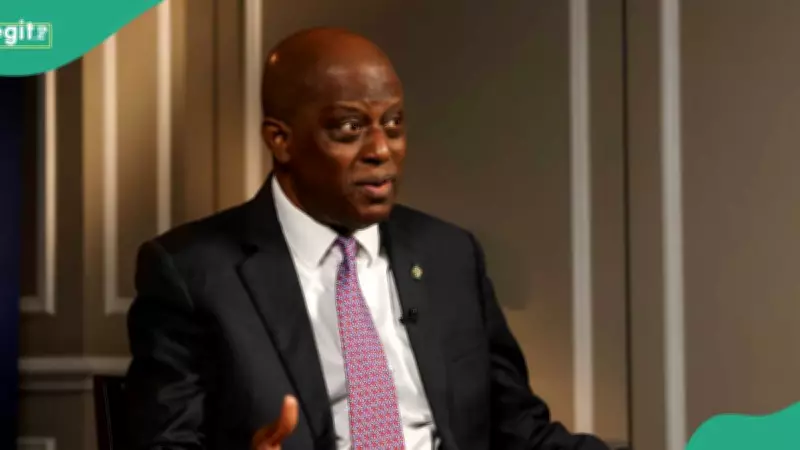
Two Major Nigerian Banks in Merger Talks as CBN Recapitalization Deadline Nears
Fresh tension is building across Nigeria's financial sector as confidential discussions between two major Tier-1 banks about a potential strategic merger intensify ahead of the Central Bank of Nigeria's recapitalization deadline. With barely three weeks remaining before the regulatory window closes on March 31, 2026, industry insiders confirm that high-level talks are ongoing as financial institutions scramble to meet the new capital requirements introduced by the apex bank.
Confidential Discussions Amid Regulatory Pressure
Although neither the banks involved nor regulatory authorities have officially confirmed the merger discussions, multiple sources familiar with the matter indicate that the talks reflect the intense pressure financial institutions face to shore up their balance sheets before the deadline expires. The potential merger remains highly confidential, with both the banks and regulators maintaining strict silence about the ongoing negotiations.
Analysts say such consolidation would not come as a surprise given the massive capital thresholds now required under the recapitalization program championed by CBN Governor Olayemi Cardoso. The banking sector is experiencing unprecedented pressure to meet new minimum capital requirements, with national banking licenses requiring N200 billion and international banking operations demanding N500 billion.
$706 Million Foreign Investment Inflow
While merger talks dominate market conversations, fresh data reveals that international investors are increasingly betting on Nigeria's banking sector. According to a recent report by Proshare, approximately $706.84 million in foreign capital has flowed into Nigerian banks during the ongoing recapitalization exercise.
The research firm noted that offshore investors are particularly targeting institutions considered systemically important and well-positioned for expansion after the recapitalization program concludes. This substantial inflow highlights growing global interest in Nigeria's financial services sector and signals that international funds believe Nigerian banks could become stronger and more competitive once the recapitalization process is completed.
Regulatory Hurdles and Market Speculation
Despite the growing buzz surrounding potential mergers, banking executives warn that any major consolidation or capital injection must pass through strict regulatory procedures before becoming official. Such transactions would require:
- Formal filings with regulatory authorities
- Approvals from shareholders of both institutions
- Comprehensive disclosures to the Nigerian Exchange Limited
- Final authorization from the Central Bank of Nigeria
Industry insiders therefore caution that until formal announcements are made, merger rumors should be treated as market speculation. However, the conversations highlight how urgently banks are racing to secure fresh capital before the rapidly approaching deadline.
Banks Racing Against Time
Several financial institutions have already moved quickly to strengthen their capital positions ahead of the deadline. Sterling Financial Holdings Company Plc completed its recapitalization program early after raising N191.79 billion through rights issues, private placements, and public offers between December 2024 and October 2025. The group secured final regulatory approvals in January 2026, placing its subsidiaries comfortably above the N200 billion minimum requirement for a national banking license.
Another lender, Optimus Bank, recently announced compliance after successfully raising its paid-up capital to N200 billion. This milestone is particularly striking given that the bank had a capital base of only N35 billion in 2023, meaning it had to raise approximately N165 billion to meet the new requirement.
However, not all lenders are comfortably above the threshold. FCMB Group is still reportedly undergoing regulatory validation to determine whether it qualifies for an international banking license. The group currently has a capital base of N288.96 billion, well below the N500 billion requirement needed for international banking operations. To close this significant gap, the financial group has launched a two-phase public offer to attract fresh funds from investors.
N4.05 Trillion Already Raised
Earlier disclosures from CBN Governor Olayemi Cardoso revealed that Nigerian banks have collectively raised about N4.05 trillion under the recapitalization program. Speaking during the 304th meeting of the Monetary Policy Committee in Abuja, he explained that the funds came from both domestic and international investors.
According to Cardoso, 71.67 percent of the capital raised was mobilized locally, while 28.33 percent came from foreign investors. The CBN governor also revealed that 20 banks have already met the new capital requirements, while 13 others are at advanced stages of raising funds.
Potential for Major Consolidation
Financial analysts say the conversation within the banking sector is gradually shifting beyond simply meeting the regulatory threshold. The bigger question now is which banks will emerge stronger after the recapitalization exercise concludes. Experts believe the final weeks could bring dramatic developments, including:
- Additional merger discussions between major institutions
- Strategic partnerships and alliances
- Last-minute fundraising deals and capital injections
- Potential acquisitions of smaller banks by larger institutions
If some systemically important banks remain undercapitalized as the deadline approaches, market watchers warn that the closing days of the recapitalization exercise could trigger major consolidation across Nigeria's banking industry. The sector now waits anxiously as the countdown continues to one of the most consequential regulatory deadlines in Nigeria's financial history.
The Central Bank of Nigeria has previously disclosed that three Nigerian banks are yet to meet the new minimum capital requirements, with this revelation coming just weeks before the regulatory deadline of March 31, 2026. According to the apex bank, the majority of lenders have successfully strengthened their capital base, with only a small number still undergoing final verification of their financial positions.




